

What You Are Looking For
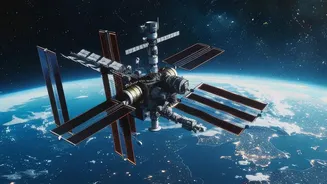
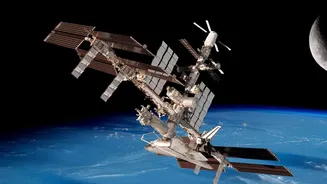
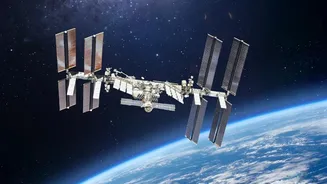
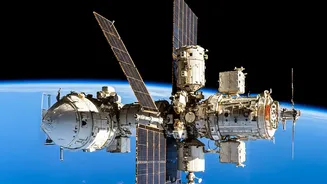
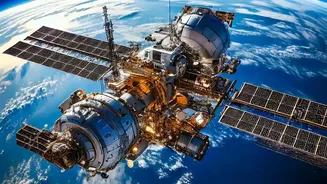
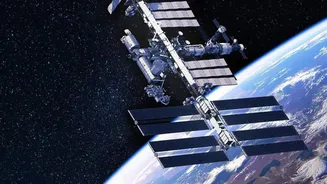
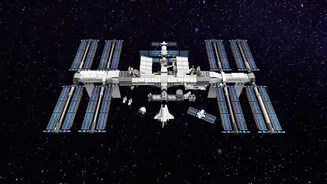
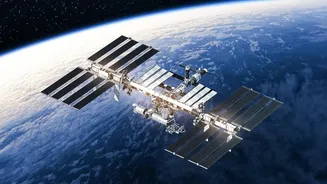
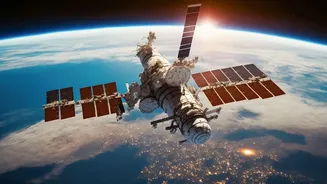
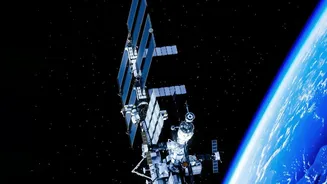
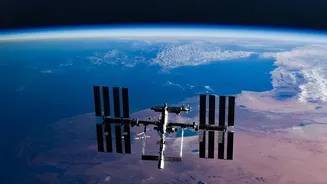
Forget what you think a satellite might look like. The International Space Station (ISS) appears as a very bright, steady point of light moving smoothly and quickly across the night sky. It doesn't blink like an aeroplane; its light is constant because
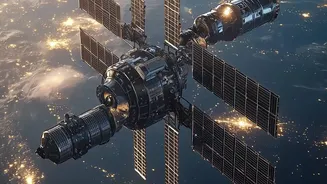
you're seeing sunlight reflecting off its massive solar panels, which are about the size of a football field. It travels much faster than a plane, completing a full orbit of Earth in about 90 minutes at a speed of roughly 28,000 kilometres per hour. From your perspective on the ground, a pass can last anywhere from two to seven minutes, appearing on one horizon and vanishing into the Earth's shadow on the other. No telescope is needed; its brightness makes it easily visible to the naked eye, even from light-polluted urban areas.
The Golden Hours: Dawn and Dusk
Timing is everything when it comes to spotting the station. The best viewing opportunities happen in the hours just before sunrise or after sunset. This is the magic window when the sky on the ground is dark, but the ISS, at its high altitude of over 400 kilometres, is still bathed in sunlight. During the middle of the night, the station is in Earth's shadow and invisible, and during the day, the bright sky washes it out. Because India is located well within the ISS's orbital inclination of 51.6 degrees, cities here get frequent and often high-quality passes. Viewing opportunities tend to run in cycles, with a couple of weeks of evening or morning passes, followed by a period with none.
August Viewing Times for Major Cities
August 2026 offers several excellent chances to see the ISS from across India. While times vary by a few minutes depending on your exact location, here are some sample predictions for the latter half of the month. Remember, these passes are either in the pre-dawn hours or just after sunset. For instance, Delhi has a bright pass on the morning of August 17th around 4:31 AM, moving from southwest to northeast. Another bright pass for Delhi occurs on August 18th just before dawn. Residents in Mumbai and nearby areas like Borivli can look for passes throughout the month in the evening and morning. Similarly, cities like Bengaluru and Prayagraj will have their own distinct schedules of visible passes, often lasting for several minutes and achieving good elevation in the sky. To get precise times for your specific locality, using a dedicated tracker is essential.
Your Toolkit for Spotting the Station
You don't need to be an astronomer to find the ISS, thanks to a host of excellent and free digital tools. NASA’s official Spot The Station service provides a website and mobile app that gives you precise viewing times and alerts for your location. Other highly-rated apps include ISS Detector, Heavens-Above, and Satellite Tracker by Star Walk. Many of these apps not only provide notifications but also feature augmented reality (AR) views, where you can point your phone at the sky and see the exact path the station will take. These tools take the guesswork out of the process, telling you the exact time a pass will start, its duration, the maximum height it will reach, and the direction it will travel across your sky.
Tips for a Perfect Sighting
Once you have your viewing time, a few simple preparations can make the experience even better. First, try to find a location with a clear view of the horizon, away from tall buildings and trees. While the ISS is bright, getting away from the worst of city light pollution will make it stand out even more. Give your eyes about 15-20 minutes to adjust to the darkness before the scheduled pass. Be patient and look in the direction the app tells you the station will appear. It will rise from the horizon as a steady point of light and begin its silent journey across the heavens. While binoculars or a basic telescope can offer a more detailed glimpse, they aren't necessary to enjoy the simple, awe-inspiring sight of humanity's outpost in space flying overhead.