





Why 'Healthy' Isn't Always 'Low Sugar'
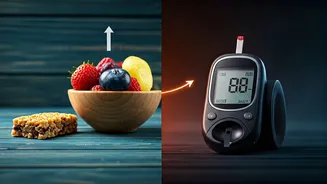
When we eat foods containing carbohydrates, our digestive system breaks them down into glucose (sugar), which enters the bloodstream. [5] The Glycemic Index (GI) is a scale from 0 to 100 that ranks foods based on how quickly they cause blood sugar to rise.
[5, 16] High-GI foods are digested fast, causing a rapid spike, while low-GI foods are digested slowly, leading to a more gradual increase. [5, 16] The catch is that many 'healthy' foods can have a surprisingly high GI. This is often due to processing, which strips away fiber and breaks down the food's natural structure, making the sugar instantly available to your body. [2, 3] A whole apple, for instance, has a much lower GI than apple juice because the fiber in the whole fruit slows down sugar absorption. [3]
The Sneaky Culprits in Your Snack Box
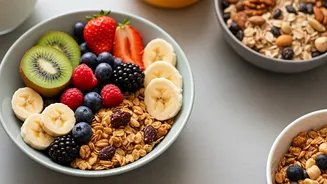
Many snacks marketed as healthy are secretly loaded with ingredients that can spike your blood sugar. Here are a few common offenders: * **Fruit Smoothies and Juices:** While fruit is healthy, blending or juicing it removes most of the fiber, delivering a concentrated shot of sugar to your system. [3] A whole fruit is always a better choice. [24] * **Granola and Cereal Bars:** These are often seen as the ultimate health snack, but many are held together with sugars like honey, glucose syrup, or date paste. [25] They can also contain refined grains like cornflakes or puffed rice, which have a high GI. [13, 25] * **Dried Fruits:** While they contain fiber and nutrients, the dehydration process concentrates their natural sugars. A small handful of raisins has significantly more sugar than the same volume of fresh grapes. While they have a low to medium GI on their own, portion control is crucial. [23] * **'Baked, Not Fried' Chips and Crackers:** Many of these snacks are made from refined flours (like maida or refined wheat flour) or starches (like potato or corn starch), which have very little fiber and are quickly converted to sugar in the body. [2, 4]
Understanding the Impact of Processing
Food processing can dramatically alter how your body handles a food. [3] Minimally processed foods, like fresh vegetables or whole grains, retain their natural fiber and structure. [3] This means your body has to work harder to digest them, leading to a slower release of energy. [5] On the other hand, ultra-processed foods are industrial formulations that are often low in fiber and nutrients but high in added sugars, unhealthy fats, and salt. [2, 10] These foods are designed to be hyper-palatable and are digested very quickly, leading to sharp spikes and subsequent crashes in blood sugar. [2, 10] Research has consistently linked high intake of ultra-processed foods with an increased risk of type 2 diabetes. [2]
The Secret to Stable Blood Sugar: The Power of Pairing
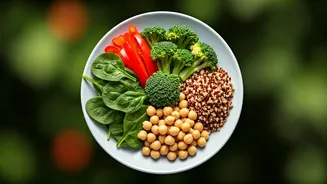
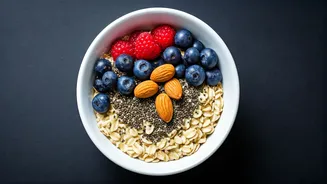
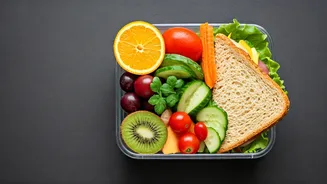
The key to smart snacking isn't to eliminate carbohydrates, but to balance them. The simple rule is to 'never eat a carb alone'. [19] Pairing carbohydrates with protein, healthy fats, or fiber slows down digestion and the release of sugar into the bloodstream, preventing sharp spikes. [17, 19] This powerful combination keeps you feeling full and maintains stable energy levels. Here are some blood-sugar-friendly snack pairings: * **An apple** with a tablespoon of peanut or almond butter. [15, 17] * **Whole-grain crackers** with a slice of cheese or a side of hummus. [1, 8] * **Plain Greek yoghurt** topped with a handful of berries and nuts. [7, 8] * **Vegetable sticks** (like carrots or cucumber) with hummus. [1, 14] * **A hard-boiled egg**, which is a great source of protein. [1, 7]