



The Challenge of an Overcast Sky
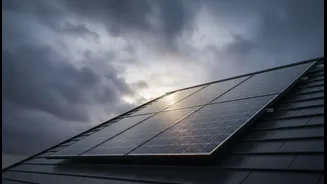
Conventional solar panels work by using photovoltaic (PV) cells, typically made of silicon, to convert sunlight into electricity. This process is most efficient under direct, bright sunlight. On cloudy or overcast days, the amount of light reaching the panels,
known as diffuse light, is significantly reduced, causing energy production to drop. While panels still produce some power, their output can fall to as low as 10-30% of their rated capacity, creating a reliability issue that has long been a critique of solar energy. This limitation is particularly pronounced in regions with frequent cloud cover or long monsoon seasons, making consistent solar generation a significant challenge.
Harnessing the Power of Rain
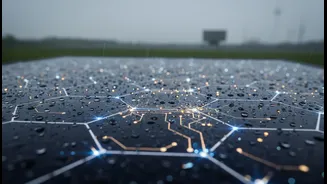
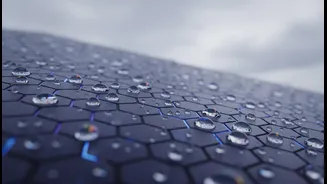
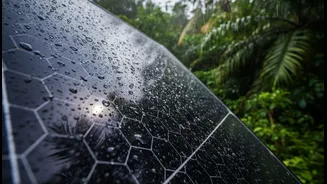
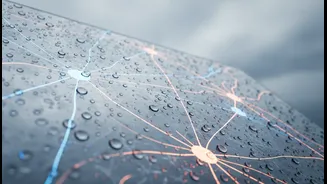
One of the most exciting advancements is the development of hybrid solar cells that can generate electricity from falling raindrops. Researchers have integrated a technology called a triboelectric nanogenerator (TENG) into solar panels. A TENG works by creating a static electricity charge through friction, much like rubbing a balloon on your hair. In these hybrid panels, a transparent polymer layer is placed on top of the standard solar cell. When raindrops hit this surface and roll off, the friction between the water and the specially coated material generates a small electric charge that can be captured and used. This means the panel can produce power from rain, day or night.
A Dual-Threat Technology
The innovation lies in creating a single device that does two jobs. Scientists in China and Spain have pioneered designs where the TENG layer is highly transparent, ensuring it doesn't block sunlight from reaching the photovoltaic cell underneath. In some designs, one of the polymer layers even serves as an electrode for both the TENG and the solar cell, simplifying the structure and keeping it lightweight. While the amount of power generated from raindrops is currently less than that from sunlight, it provides a crucial boost during inclement weather, preventing energy production from flatlining completely when clouds roll in. Recent studies have shown that a single raindrop can generate a significant voltage, enough to power small sensors or electronics.
New Materials for Low-Light Conditions
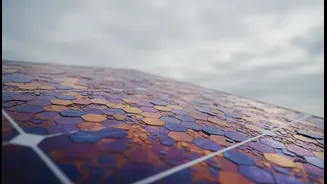
Alongside rain-harvesting technology, other new materials are proving highly effective in low-light environments. Perovskite solar cells, in particular, are showing immense promise. Unlike rigid silicon, perovskites are a class of materials that can be processed into thin, flexible, and lightweight films. They have a different chemical structure that makes them exceptionally good at converting indoor light and diffuse sunlight into energy. Recent studies have demonstrated perovskite cells achieving remarkable efficiency levels under low-light conditions found in a typical office, far outperforming traditional silicon cells in the same environment. This makes them ideal for not just cloudy days but also for powering devices indoors.
The Opportunity for India
For a country like India with ambitious solar energy targets and a powerful monsoon season, these all-weather technologies could be transformative. The ability to generate power during rainy and overcast days would dramatically improve the reliability of solar energy, helping to stabilize the grid and ensure a more consistent power supply throughout the year. The decreased dependence on perfect weather makes solar a more viable and economically attractive option across more regions of the country. These hybrid panels could provide essential power for critical infrastructure, such as remote environmental sensors, agricultural technology, and telecommunication towers, which need to operate reliably regardless of the weather.
What's Next for All-Weather Solar?
While these advancements are groundbreaking, the technology is still in its early stages. Key challenges remain, including ensuring the long-term durability of the materials, which must withstand years of weather exposure without degrading. Researchers are also focused on improving the power output from raindrops and scaling up production from laboratory-sized cells to large, commercially viable modules. Some experts predict that prototype products could be available within the next three to five years as the field develops rapidly. Continued innovation in materials like perovskites and COFs (Covalent Organic Frameworks) promises even greater efficiencies and lower costs, paving the way for a future where clean energy is always on, rain or shine.