






Beyond a Smarter To-Do List
We’re all familiar with project management tools like Trello, Asana, or Jira. They help us visualise tasks and track progress. But an 'intelligent office platform' represents the next evolutionary step. It’s not just a digital whiteboard; it's a proactive
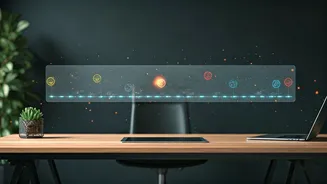
manager powered by artificial intelligence (AI) and machine learning. These platforms connect to your team’s calendars, communication channels, and project timelines to build a comprehensive understanding of not just *what* needs to be done, but *who* has the capacity, skills, and availability to do it. Instead of simply listing tasks, they analyse dependencies, estimate completion times, and monitor individual workloads in real-time. This moves them from passive organisers to active participants in managing a team's operational rhythm.
How AI Plays the Role of a Fair Manager
The core promise—'automatically apportioning workload'—sounds like science fiction, but the mechanism is grounded in data. Here’s how it typically works: a manager inputs a project with its various tasks and deadlines. The platform then scans its data on team members. It knows that Priya is a fast coder but is already at 95% capacity this week, while Rahul has expertise in user-interface design and has free bandwidth starting Wednesday. Based on this, the AI can suggest assigning specific tasks to Rahul. More advanced systems can even automatically assign low-priority or routine tasks to the most appropriate available person. The system learns over time, getting better at estimating how long certain tasks take for different individuals and flagging potential bottlenecks, such as a designer who is consistently overloaded while a writer is underutilised. It’s less about replacing a manager’s decision and more about providing them with data-driven recommendations to ensure work is distributed equitably and efficiently.
The Real-World Goal: Preventing Burnout
The claim of 'evading exhaustion' is bold, but the goal is to systematically reduce the risk of burnout, a pervasive issue in India's demanding work culture. By providing a transparent, data-backed view of everyone's workload, these platforms help prevent the common scenario where the most capable or agreeable employees are unintentionally overloaded. When a new urgent request comes in, a manager can immediately see who can absorb the work without being pushed into overtime. This prevents chronic overwork, which is a primary driver of burnout. For employees, it offers a sense of fairness and visibility, reducing the anxiety that their hard work is going unnoticed or that they are shouldering an unfair burden. It also frees up managers from the constant, time-consuming administrative task of manually balancing assignments, allowing them to focus on more strategic, high-value leadership activities like mentoring and feedback.
The Human Element Is Still Crucial
However, these platforms are not a perfect solution. An over-reliance on algorithms can be dehumanising. An AI can’t understand that an employee is having a difficult week for personal reasons or that a seemingly simple task requires a burst of creative energy that can’t be scheduled. A system that measures only time and output might penalise deep, thoughtful work that is hard to quantify. The risk is that employees feel they are being managed by a machine that tracks their every move, fostering a culture of surveillance rather than trust. The most successful implementations use these platforms as a co-pilot, not an autopilot. The AI provides suggestions, but the human manager makes the final call, using their emotional intelligence and contextual understanding to temper the algorithm's logic. The goal is to augment human management, not replace it.