

The Quest for Lunar Gold
For decades, water has been the holy grail of lunar exploration. It’s more valuable than gold for future astronauts. When broken down, water provides breathable oxygen and hydrogen for rocket fuel. Finding a local supply is the single most important factor
in making a permanent Moon base viable, as it would dramatically reduce the immense cost of hauling these essentials from Earth. We have long suspected that water ice is hidden in Permanently Shadowed Regions (PSRs) at the lunar poles—craters so deep and tilted that their floors haven't seen sunlight in billions of years. Previous missions confirmed the presence of hydrogen, a key component of water, in these frigid traps. However, those early maps were low-resolution, showing vast areas where water might be, but not precisely where to land to extract it.
How a Spectrometer 'Sees' Water
This latest breakthrough comes from a sophisticated instrument called a neutron spectrometer. The Moon's surface is constantly bombarded by cosmic rays from deep space, which sends subatomic particles called neutrons scattering. A neutron spectrometer doesn't see water directly. Instead, it counts these escaping neutrons. When neutrons pass through material rich in hydrogen—the 'H' in H₂O—they lose energy in a very specific way. By measuring a deficit in the energy of neutrons escaping from a particular spot, scientists can infer the presence and concentration of hydrogen buried up to three feet below the surface. This new data provides a much sharper, higher-resolution view than ever before, turning a blurry guess into a detailed treasure map.
From 'If' to 'Where'
The significance of this new data isn't just confirmation, but precision. Instead of identifying a large crater that might hold ice, mission planners can now pinpoint specific, smaller zones within those craters where hydrogen concentrations are highest. This level of detail is a game-changer for programs like NASA's Artemis, which aims to build a sustainable human presence on the Moon. The new maps allow engineers to find the sweet spot: areas with accessible, high-purity water ice that are also close to crater rims or peaks that receive near-constant sunlight. This solves two problems at once, providing both the raw material (water) and the energy source (solar power) needed for a functioning lunar outpost. Choosing the right landing spot just got significantly easier and less risky.
Designing the First Lunar Base
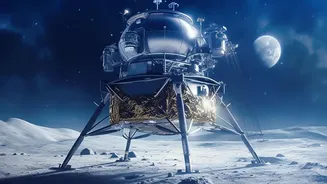
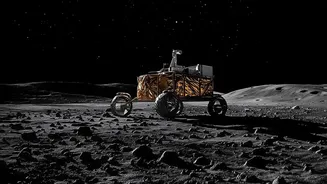
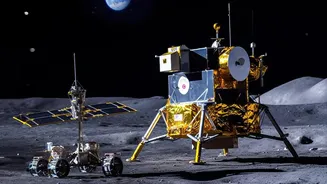
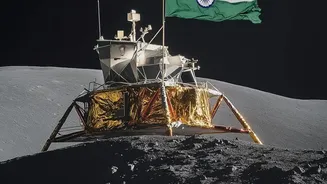
With these detailed resource maps, the concept of a lunar base moves from the realm of science fiction to practical engineering. The data will directly inform the selection of landing sites for both robotic and crewed missions. Future rovers, like the planned LUPEX mission from the Japanese and Indian space agencies, will be equipped with their own neutron spectrometers to perform ground-truth verification of these orbital maps. Once a site is confirmed, the architecture of the base can be planned around it. Robots will be sent to mine the ice-rich regolith (lunar soil), which will then be heated in a processing plant to extract the water. This water will support life for the astronauts and be split into hydrogen and oxygen to refuel landers for their return trip to a lunar gateway station or even back to Earth.
A New Space Race for Resources
This mapping of a critical resource naturally heats up the international space race. The lunar South Pole is a focal point for all major space-faring nations, including the United States, China, Russia, and India. Having a clear map of where the most valuable resource deposits are located adds a new strategic dimension to exploration. Control over these water-rich areas could determine who leads the development of a lunar economy. It raises important questions about resource rights and international cooperation, issues that are being addressed through frameworks like the Artemis Accords. As robotic prospectors and eventually human explorers head to these newly mapped hotspots, they won't just be collecting scientific samples; they will be laying the groundwork for humanity's future off-world.