
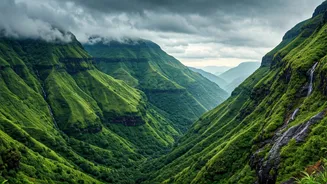
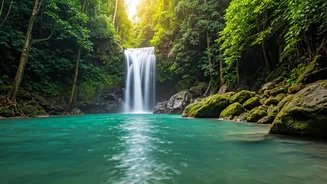



Dudhsagar Falls, Goa
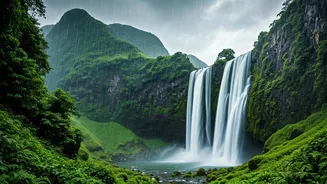
Living up to its name, which translates to "Sea of Milk," Dudhsagar is a magnificent four-tiered waterfall located on the Mandovi River, on the border of Goa and Karnataka. Plunging from a staggering height of over 1,000 feet, it creates a spectacle of immense
power and beauty. The sight of a train crossing the bridge that bisects the falls is one of the most iconic images of the Indian railway network. While jeep safaris to the base are often suspended during the peak monsoon due to safety concerns, the view from a passing train during these months is unparalleled. The best time to visit for a fuller experience is often considered to be from October to May, just after the heaviest rains, when the flow is still impressive but access is easier.
Jog Falls, Karnataka
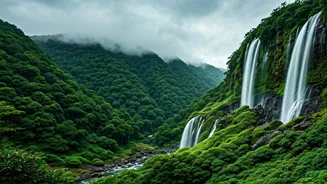
Located in the Shimoga district, Jog Falls is one of India's most famous waterfalls. Created by the Sharavathi River, it is unique because the water drops directly down without streaming over rocks. It is actually a combination of four distinct cascades named Raja, Roarer, Rocket, and Rani, which merge to form a single, spectacular plunge, especially during the monsoon. The peak season to witness this thunderous display is from August to December, when the falls are at their most powerful and often shrouded in a beautiful mist, with rainbows making frequent appearances. There are well-constructed viewing decks for visitors, and for the more adventurous, a path of around 1,400 steps leads down to the base of the falls.
Athirappilly Falls, Kerala
Often called the "Niagara of India," Athirappilly Falls in Kerala's Thrissur district is the state's largest waterfall and a true cinematic star, famously featured in the movie 'Baahubali'. Plunging from a height of about 80 feet, its grandiosity comes from its impressive width. Fed by the Chalakudy River, which originates in the Western Ghats, the falls are surrounded by lush green forests that are home to a variety of flora and fauna, including several species of hornbills. While the monsoon months from June to October offer the most powerful views, the period just after, from November to February, provides a more serene experience with pleasant weather for exploring the area.
Nohkalikai Falls, Meghalaya
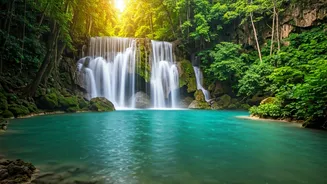
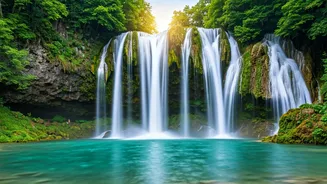
Located near Cherrapunji, one of the wettest places on Earth, Nohkalikai Falls is India's tallest plunge waterfall, dropping from a height of about 1,115 feet (340 meters). The water cascades from a verdant plateau into a deep, emerald-green pool below, creating a truly mesmerizing sight. The falls are rain-fed, making the monsoon season from June to September the time of its most powerful flow. However, the post-monsoon months from October to December often offer clearer views, free from the heavy mist. The name has a tragic legend associated with it, telling the story of a woman named Likai, adding a layer of poignant history to its stunning beauty.
Chitrakote Falls, Chhattisgarh
Also proudly bearing the title of the "Niagara of India," Chitrakote Falls in Chhattisgarh's Bastar district is distinguished by its incredible width, which can extend up to 300 meters (about 980 feet) during the monsoon. Situated on the Indravati River, this horseshoe-shaped cascade is a spectacular sight. The best time to witness its full, majestic breadth is between July and October. During the low-flow season, the falls split into several smaller streams, and boat rides are available in the pool at its base, offering a different but equally enchanting perspective. The surrounding area is rich in local culture, making a visit a deeper experience than just sightseeing.