



The IEA's Alarming Forecast
The International Energy Agency has projected that global electricity consumption from data centres could more than double by 2030, surging from roughly 460 terawatt-hours (TWh) in 2024 to over 1,000 TWh. This projected increase is equivalent to adding
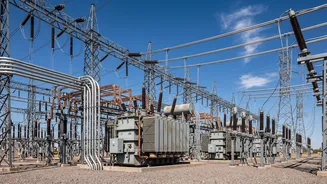
the entire current electricity demand of a country like Japan to the world's power grids. While data centres currently account for about 1.5-2% of global electricity use, their rapid growth rate, pegged at around 15% annually, is more than four times faster than all other sectors combined. This explosive growth poses a significant challenge to power grids that were not designed for such concentrated and rapidly expanding loads.
The AI and Crypto Effect
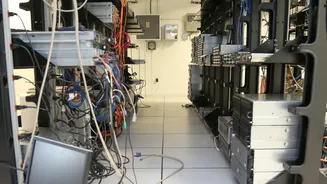
The primary driver behind this unprecedented demand is the boom in artificial intelligence and, to a lesser extent, cryptocurrency mining. Training a large language model like GPT-4, for instance, can consume an estimated 50 gigawatt-hours of electricity, a colossal amount of energy for a single computational task. But it is the ongoing 'inference' stage—the energy used every time someone makes a ChatGPT query or uses an AI-powered service—that is expected to become the dominant consumer of power. The computational intensity of these tasks requires servers that are far more power-hungry than those used for traditional computing, leading to greater power density and cooling needs within data centres. Accelerated servers for AI are projected to see their electricity use grow by 30% annually.
Tech Hubs Under Pressure
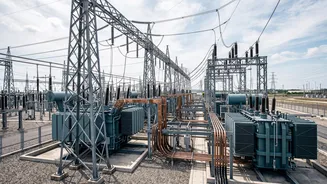
This energy crunch is not distributed evenly; it is intensely focused on major tech hubs where data centres tend to cluster. Regions like Northern Virginia in the U.S., which hosts the world's largest concentration of data centres, are already facing grid constraints. The IEA notes that the United States and China will account for nearly 80% of global growth in data centre electricity consumption through 2030. For India, the story is one of rapid ascent. The country's data centre capacity has grown at a compound annual rate of 24% and is projected to expand significantly by 2030. Major Indian hubs like Mumbai, Navi Mumbai, Chennai, Bengaluru, and Hyderabad are at the forefront of this expansion. While currently accounting for about 0.5% of India's total electricity use, this share could rise to 2% or more within the next decade, straining local grids in these key economic zones.
The Race for Sustainable Power
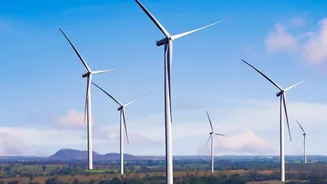
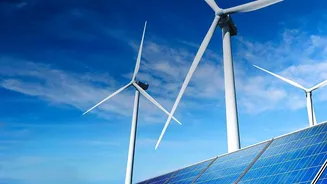
The challenge is that data centres can be built much faster—often in two to five years—than the decade or more it can take to plan and construct new large-scale power generation and transmission infrastructure. This mismatch creates a significant risk of energy shortfalls and instability. In response, tech giants have become the largest corporate buyers of renewable energy, signing long-term power purchase agreements (PPAs) to secure clean energy for their operations. In India, renewable capacity needed to power data centres is expected to double by 2030. However, renewables alone may not be enough to meet the 24/7 power demands of these facilities. Consequently, there is a renewed interest in other firm power sources, including natural gas and even nuclear power, with some companies exploring small modular reactors (SMRs) as a potential long-term solution.
Can Efficiency and Innovation Keep Up?
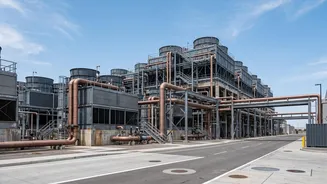
Alongside the push for more generation, improving energy efficiency is a critical part of the solution. This includes advancements in cooling technologies, which can account for a large portion of a data centre's energy use, and developing more energy-efficient algorithms and hardware. Innovations in grid management are also emerging. New technologies like medium-voltage uninterruptible power supplies (MV-UPS) can act as a buffer between the data centre and the grid, smoothing out the volatile power demand from AI workloads and protecting the grid from instability. These systems can also improve a facility's overall energy efficiency. However, the IEA's 'High Efficiency' scenario, which assumes strong progress in these areas, still projects a massive increase in power consumption, underscoring the scale of the challenge ahead.