



The Science of a Hot Street
Cities are often several degrees warmer than surrounding rural areas, a phenomenon known as the urban heat island effect. A primary culprit is the vast expanse of dark surfaces like roads and roofs, which can make up over 60% of a city's area. Traditional
black asphalt is a major offender, absorbing as much as 90% of the sunlight that hits it. This stored solar energy heats the pavement to blistering temperatures, which then radiates back into the air, keeping neighbourhoods warm long after sunset. This process is based on a simple principle called albedo, which is the measure of a surface's ability to reflect sunlight. Dark, low-albedo surfaces absorb heat, while light, high-albedo surfaces reflect it.
Painting the Town Cool
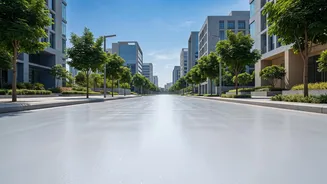
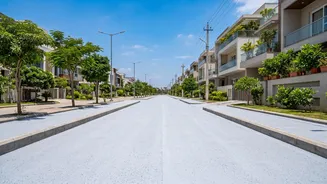
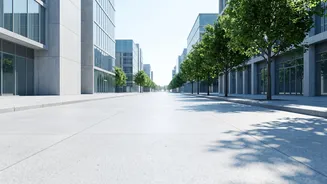
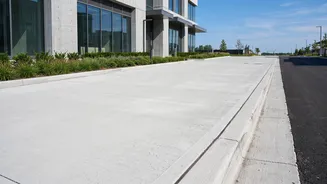
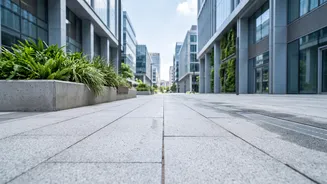
Reflective pavements tackle this problem head-on by increasing the street's albedo. The most common method involves applying a special light-coloured, solar-reflective coating over existing asphalt. These coatings, which can contain materials like titanium dioxide, act like a mirror for sunlight, bouncing solar radiation back into the atmosphere instead of absorbing it. The result is a dramatic drop in the temperature of the pavement itself. Studies and real-world pilot programs, such as those in Los Angeles and Phoenix in the US, have shown that these treated surfaces can be 5-10°C cooler than traditional blacktop under the same sunny conditions. Other types of cool pavements include permeable systems that cool through water evaporation and using naturally lighter-coloured materials like concrete.
Real-World Impact and Benefits
The primary benefit of cooler streets is a reduction in local temperatures. While the effect on ambient air temperature is more modest, the significant drop in surface temperature can make a real difference. It means less heat radiating into homes and businesses, potentially reducing the need for air conditioning and saving energy. Some estimates suggest that widespread adoption in US cities could yield emission reductions equivalent to taking millions of cars off the road. Beyond temperature, there are other advantages. The lighter surface improves nighttime visibility, which can reduce the need for street lighting. Some coatings are also designed to protect the underlying asphalt from wear and tear, potentially extending the life of the road.
Not a Perfect Solution
Despite the promise, cool pavements are not a silver bullet. One significant drawback is the potential to make pedestrians feel hotter during the day. While the street itself is cooler, the reflected solar radiation is bounced back onto people walking on it, which can increase the 'mean radiant temperature'—a measure of how hot a person feels. There are also concerns about glare for drivers and cyclists on very bright days. The durability and maintenance of the reflective coatings are another challenge. Tire marks, dirt, and oil can degrade the surface, reducing its reflectivity and requiring reapplication. Furthermore, in colder climates, the heat-absorbing quality of dark asphalt can be a benefit, helping to melt snow and ice.
The Road Ahead for Indian Cities
As India's cities continue to grow and face rising temperatures, solutions like cool pavements are becoming increasingly relevant. While large-scale road projects are still in early stages, the related concept of cool roofs—painting rooftops white—has already proven effective in cities like Ahmedabad and Hyderabad, reducing indoor temperatures significantly. Workshops and pilot projects are exploring the use of advanced pavement technologies in the Indian context, considering local materials and climate conditions. The key will be strategic implementation. Experts suggest these technologies are most effective when used as part of a broader urban cooling strategy that also includes increasing green cover and shade, which remains one of the most effective ways to cool neighbourhoods and protect people from direct sun exposure.