







A Landmark Achievement
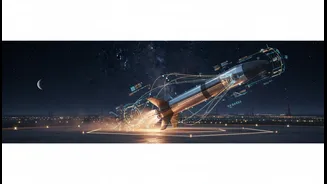
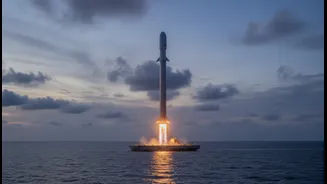
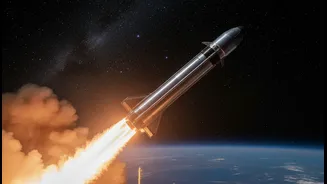
The latest trial saw both the Super Heavy booster and the Starship spacecraft return to Earth for a precise landing after reaching orbit. This marks another successful demonstration of a fully reusable transportation system, a concept long considered
the holy grail of rocketry. Unlike traditional rockets where expensive stages are discarded after a single use, every part of the Starship system is designed to fly again, and again. This iterative process of launching, landing, and improving is fundamental to SpaceX's strategy. With each flight, engineers gather critical data to enhance reliability and safety, moving closer to a system as routine and dependable as commercial air travel.
The Economics of Reusability
The single biggest barrier to space exploration has always been cost. When you build a multi-million dollar rocket and then throw it away after one flight, the price of sending anything to orbit is astronomical. Full reusability fundamentally changes this economic equation. The vast majority of a launch's cost is in the hardware itself; the fuel is a tiny fraction of the total price. By recovering and relaunching the entire vehicle, the manufacturing cost is spread over many missions. This is expected to slash the cost of reaching low-Earth orbit, potentially dropping it from millions to just tens of thousands of dollars per flight over time. This dramatic price reduction is the key to unlocking a new era of space commercialization and exploration.
From Once a Year to Once an Hour
Beyond cost, reusability directly impacts launch frequency. Instead of taking months or years to build a new rocket, a reusable vehicle can be inspected, refurbished, and prepared for its next flight in a matter of weeks, days, or eventually, hours. SpaceX's long-term goal is to achieve a launch cadence that is currently unimaginable—targeting thousands of launches per year. This high frequency transforms space travel from a series of bespoke, monumental events into a reliable transit system. This 'space-highway' is essential for building and supplying a lunar base or a Martian city, which would require a constant flow of cargo, supplies, and people.
Paving the Highway to Mars
Starship's ultimate goal is to enable the colonization of Mars. A self-sustaining city on another planet requires transporting millions of tonnes of cargo. Such a massive undertaking is simply not feasible with expendable rockets. The cost and launch frequency improvements from a fully reusable system like Starship are non-negotiable prerequisites. Furthermore, the system is being designed to refuel in orbit using tanker Starships, allowing the transport of hundreds of tonnes of cargo all the way to Mars. The fuel for the return journey, methane, can theoretically be produced on Mars itself using local resources, creating a sustainable, long-term transportation network between planets.
More Than Just Mars
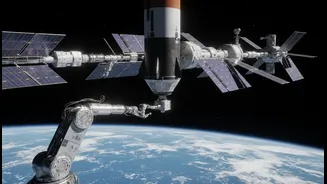
While Mars is the headline destination, the implications of cheap and frequent access to space are far broader. It enables the deployment of large-scale satellite constellations, the construction of massive orbital space stations, and perhaps even a new industry of high-speed, point-to-point travel on Earth. For future astronauts, this thirteenth successful trial is more than just a technical milestone. It represents a foundational shift that makes their journeys safer, more frequent, and more ambitious than ever before. It's one more deliberate step in dismantling the barriers that have kept humanity tied to one planet.