




The Science of a Misty Blanket
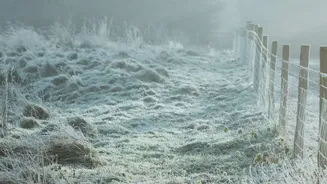
The enchanting mist you see is a type of fog, most often 'radiation fog', and its creation is a perfect dance of temperature and moisture. It all starts on a clear, calm night. Without cloud cover, the ground rapidly radiates its warmth from the day back
into the atmosphere, causing it to cool down significantly. This process chills the layer of air closest to the ground. Since cold air cannot hold as much water vapour as warm air, if the air is moist enough, it will cool to its 'dew point'—the temperature at which condensation occurs. The invisible water vapour then transforms into billions of tiny liquid water droplets, which hang suspended in the air, creating the beautiful mist we see.
How Forests Make Their Own Mist
Forests are not just passive backdrops for this event; they are active participants. Trees and plants constantly release water vapour from their leaves through a process called transpiration. This adds a significant amount of moisture to the air, especially in sheltered forest environments where the wind can't easily blow it away. This locally-sourced humidity means that on a cold, still morning, the forest air is primed for condensation. The cold, dense air settles in low-lying areas and among the trees, creating the classic image of a valley filled with mist while the hilltops remain clear. The trees themselves provide countless surfaces upon which these water droplets can form, contributing to the dense, clinging nature of forest mist.
A Perfect Stage for Wildlife
For wildlife enthusiasts and photographers, these misty conditions are a gift. The quiet, damp atmosphere often makes animals feel more secure. Many species are more active in cooler, overcast conditions, and the lack of harsh sunlight means predators are less easily spotted, encouraging prey animals to move more openly. Sound is also affected; the damp air can muffle sounds, making the forest quieter and allowing for closer, undetected observation. Visually, the mist simplifies a cluttered forest background, making animals stand out against a soft, diffused backdrop. A deer that might normally blend in with trees and brush can become a striking silhouette against the pale grey of the fog, creating a powerful, atmospheric image.
Seeing More in the Mist
While our vision is limited by mist, some animals may not be so constrained. Many creatures have senses tuned differently than our own. Some can perceive light in the infrared spectrum, which can penetrate fog more effectively than visible light. While dense water-droplet fog still presents a challenge, this difference in perception can give certain predators an advantage. For a wildlife tour, the benefit is more direct: fewer crowds and more serene conditions. The peaceful atmosphere that draws people to nature is amplified, allowing for a deeper and more focused connection with the environment.
Tips for Your Own Misty Tour
To experience this magic for yourself, timing is everything. The best conditions for radiation fog are after a clear, calm night with relatively high humidity, perhaps following a day with some rain. Head out early, just as the sun begins to rise. As the sun warms the ground, the fog will start to 'burn off', evaporating from the ground up and creating ever-changing, dramatic light. Look for tours in areas with varied terrain, like river valleys or forested hills, where the cold air is likely to pool. Bring a camera, but also take time to simply watch. The way the light filters through the mist and how animals move within the ethereal landscape is an experience that photography can only begin to capture.