





A Trail of Cosmic Dust
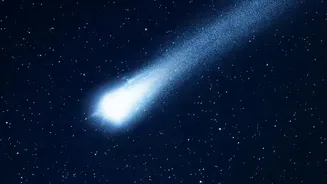
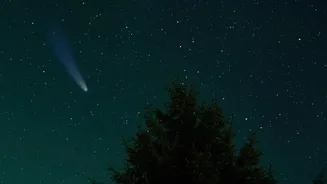
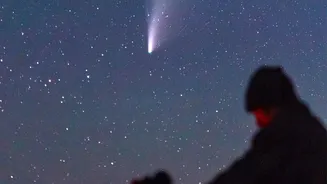
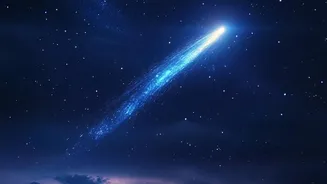
The Orionid meteor shower is caused by Earth passing through a stream of debris left behind by a comet. Think of a comet as a giant, dusty snowball hurtling through space. As it gets closer to the Sun, its ice vaporises, releasing the dust and rock particles
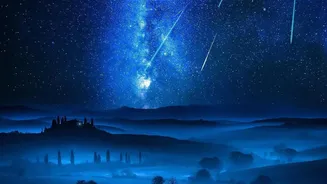
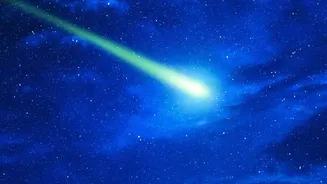
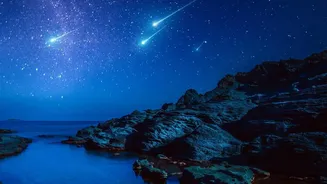
trapped within. This creates a long, dusty trail that lingers in space, following the comet's orbital path. Every year, as Earth makes its journey around the Sun, its orbit intersects this trail of cosmic leftovers. When these tiny particles, many no bigger than a grain of sand, slam into our planet's upper atmosphere at incredible speeds, they burn up, creating the brilliant streaks of light we call meteors, or shooting stars.
The Famous Parent: Halley's Comet
The parent of the Orionid meteor shower is none other than the most famous comet of all: 1P/Halley, or Halley's Comet. This celebrated comet takes about 76 years to orbit the Sun and last visited our celestial neighbourhood in 1986. While the comet itself is now far away in the outer solar system, its legacy remains. The dust it has shed over thousands of years is spread out along its orbit, creating a permanent debris field. In a fascinating celestial coincidence, Earth's orbit crosses this path twice a year. Our passage in October results in the Orionids. The other crossing, in May, produces a different meteor shower known as the Eta Aquariids. So, both of these annual showers are gifts from the very same cosmic parent.
Why 'Orionids'?
Meteor showers are named after the constellation from which they appear to radiate. From our perspective on Earth, the Orionid meteors seem to streak away from a point in the constellation Orion the Hunter. This point, called the radiant, is located near Orion’s bright, reddish star, Betelgeuse. It's important to remember that the constellation itself is not the source of the meteors; it simply serves as a signpost in the sky, helping astronomers and stargazers identify which shower they are watching. In reality, the meteors can appear anywhere in the night sky. For the best viewing, it’s often recommended to look about 45 to 90 degrees away from the radiant. Meteors seen further from this point will appear longer and more spectacular.
Fast, Bright, and Beautiful
Orionid meteors are known for being exceptionally fast and bright. They enter Earth's atmosphere at a blistering speed of about 66 kilometres per second (around 2,37,000 km/h). This high velocity means they can produce very bright flashes and sometimes even explode as fireballs. A particularly beautiful feature of the Orionids is their tendency to leave behind glowing "trains"—incandescent trails of gas that can linger in the sky for several seconds after the meteor has vanished. Under ideal conditions, away from city lights, observers can typically expect to see between 15 and 20 meteors per hour during the shower's peak.
How to Watch the Spectacle
The Orionid meteor shower is active from early October to early November each year, with the peak occurring around October 21-22. To get the best view, you don't need any special equipment like a telescope. The key is to find a location far from city lights with a clear, dark sky. The best time to watch is generally after midnight and into the pre-dawn hours, as the radiant point in Orion will be higher in the sky. Get comfortable in a reclining chair or on a blanket, and allow your eyes at least 20 to 30 minutes to fully adapt to the darkness. Then, just lie back, look up, and be patient. The show will last until dawn, offering plenty of time to catch a glimpse of Halley's Comet's ancient, dusty trail lighting up the night.