








The Anatomy of Terminal Turmoil
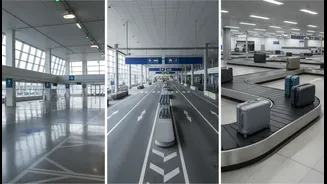
Large transport terminals in India, whether it's Delhi's T3, Mumbai's T2, or a major railway hub like Howrah, are designed for massive throughput, but this efficiency often creates confusion for those trying to meet. Multiple exit gates, sprawling arrival
halls, and two-tiered pick-up zones for different vehicle types can easily lead to disorientation. Add to this the sheer volume of people, the noise, and the fatigue from travel, and you have a perfect recipe for a frantic and frustrating experience. It’s common for people to exit from different gates than anticipated or for poor mobile network coverage in certain areas to cut off communication at the most critical moment. Without a clear, predetermined plan, you might spend the first thirty minutes of your reunion pacing back and forth, craning your neck, and making repeated, fruitless phone calls.
Your Five-Minute Pre-Travel Pact
The solution is a simple pre-arrival pact. Before the passenger heads to their departure point and before the person picking them up gets in their car, a quick chat is essential. The goal is to agree on a single, hyper-specific meeting point. Don't just say “the arrivals gate.” Instead, be precise: “Pillar number 10 outside domestic arrivals Gate 2.” Or, “the counter of the Costa Coffee shop next to the prepaid taxi stand.” This level of detail removes all ambiguity. It is also crucial to share key information like the flight or train number, which allows the person waiting to track its status for any delays. Finally, agree on a simple backup plan. For instance: “If we don’t find each other within 15 minutes, let’s both go to the main information desk.” This creates a safety net and prevents aimless wandering if the primary plan fails for any reason.
Choosing Your Tools: Landmarks vs. Live Location
In our connected world, technology seems like the obvious answer. Dropping a pin on Google Maps or using WhatsApp’s ‘Share Live Location’ feature can be incredibly effective. These tools can guide you directly to each other with visual aids. However, high-tech solutions have their pitfalls. Crowded terminals can have spotty mobile data, and GPS signals are often unreliable indoors or in basement-level parking areas. This is where low-tech methods shine. Choosing a permanent, unmovable, and easily identifiable landmark is often the most reliable strategy. Think of a specific storefront (like a WHSmith or a Guardian Pharmacy), a designated airport lounge entrance, or a numbered column just outside the exit doors. These landmarks don't rely on battery life or a stable internet connection. A hybrid approach often works best: agree on a landmark, and then use live location sharing as you get closer to fine-tune your meeting.
What Makes a Good Meeting Point?
Not all spots are created equal. A good meeting point should be easy to find, relatively less crowded, and simple to describe. Avoid generic locations like “the baggage claim area” or “outside the main entrance,” as these zones are often vast and chaotic. Instead, look for what professionals call a point of interest. This could be a cafe, a specific bank ATM, or a car rental counter just beyond the customs exit. These places are typically well-lit, often have seating nearby, and are less frantic than the immediate exit points where crowds of drivers and families congregate. For railway stations, which can be even more confusing with their multiple platforms and footbridges, a specific bookstall on a particular platform or the entrance to the main waiting room can serve as an excellent, unambiguous meeting spot. The key is to pick a spot that is easy for even a tired, first-time visitor to locate.
When Plans Go Awry: A Quick Recovery Guide
Even with the best plans, things can go wrong. A last-minute gate change or a dead phone battery can throw a wrench in the works. If you find yourself separated and unable to make contact, the first rule is not to panic. Instead of wandering randomly, stop and think. Go to your pre-agreed backup location. If you didn't set one, make your way to a central, official point like the airport's or railway's main information desk. Staff there are equipped to help and can even make announcements in some situations. Find a spot with better mobile reception, perhaps by moving away from the crowded main hall, and try calling again. If you're the one arriving, resist the urge to immediately exit the terminal building into the chaos of taxi stands. There are often designated waiting areas inside the arrivals hall where you can safely wait and try to re-establish communication.