



Decoding the IMD's August Forecast
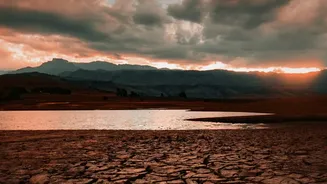
The India Meteorological Department (IMD) has projected that rainfall in August 2026 is likely to be below normal for the country as a whole. This is defined as less than 94% of the Long Period Average (LPA), which for August is 254.9 mm. This forecast
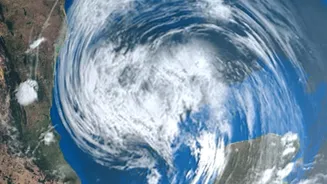
for a drier August comes after a weak June was followed by a strong recovery in July. The outlook for the entire second half of the monsoon season (August and September combined) is also for below-normal rainfall. The primary driver for this weaker forecast is the strengthening of El Niño conditions over the Pacific Ocean, a phenomenon typically associated with suppressed monsoon rainfall in India. However, the forecast isn't uniform. The IMD notes that some parts of Eastern Peninsular India, as well as areas in Northwest and Central India, may still receive normal to above-normal rainfall.
The Current State of Our Water Banks
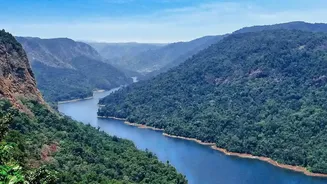
With a subdued forecast, the current water levels in India's major reservoirs become critically important. As of late July 2026, the live water storage in 166 of the country's major reservoirs was still below normal levels and significantly less than the storage recorded at the same time last year. Central Water Commission (CWC) data from late July showed that overall storage was around 38-44% of total capacity. Regionally, the situation varies greatly. The southern region has faced the most significant deficit, with reservoir levels well below normal. In contrast, heavy rains in other areas have led to a much healthier situation. For example, by early August, the seven lakes supplying water to Mumbai had crossed 90% of their total capacity, ensuring a comfortable supply for the city. Similarly, reservoirs in the Pune region were also reported to be in a healthy state, with most dams near full capacity.
From Reservoir to Tap: The Municipal Angle
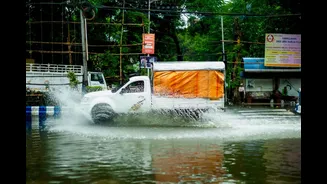
The connection between the IMD forecast, reservoir levels, and your daily water supply is managed by municipal corporations. Their decisions are based on the current storage and the likelihood of it being replenished. In cities with robust reservoir levels like Mumbai, officials are confident about supply. In fact, due to intense rainfall, the city's storm water pumps have had to discharge massive amounts of fresh water into the sea to prevent flooding, a yearly dilemma for the coastal metropolis. In other areas, even with concerns about below-normal monsoon performance, civic bodies are assuring residents. Officials in Visakhapatnam, for instance, have stated that despite a rainfall deficit, the water levels in their key supply reservoirs like Yeleru and Thatipudi are adequate, posing no immediate threat to the city's water supply. These local-level assessments are what ultimately determine whether residents will face water cuts.
What This Means for You
The national forecast provides a big picture, but the reality of water availability is hyper-local. A 'below-normal' forecast for the country doesn't automatically mean your taps will run dry. The key is the performance of the monsoon in the specific catchment areas that feed your local reservoirs. While the healthy storage in western India's dams is reassuring for residents of cities like Mumbai and Pune, the situation remains a cause for concern in other parts of the country, particularly in the south, which entered this period with lower-than-normal storage. The IMD's prediction of uneven distribution means some regions will fare better than others. For citizens, the most important information will come from their local municipal corporation, which monitors reservoir levels daily and manages the distribution network.