


The Numbers Driving the Narrative
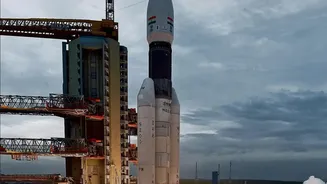
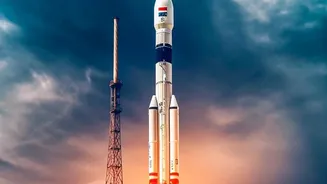
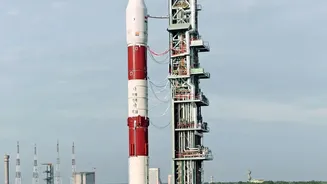
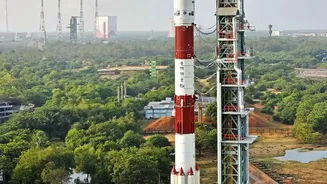
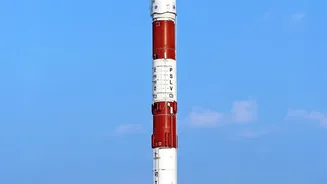
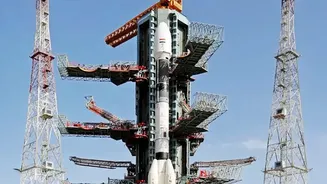
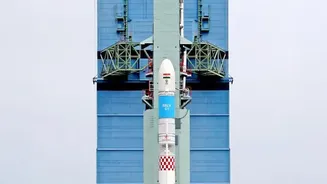
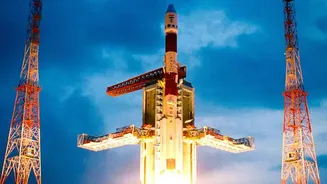
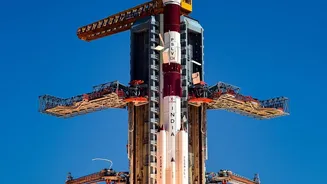
On the surface, ISRO's fiscal targets are about frequency. Recent announcements confirm a target of at least seven launches within the current financial year, with a mix of scientific, commercial, and strategic payloads. This packed schedule includes
crucial missions for India's national priorities as well as launches for international clients. This increased tempo is enabled by growing infrastructure, including a second launch complex at Kulasekarapattinam in Tamil Nadu, which is expected to become operational this fiscal year and will be optimised for launching smaller satellites. This increased cadence is a clear signal of intent: to accelerate India's presence in orbit and solidify its reputation as a reliable and busy launch provider.
The Commercial Frontier
A significant portion of this strategy revolves around capturing a larger share of the global space economy. India aims to grow its slice of the market from about 2% to 8% by 2033, expanding its space economy from around $8.4 billion to $44 billion. The key player in this effort is NewSpace India Limited (NSIL), ISRO's commercial arm, which was established in 2019. NSIL's mandate is to commercialise ISRO's proven technologies, particularly its reliable launch vehicles like the PSLV and SSLV. By offering cost-effective launch services to other countries and private companies, NSIL generates significant revenue. This commercial success is not an end in itself; it creates a self-sustaining financial model where earnings from commercial launches are ploughed back into funding ISRO's more ambitious, long-term scientific and exploratory projects that may not have immediate commercial returns.
Powering National Ambitions
Beyond commerce, the launch targets are fundamentally about sovereign capability and strategic ambition. The most prominent of these is the Gaganyaan programme, India's quest to send astronauts into space. The schedule includes uncrewed test flights, with the first, G1, planned for the latter half of 2026. These missions are critical for testing life support systems and ensuring astronaut safety before the first crewed flight, now anticipated around 2027. These launches also deploy vital national assets, such as Earth observation satellites for disaster management and border monitoring, and communication satellites that form the backbone of the country's digital infrastructure and defence communications. Each launch, therefore, adds another layer to India's strategic autonomy.
Building for a Future in Orbit
The current launch strategy is the foundational work for even grander long-term goals. Prime Minister Narendra Modi has articulated a vision that includes establishing the Bharatiya Antariksha Station (Indian Space Station) by 2035 and sending an Indian astronaut to the Moon by 2040. The development of the space station is already underway, with the first module planned for a 2028 launch. Achieving these milestones requires the very capabilities being honed today. Every successful PSLV launch demonstrates reliability, every Gaganyaan test flight builds expertise in human spaceflight, and every commercial contract strengthens the industrial ecosystem needed to manufacture complex space hardware. The high frequency of launches is essentially an exercise in capacity building, preparing ISRO, and its growing network of private partners, for the complexities of long-duration space missions and interplanetary exploration.