



Beyond the Grams: Why Digestibility Matters
Counting protein grams is a common practice for anyone serious about muscle gain. However, for vegans, there's a crucial layer beyond the numbers: protein quality. Proteins are made of building blocks called amino acids, nine of which are essential because
our bodies can't make them. While animal proteins contain all nine in sufficient amounts, most plant sources are 'incomplete,' meaning they are low in one or more essential amino acids. This is compounded by the issue of digestibility. Plant-based proteins can be less digestible than their animal-based counterparts, meaning your body might not absorb all the protein you consume. This is where a scientific tool comes in to provide clarity.
Introducing DIAAS: The New Gold Standard
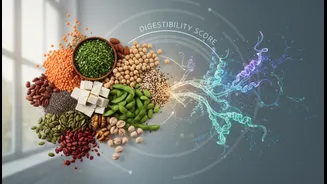
For years, the Protein Digestibility Corrected Amino Acid Score (PDCAAS) was the standard for measuring protein quality. However, the Food and Agriculture Organization (FAO) now recommends a more accurate method: the Digestible Indispensable Amino Acid Score (DIAAS). Unlike PDCAAS, which measures digestibility over the entire digestive tract, DIAAS focuses on absorption at the end of the small intestine, providing a truer measure of how many amino acids are actually available for your body to use for functions like muscle repair. Another key difference is that PDCAAS scores are capped at 1.0, making many high-quality proteins appear equal, whereas DIAAS scores are not capped, offering a clearer distinction between good and excellent protein sources.
How Plant Proteins Stack Up
On the DIAAS scale, different proteins receive a score indicating their quality. A score of 100 or more is considered 'excellent,' 75-99 is 'good,' and below 75 is not considered a high-quality source on its own. Animal proteins like whey and casein consistently score high. For vegans, soy protein is a standout, often classified as a high-quality protein with a good DIAAS score. Pea protein also performs well. However, many other popular plant sources, like some grains and legumes, have lower scores on their own. For example, rice protein has a lower score than pea protein concentrate, meaning less of its amino acids are absorbed. This doesn't mean these foods are 'bad,' but it highlights the need for a smart strategy.
The Power of Protein Combining
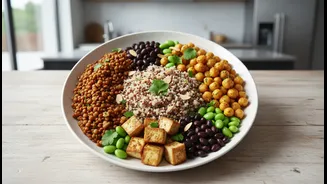
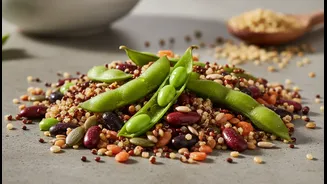
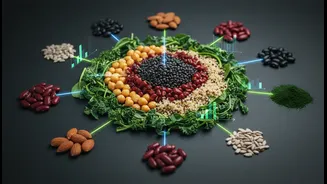
The key to unlocking the full potential of a vegan diet for muscle building lies in an old concept that science now backs up with new data: protein combining. Since most plant proteins are low in one or two essential amino acids, you can pair them together to create a 'complete' protein profile in a meal. This strategic pairing effectively raises the overall protein quality of your meal, ensuring your body gets all the building blocks it needs for muscle protein synthesis. The classic example is rice and beans. Rice is low in the amino acid lysine but high in methionine, while beans are the opposite. Eaten together, they provide a full complement of essential amino acids, much like an animal-based protein source would. This doesn't need to happen in the same meal, but combining foods throughout the day is an effective strategy.
Building a Muscle-Friendly Vegan Plate
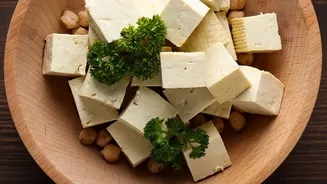
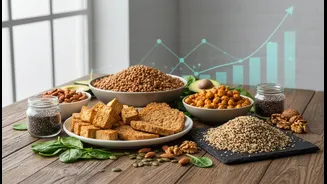
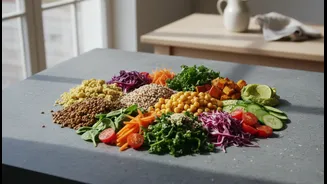
Putting this into practice is simpler than it sounds and is a cornerstone of many traditional diets in India. For breakfast, consider oatmeal (a grain) topped with nuts and seeds. For lunch or dinner, a plate of dal with rice or roti is a perfect example of combining a legume with a grain to form a complete protein. Other powerful combinations include hummus (made from chickpeas, a legume) with whole wheat pita (a grain), or a peanut butter sandwich on whole grain bread. Foods like quinoa, tofu, tempeh, and amaranth are also excellent choices as they are considered complete proteins on their own, containing all nine essential amino acids. By incorporating a variety of these foods, you ensure a steady supply of high-quality, digestible protein to support your training goals.