







The Great Monsoon Myth
Let's clear this up first: clouds do not block all UV radiation. It’s a common misconception that a grey, overcast sky means you're safe from sun damage. In reality, up to 80% of the sun's harmful ultraviolet (UV) rays can penetrate through clouds, mist,
and fog. This means that even on the gloomiest of monsoon days, your skin is still being exposed to radiation that causes long-term damage. In some situations, with scattered clouds, UV exposure can even be higher than on a clear day due to a reflection effect. So, while you may not feel the sun's heat or see its bright light, the invisible threat to your skin remains.
Meet the Invisible Attackers: UVA and UVB
To understand why cloudy-day protection is so vital, it's important to know the difference between the two main types of UV rays that reach the earth. UVB rays are shorter and are the primary cause of sunburn and tanning. Their intensity fluctuates, peaking in the summer and during midday hours. Clouds do filter some UVB rays. UVA rays, on the other hand, have a longer wavelength that allows them to penetrate deeper into the skin. They are the main culprits behind premature ageing—think wrinkles, fine lines, and loss of elasticity. Crucially, UVA rays maintain a consistent strength during all daylight hours, throughout the entire year, rain or shine. They make up about 95% of the UV radiation reaching us and can easily pass through clouds and even glass windows.
Why This Matters for Indian Skin
Indian skin, which is rich in melanin, has some natural protection against UVB-induced sunburns. This often leads to the dangerous belief that sunscreen isn't necessary. However, this is a myth. While melanin offers some defence, it's not enough to fully protect against UV damage, particularly from UVA rays. In fact, Indian skin is highly prone to hyperpigmentation, melasma, and uneven skin tone, all of which are triggered and worsened by UVA exposure. Skipping sunscreen during the monsoon can undo months of skincare progress, leading to stubborn dark spots and a dull complexion. The long-term, consistent exposure to UVA rays accelerates ageing and contributes to the risk of skin cancer.
Choosing Your Monsoon Armour
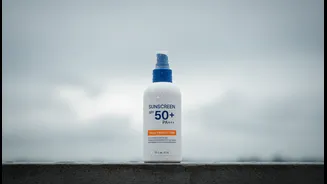
The sticky, humid weather of the Indian monsoon calls for a specific type of sunscreen. Heavy, greasy creams are a no-go. Instead, look for formulations that are lightweight, non-greasy, and non-comedogenic (meaning they won't clog your pores). Gel-based or fluid sunscreens are often ideal for oily and combination skin types common in India. Most importantly, your sunscreen must be 'broad-spectrum', which means it protects against both UVA and UVB rays. Look for a minimum of SPF 30, though many dermatologists in India recommend SPF 50 for better protection. Also, check the PA rating, which indicates UVA protection. A PA++++ rating offers the highest level of defence against ageing UVA rays, which is critical for pigmentation-prone skin.
Application and Reapplication Rules
Choosing the right product is only half the battle. For sunscreen to be effective, it must be applied correctly. Use a generous amount—the popular 'two-finger rule' is a good guide for your face and neck. Apply it as the last step of your skincare routine, about 15-20 minutes before you step out. During the monsoon, reapplication is key. High humidity and sweat can cause sunscreen to break down faster. If you get caught in a downpour or are outdoors for an extended period, you should reapply it every two to three hours. Opting for a 'water-resistant' formula can provide more durable protection, but remember that no sunscreen is fully waterproof. Diligence is your best defence.