




A Collision Course by Chance
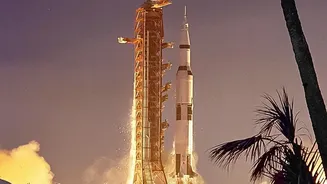
The object in question is the upper stage of a Falcon 9 rocket that launched in January 2025. Its mission was to deploy two commercial lunar landers, which it did successfully. However, the rocket stage used most of its fuel to reach its distant destination
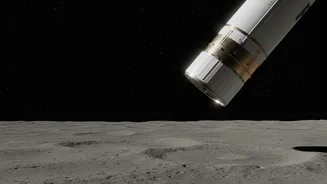
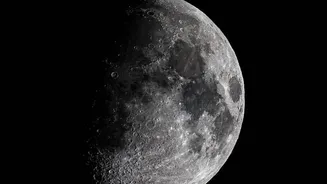
and didn't have enough to power a return trip to burn up in Earth's atmosphere. Left in a chaotic orbit, the combined forces of solar activity and gravity have slowly nudged it onto a collision course with the Moon, an event confirmed by independent astronomers and NASA's tracking centres. The impact, expected on August 5, 2026, marks a rare case of human-made debris unintentionally hitting the lunar surface.
An Explosive Experiment
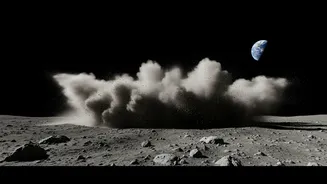
When the nearly 4.5-tonne rocket body slams into the Moon at over 8,700 km/h, it will create a new crater estimated to be about 18 to 27 meters wide. The impact will violently excavate lunar soil and rock, called regolith, throwing a plume of debris high above the surface. This is where the science begins. Because the Moon has no atmosphere, this plume of material can be studied by orbiting spacecraft and even telescopes on Earth. Scientists are eager to analyse the light from the impact flash and the composition of the dust cloud to learn about the geology of the impact zone.
What Scientists Hope to Find
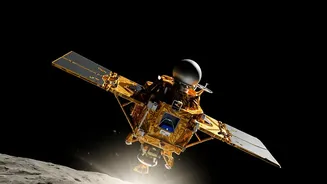
Every crater tells a story. By studying the shape and size of this new, artificial crater, scientists can refine their models of impact physics. More importantly, the ejected material provides a free sample from beneath the surface. Orbiting spacecraft, like NASA's Lunar Reconnaissance Orbiter (LRO) and South Korea's Pathfinder Lunar Orbiter, will attempt to take before-and-after images of the site. These orbiters are equipped with spectrometers and special cameras that can analyse the debris plume for signs of water ice and other volatile compounds, which are crucial resources for future human missions. India’s own Chandrayaan-2 orbiter, also circling the Moon, has previously been in a position to observe similar events.
Not the First, But Still Special
Deliberately crashing things into the Moon for science is not a new idea. In 2009, NASA's LCROSS mission intentionally slammed a spent rocket stage into a permanently shadowed crater near the south pole. The shepherding spacecraft flew through the resulting plume and famously confirmed the presence of water ice. While the upcoming Falcon 9 impact is accidental, it offers a different kind of opportunity. It will strike a different location, providing data on a new area and helping scientists understand how impacts from artificial objects differ from natural meteoroid strikes. There was also an unintentional impact from a Chinese rocket booster in 2022, which interestingly created an unusual double crater, deepening the mystery of its composition.