




A Different Kind of Celestial Body
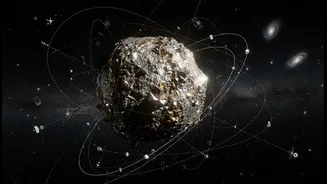
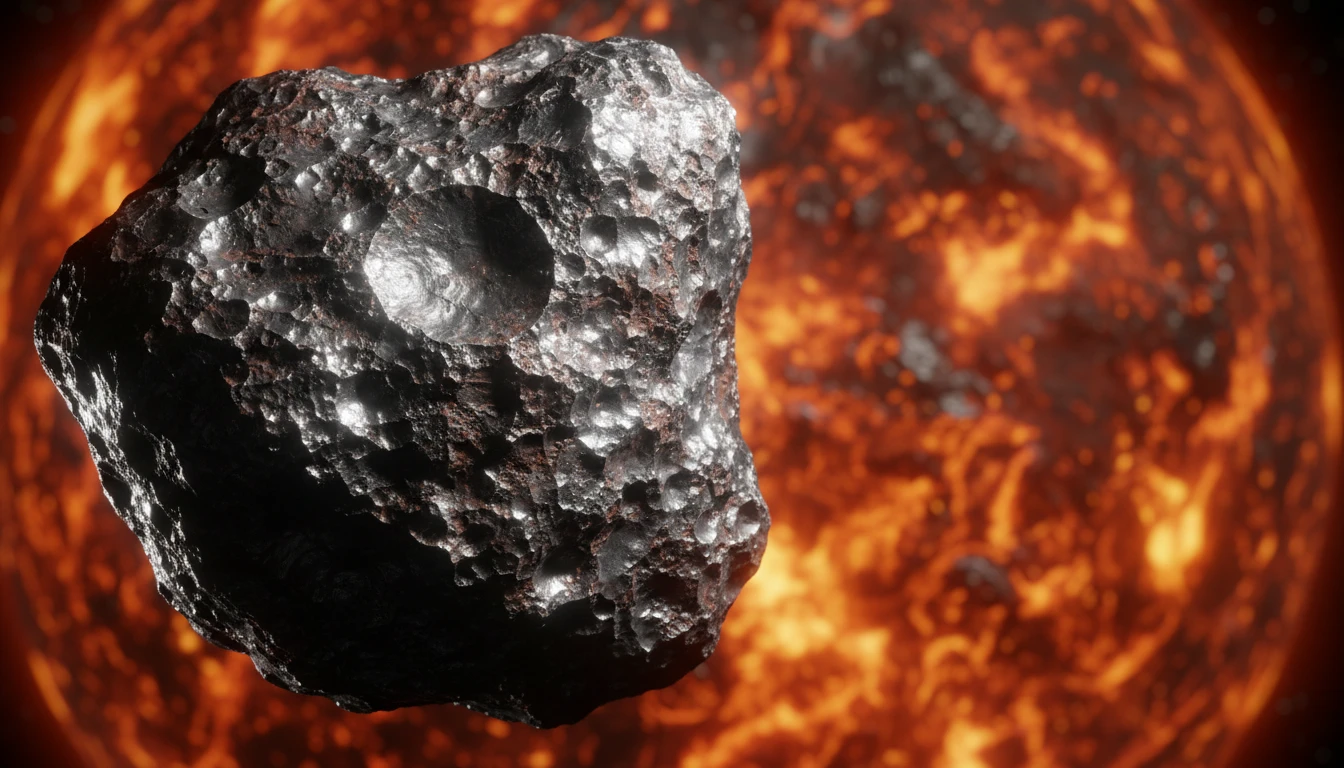
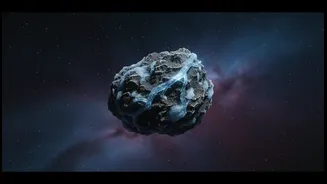
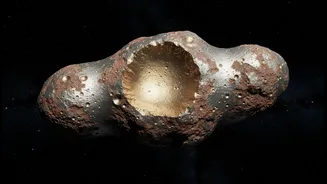
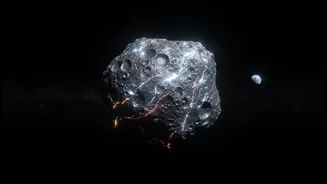
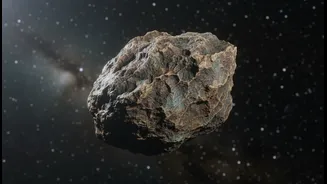
Most asteroids are rocky or icy, but 16 Psyche is different. Located in the main asteroid belt between Mars and Jupiter, it is a massive, metal-rich object spanning over 220 kilometers in diameter. For years, scientists theorized it could be the exposed
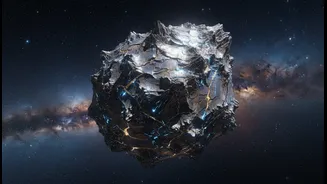
iron-nickel core of a protoplanet, a small celestial body that never quite formed into a full planet. While newer observations suggest a more complex mixture of metal and rock, with metal making up an estimated 30% to 60% of its volume, it remains an extraordinary object. This composition makes Psyche a tantalizing target, not just for scientific study, but for the long-term prospect of resource extraction.
The Journey to a Metal World
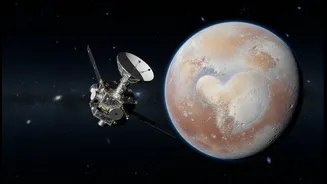
To unravel its mysteries, NASA launched the Psyche spacecraft in October 2023. This is not a mining mission, but a scientific expedition to understand the origin of planetary cores. After a long journey, the spacecraft successfully performed a gravity-assist maneuver by flying past Mars on May 15, 2026. This slingshot effect increased its speed and adjusted its trajectory, putting it on a direct path to the asteroid. The spacecraft is scheduled to arrive at 16 Psyche in August 2029, where it will spend nearly two years orbiting and studying the asteroid’s composition, magnetic field, and history.
A Potential Bonanza for Manufacturing
The excitement from an industrial perspective stems from the sheer quantity of metals Psyche is believed to hold. Key manufacturing metals like iron and nickel, along with more precious ones like platinum and gold, are thought to exist in vast amounts. If these resources could be retrieved, they could fundamentally alter manufacturing. An abundant supply of nickel would be a game-changer for battery production and stainless steel, while a flood of iron could impact everything from construction to automotive manufacturing. Platinum group metals are crucial for electronics and as catalysts in chemical processes. An influx of these materials could slash production costs, enable new technologies, and reduce reliance on terrestrial mining, which often carries significant environmental and geopolitical baggage.
The Quadrillion-Dollar Asteroid? A Reality Check
You may have seen headlines valuing Psyche's metals at quintillions of dollars, a figure that dwarfs the entire global economy. While a fun thought experiment, this number is economically misleading. It's calculated by multiplying the estimated mass of metals by their current, Earth-based prices. In reality, flooding the market with such a colossal amount of material would cause prices to crash, completely devaluing commodities and potentially wrecking the economies of countries dependent on mining. The real value, at least for the foreseeable future, lies not in bringing metals back to Earth, but in using them in space. Establishing in-space manufacturing, where resources are mined and used to build spacecraft, habitats, and fuel depots without the immense cost of launching them from Earth, is a more probable first step.
The Immense Challenges Ahead
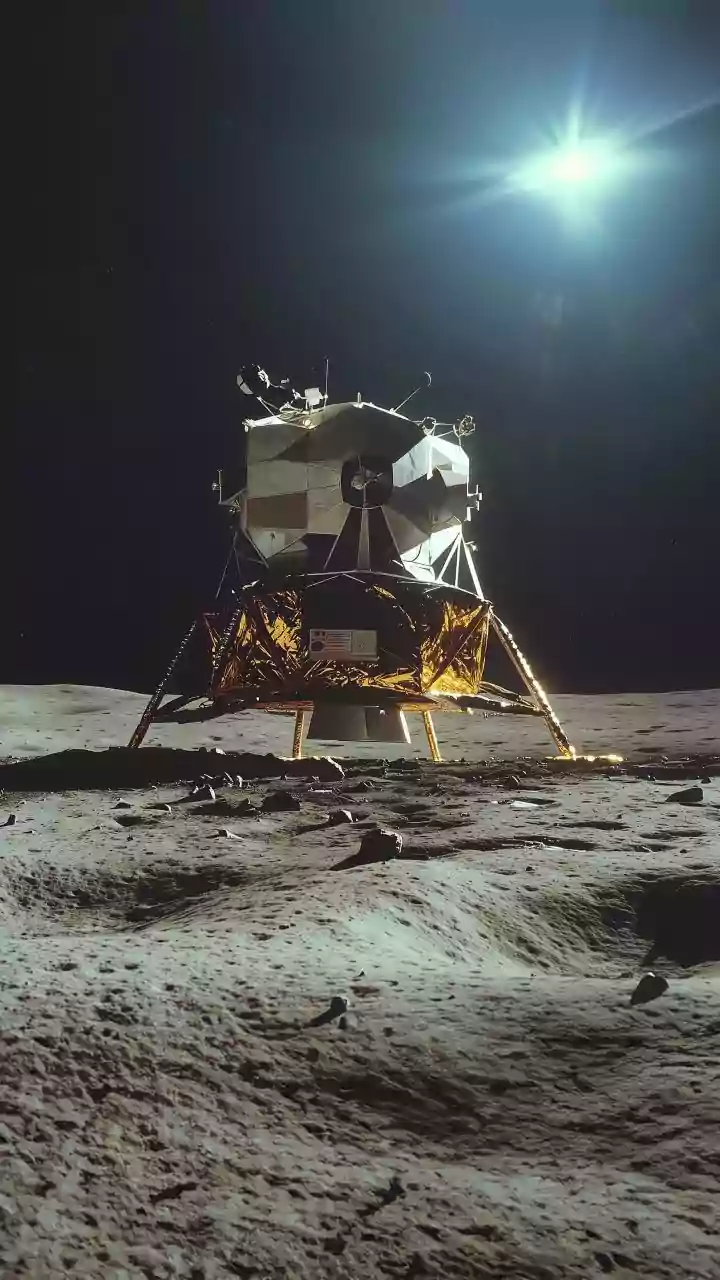
Even with a clear target, the path to asteroid mining is fraught with difficulty. The technology to autonomously mine, process, and transport materials on a large scale in deep space does not yet exist. The cost of such an endeavor is astronomical, far beyond what private companies can currently finance without government-level investment. Then there are the logistical nightmares: operating robotic equipment in zero gravity, dealing with abrasive dust, and the simple, vast distance between the asteroid belt and Earth. These hurdles mean that while the Psyche mission is a crucial first step in understanding these metal worlds, a commercial mining operation is still decades away at best.