





Start With a Ruthless Declutter
Before you can organise, you must simplify. The most effective first step is always to get rid of what you no longer need, use, or love. A cluttered room often has more to do with having too much stuff than having too little space. Be honest with yourself
about each item. If it doesn't serve a purpose or bring you joy, it's time for it to go. This single act costs nothing but has the most significant impact on creating a more spacious environment. Aim to reduce your belongings before you even think about buying storage containers.
Embrace the Four-Box Method
To make decluttering less overwhelming, try the four-box method. Label four boxes: 'Keep', 'Donate/Sell', 'Store', and 'Trash'. Go through your room section by section, placing every single item into one of the boxes. This systematic approach forces you to make a decision about everything you own. The 'Store' box is for seasonal items or things you don't need daily, which can be placed in less accessible spots. Be strict with the 'Keep' box—it should only hold things that are essential or truly valued.
The Golden Rule: Think Vertically
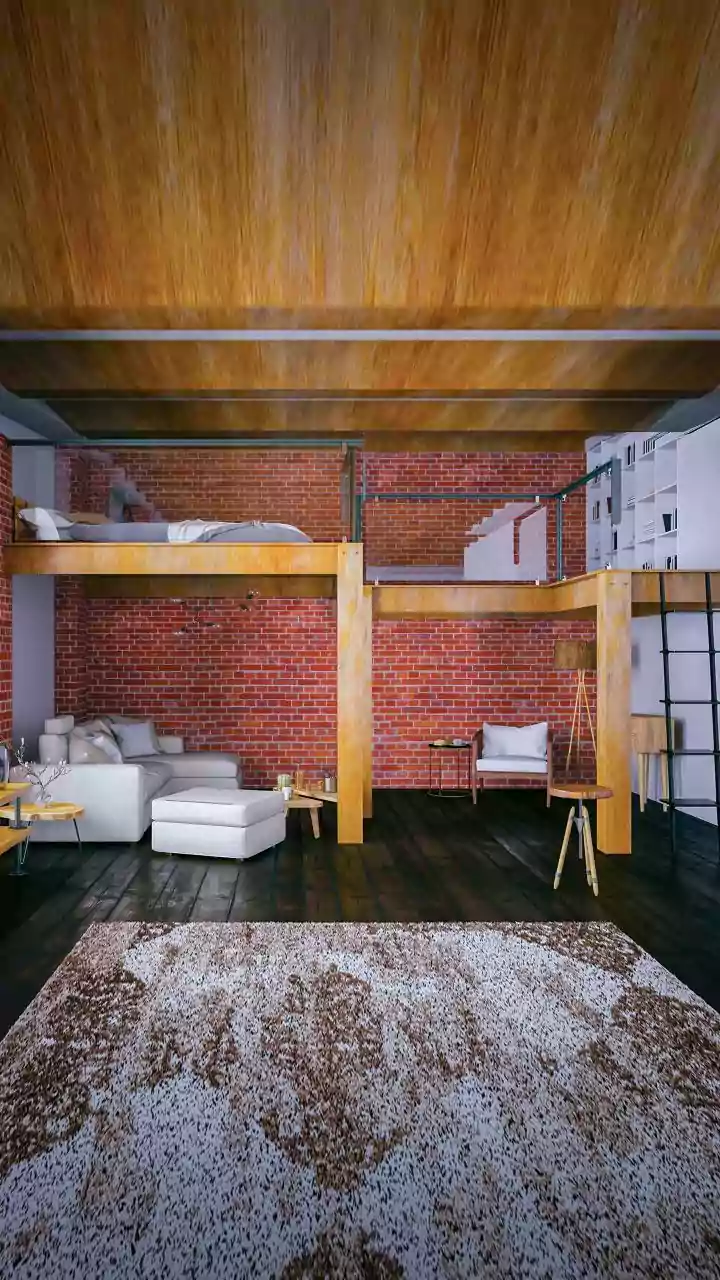
The single biggest mistake in organising a small room is ignoring the walls. Most people fill the floor and forget about the vast, empty space above their furniture. When floor space is a premium, building upward is the only logical solution. Vertical storage draws the eye upward, making the room feel taller and more open. From shelves to hanging organisers, using your walls effectively can practically double your storage capacity without taking up another square inch of the floor.
Floating Shelves and Tall Bookcases
Floating shelves are a young person’s best friend. They are stylish, minimalist, and perfect for holding books, plants, and decor without the bulk of traditional furniture. Install them above your desk, bed, or even your doorway. Similarly, opt for tall, narrow bookcases instead of wide, sprawling ones. These pieces offer a huge amount of storage while occupying a minimal footprint, making them ideal for small rooms where every bit of floor is precious.
Utilise Over-the-Door Organisers
The back of your door is one of the most underutilised storage spots in any room. An over-the-door organiser with pockets is incredibly versatile. In the bedroom, it can hold shoes, accessories, or toiletries. In a study area, it can be used for stationery and supplies. This simple addition creates an entire column of storage out of thin air, keeping items off your desk and floor.
Multi-Functional Furniture is Key
In a small space, every piece of furniture should work hard. Investing in multi-functional items is one of the smartest decisions you can make. A bed with built-in drawers or hydraulic storage can eliminate the need for an extra cupboard, freeing up valuable floor space. An ottoman with a removable lid can serve as a seat, a footrest, and a hidden storage chest for blankets or magazines. A sofa-cum-bed is another classic choice for those who need to accommodate guests.
Stackable Bins and Under-Bed Storage
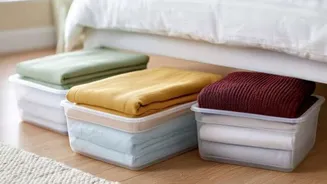
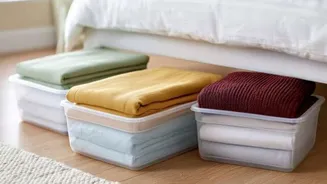
The space under your bed offers a wealth of storage potential. Use sleek, rolling bins or vacuum-sealed bags to store seasonal clothing, extra bedding, or luggage. For closets and open shelves, stackable containers are a game-changer. Choose clear bins so you can easily see what’s inside, or use labels to keep track of everything. Stacking creates vertical storage inside your existing furniture, instantly maximising efficiency.
Create Designated 'Zones'
A small room often has to serve multiple purposes: sleeping, studying, and relaxing. To maintain order, create designated zones for each activity. Use a small rug to define a seating area, arrange your desk and shelves to create a clear study nook, and keep your bed area calm and clutter-free. This psychological separation helps contain messes. When every item has a 'home' within its zone, you're far more likely to put things back where they belong, preventing clutter from taking over the entire room.