
Embracing the Monsoon Challenge
Let's be realistic: August is a tricky month for stargazing in most of India. The monsoon clouds are the biggest hurdle for any aspiring astronomer. However, this season also brings a unique advantage. A clear night immediately following a heavy rain
shower can offer exceptionally transparent skies, as the rain washes dust and pollutants from the atmosphere. These post-rain windows are precious and provide viewing quality that can rival drier seasons. While most of the country plays a game of chance with the weather, some regions offer more reliable conditions. The high-altitude deserts of Ladakh and the Spiti Valley, which lie in a rain-shadow, remain India’s premier destinations for clear August skies. For those elsewhere, the key is to be prepared and seize the moment when the clouds part.
Last Call for the Perseid Meteor Shower
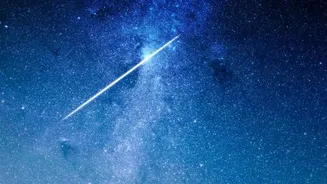
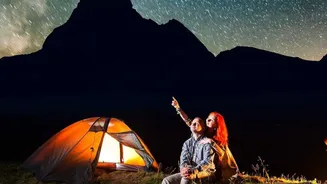
The spectacular Perseid meteor shower had its peak on August 12-13, with a moonless sky providing a stunning display. But the show isn't over yet. The shower remains active until around August 24, meaning you still have a chance to witness these shooting stars. While the rate of meteors will be lower than the peak, you can still catch several bright streaks per hour. For the best experience, find a location away from city lights after midnight. Lie back, let your eyes adapt to the darkness for about 20-30 minutes, and look towards the northeast. No special equipment is needed; the Perseids are best viewed with the naked eye, allowing you to take in a wide expanse of the sky. Patience is your best tool here, so get comfortable and enjoy one of nature's finest light shows.
The Rise of the Ringed Planet, Saturn
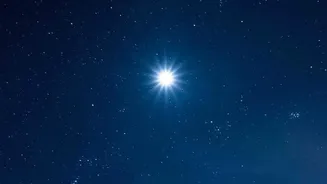
As the Perseids fade, a new headliner takes the stage: the planet Saturn. While its official opposition—the point where it is brightest and closest to Earth for the year—is on October 4, late August marks the beginning of its prime viewing season. The ringed planet is now rising in the east around sunset and remains visible throughout the night, making it an easy and rewarding target. You don't need a professional telescope to spot it; its steady, yellowish light distinguishes it from the twinkling stars. Even a good pair of binoculars will stabilize the view, and a basic telescope can begin to reveal its iconic rings, a sight that captivates every observer. For the rest of 2026, Saturn will be a prominent fixture in our evening sky, and your observing journey can start now.
Planets, the Moon, and Managing Expectations
Beyond Saturn, other planets are still making appearances. Mars and Jupiter can be spotted in the pre-dawn sky, a lingering sight from the planetary parade earlier in the month. Now, a word of caution. You may have heard about a partial lunar eclipse on August 28. It is important to know that this eclipse will not be visible from anywhere in India. Managing expectations is key in astronomy, and knowing what you can't see is as important as knowing what you can. The Moon itself will be waxing through the rest of the month, meaning its light will increasingly brighten the night sky. This makes it a great object to observe on its own but will make it harder to see fainter stars and meteors as we approach the full moon at the end of August.
Your Essential Stargazing Toolkit
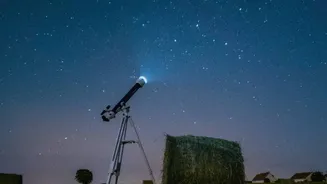
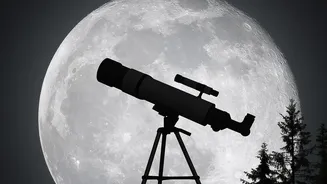
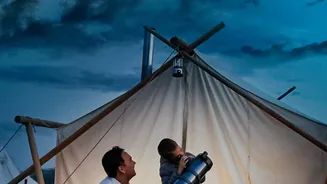
Getting started in astronomy requires less than you might think. Your most powerful tool is likely already in your pocket. A good stargazing app can transform your smartphone into a planetarium. Apps like Stellarium Mobile, Star Walk 2, and SkyView use your phone's sensors to identify stars, constellations, and planets in real-time. For a uniquely Indian perspective, the Bhagol app provides star names and constellation maps from Indian astronomical traditions. Before you head out, always check two things: the weather forecast and the moon phase. Choose a clear night and, for deep-sky objects, one where the Moon is not too bright. A pair of binoculars is a fantastic first instrument, revealing far more than the naked eye without the complexity of a telescope. Most importantly, find a comfortable spot, dress for the weather, and give yourself time to simply enjoy the view.