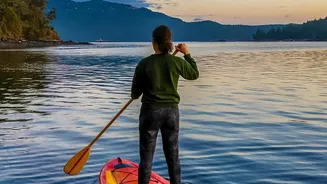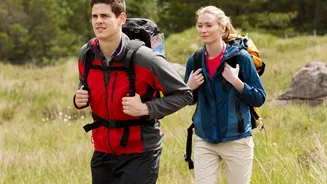



Choosing between a serene glide across the water and a rugged trek through the hills? Both paddleboarding and hiking offer fantastic workouts, but they challenge your body in remarkably different ways. So, which one is right for your fitness goals?
The Cardiovascular Question: Gentle Pulse or Steady Climb?
The
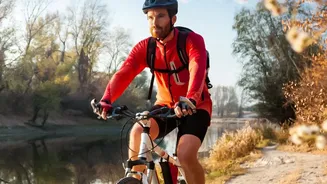
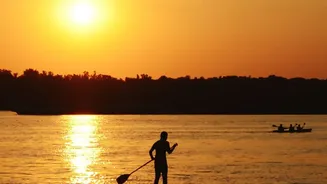
core of the headline’s claim lies in the type of cardio each activity provides. Stand-up paddleboarding (SUP) is often described as a low-impact, full-body workout. While you can certainly push the intensity, a typical recreational paddle keeps your heart rate in a moderate, steady zone. It provides a 'gentle' cardio session because the effort is distributed across your entire body—arms, back, and shoulders for paddling; core and legs for balance. This makes it an excellent choice for those who want to improve cardiovascular health without putting major stress on their joints. Hiking, on the other hand, is the definition of sustained aerobic exercise. It’s a weight-bearing activity that primarily taxes your leg muscles and cardiovascular system, especially when tackling varied terrain and inclines. This sustained effort over long durations is ideal for building a strong aerobic base and improving stamina—your body’s ability to perform physical activity for longer periods without getting tired.
Muscle Engagement: Total Body Tone vs. Lower Body Power
Paddleboarding’s biggest advantage is its comprehensive muscle engagement. To stay balanced on an unstable board, your core—including your abs, obliques, and lower back—is constantly firing. Every paddle stroke works your lats, shoulders, and arms. Meanwhile, your legs and glutes are continuously making micro-adjustments to maintain stability, providing a surprising lower-body workout. The result is a unique combination of strength, balance, and stability training in one activity. Hiking is predominantly a lower-body powerhouse. It builds serious strength in your glutes, quadriceps, hamstrings, and calves, which do the heavy lifting on inclines and declines. Your core is also engaged to maintain posture and stability on uneven ground, particularly when carrying a backpack. While your upper body is less involved than in paddleboarding, carrying a pack will engage your back and shoulders. So, if your goal is building powerful legs and endurance, hiking has a clear edge.
Calorie Burn: The Great Outdoor Debate
When it comes to burning calories, the intensity is what matters most. For a casual, hour-long session, both activities are surprisingly comparable. A relaxed paddle can burn between 300 and 500 calories, depending on your pace and water conditions. A moderate hike burns a similar amount, often in the range of 400 to 600 calories per hour, with the exact number influenced by terrain difficulty and the weight of your backpack. However, both can be scaled for a much tougher workout. Vigorous paddleboarding, like racing or paddling against wind and currents, can burn over 700 calories an hour. Similarly, a strenuous hike up a steep mountain can easily surpass that figure. A leisurely paddle is roughly equivalent to a brisk hike, but a high-intensity session in either sport rivals activities like running.
Accessibility, Cost, and Injury Risk
Hiking is one of the most accessible outdoor activities. All you need is a good pair of shoes and a local trail. While you can invest in more gear, the barrier to entry is very low. The primary injury risks are joint_related, particularly in the knees and ankles from the repetitive impact of walking on hard or uneven surfaces. Paddleboarding requires access to a body of water and more specialized equipment—a board, paddle, and a personal flotation device. This can represent a higher initial cost, though rentals are widely available. The major benefit of paddleboarding is that it is a low_impact exercise, making it exceptionally gentle on the joints and a great option for people with knee or hip issues or those recovering from certain injuries. The main challenge for beginners is balance, but it is a skill that develops quickly.