




The Genetic 'Dark Matter' Problem
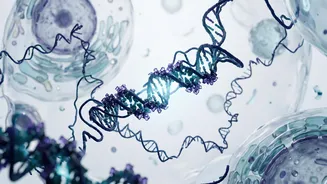
For decades, scientists have focused on the 2% of our DNA that contains genes, the direct blueprints for the proteins that build and run our bodies. The other 98%, often dismissed as 'junk DNA', has remained one of biology's greatest mysteries. We now
know this non-coding DNA is anything but junk. It's the genome's vast and complex control panel, filled with millions of switches, dials, and instructions that tell genes when and where to turn on or off. However, figuring out how this regulatory system works has been incredibly difficult. A tiny mutation in this 'dark matter' can cause devastating diseases, not by breaking a gene, but by disrupting its regulation. This is the challenge DeepMind is tackling.
Enter AlphaGenome 2
Following its groundbreaking work with models like AlphaFold, which predicts protein structures, DeepMind has now launched AlphaGenome 2. This new AI model is designed specifically to interpret the non-coding genome. Where its predecessor gave broad, tissue-level predictions, AlphaGenome 2 focuses on specific cell types and states. It takes a long DNA sequence—up to one million 'letters'—and pairs it with a specific biological context, like a heart muscle cell or an immune cell. It then predicts how that DNA sequence behaves in that exact environment, offering a much more granular and useful view of gene activity. This leap in precision is critical because the same DNA sequence can have vastly different functions depending on the cell it's in.
Decoding the Switches and Dials
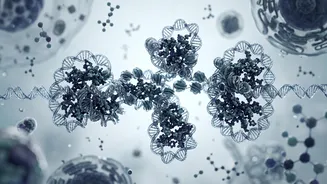
At its core, AlphaGenome 2 works by learning the 'language' of the genome. Trained on enormous public datasets of human and mouse genetics, including over 100 million individual cell profiles from the Human Cell Atlas, the model learns to identify patterns. It predicts a wide range of regulatory properties simultaneously, such as which parts of the DNA are accessible, where proteins are binding to it, and how the DNA is folded in three-dimensional space. Crucially, the new version adds the ability to predict DNA methylation, a key epigenetic process where environmental factors can influence gene activity. By comparing its predictions for a normal DNA sequence versus one with a mutation, the model can score the impact of that genetic variant, essentially flagging which 'typos' are harmless and which could disrupt the entire system and lead to disease.
A New Map for Disease Research
The implications for understanding and treating complex genetic diseases are profound. Many conditions, including various cancers, autoimmune disorders, and heart diseases, are linked to faults in gene regulation rather than in the genes themselves. AlphaGenome 2 provides a powerful tool to pinpoint these regulatory variants. In early benchmarks focused on immune cells, AlphaGenome 2 nearly doubled the rate of identifying causal variants compared to the previous model. For researchers, this means they can more effectively sift through millions of potential genetic culprits to find the ones most likely to be driving a disease. This doesn't replace lab work, but it dramatically accelerates it, helping scientists prioritise which leads to pursue for developing new drugs and diagnostics.
The Road to Personalised Medicine
While AlphaGenome 2 is a research tool and not approved for clinical diagnosis, its launch marks a significant step toward the future of personalised medicine. By providing a clearer picture of how an individual's unique genetic makeup influences gene activity, tools like this pave the way for treatments tailored to a person's specific regulatory landscape. The ability to predict the function of a mutation before running costly and time-consuming experiments could revolutionise drug discovery. It allows scientists to generate better hypotheses about the mechanisms of disease and focus their efforts where they are most likely to pay off. This new, higher-resolution view of our genetic control panel brings us closer to an era where medicine is not just about treating symptoms, but about understanding and correcting the root genetic cause.