


Reclaiming the Night
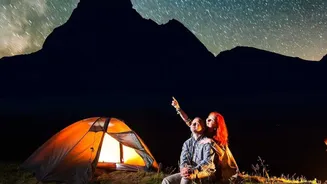
At its core, dark-sky tourism involves travelling to locations with minimal light pollution to experience the night sky in its natural, breathtaking glory. As cities expand and their glow washes out the stars for an estimated 80% of the world's population,
people are increasingly seeking out these pockets of pristine darkness. Destinations earn titles like 'Dark Sky Reserve' or 'Park' from bodies like the International Dark-Sky Association by committing to responsible lighting practices that protect this natural resource. This isn't just about finding a pretty view; it's a conscious choice to reconnect with a fundamental part of our environment that has been lost to modernity, offering a chance to see the cosmos as our ancestors did for millennia.
A Classroom Under the Cosmos
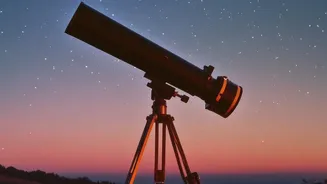
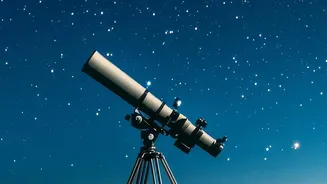
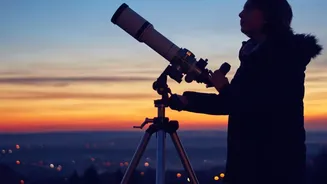
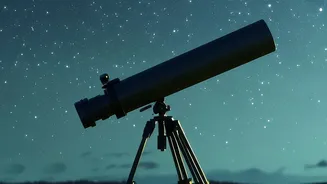
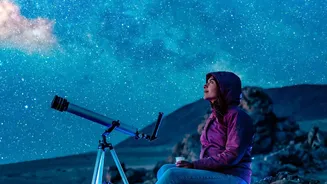
The scientific dimension of dark-sky travel is immediate and powerful. In a designated reserve, the Milky Way isn't a faint smudge but a brilliant, sprawling river of light. Visitors can witness meteor showers, spot distant galaxies with the naked eye, and see planets in detail through telescopes. Many of these destinations are built around observatories or offer guided astronomy sessions, turning a holiday into an immersive educational experience. It’s a chance to grasp the sheer scale of the universe in a way that no textbook or documentary can convey. This direct engagement sparks curiosity and a deeper appreciation for astronomy and the natural sciences, reminding us of our place within the vast cosmic landscape.
Echoes of Ancient Stargazers
Long before screens and satellites, the night sky was humanity’s original calendar, compass, and storybook. Dark-sky travel offers a profound cultural connection by allowing us to see the same celestial panorama that guided ancient navigators and inspired myths across civilizations. Many dark-sky tourism initiatives incorporate this heritage, blending scientific observation with cultural storytelling. Learning about the constellations and the legends woven around them provides a tangible link to our shared human history. It’s an opportunity to understand how stars shaped belief systems, agriculture, and art, turning a view of the sky into a journey through time.
The Deep Luxury of Solitude
Perhaps one of the most compelling draws of dark-sky destinations is the profound sense of peace and isolation they offer. These locations are, by necessity, remote and far from the clamour of urban life. This provides the perfect environment for a digital detox and a mental reset. Studies have shown that experiences of awe, like those prompted by a vast, starry sky, can reduce stress and improve emotional well-being. The quiet stillness of a dark-sky location, combined with the meditative act of stargazing, fosters mindfulness and perspective. This unique form of scenic isolation is a powerful antidote to the pressures of a hyper-connected world, promoting better sleep and a renewed sense of calm.
India’s Celestial Sanctuary: Hanle
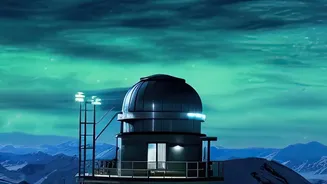
For those in India, this unique blend of experiences is closer than you might think. The Hanle Dark Sky Reserve in Ladakh, situated over 4,500 metres high in the Changthang region, is India's first such designated area. Anchored by the Indian Astronomical Observatory, the region's pristine skies are protected to support both scientific research and community-led astro-tourism. Here, the three pillars of dark-sky travel converge perfectly. Visitors can engage with cutting-edge science at the observatory, experience the profound quiet of the high-altitude desert, and connect with a landscape where the sky has held deep cultural significance for centuries. Hanle is a prime example of how protecting the night sky creates a sustainable and deeply meaningful travel destination.