


A Digital Brain for the Moon
In early September 2026, NASA and IBM unveiled a groundbreaking tool called the NASA-IBM Lunar Foundation Model. Think of it as a specialized digital brain, trained exclusively on the Moon. It has been fed petabytes of information—that’s millions of gigabytes—from
decades of lunar missions, including high-resolution images and data from NASA's Lunar Reconnaissance Orbiter and other international spacecraft. Unlike older methods that required scientists to manually piece together information from different sources, this AI model can understand and connect all of it at once. Best of all, it has been released as an open-source tool, meaning scientists and space agencies around the world can use and adapt it for free.
Solving a Decades-Old Data Puzzle
For years, space exploration has faced a 'good' problem: too much data. Various missions have captured the Moon's surface using different cameras, sensors, and instruments, resulting in a massive, disjointed library of information. Analysing this data was a painstaking and slow process, often relying on task-specific programs that couldn't see the bigger picture. The new lunar AI model solves this by harmonizing these disparate datasets into one coherent framework. It can see patterns and relationships across different types of observations that a human might miss, effectively acting as a super-powered research assistant. This allows scientists to move from tedious data processing to what really matters: interpretation and discovery.
The Search for Water and Safe Harbours
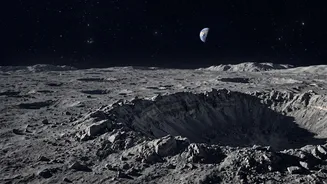
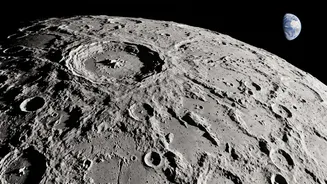
The immediate impact of this AI is on two of the most critical goals of modern lunar exploration: finding water ice and ensuring safe landings. The model is exceptionally good at predicting where water ice might be hidden, particularly in the permanently shadowed craters of the lunar poles. These regions are vital because water can be converted into breathable oxygen and rocket fuel, resources essential for a future Moon base. The model has already proven to be up to 22% more accurate at this task than previous methods. Furthermore, it can map the Moon's vast landscape of craters with incredible speed and precision. This helps scientists date the lunar surface and, more practically, identify smooth, hazard-free zones for future robotic and human landings.
A Boost for India’s Lunar Ambitions
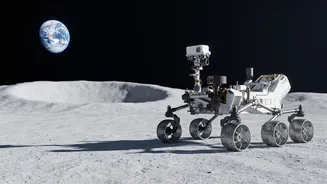
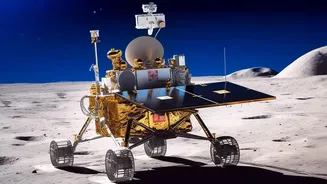
For India, this technological leap comes at a perfect time. ISRO has already demonstrated its expertise in using artificial intelligence with the historic Chandrayaan-3 mission. AI algorithms were crucial for guiding the Pragyan rover, helping it navigate the lunar surface and avoid obstacles. AI was also used to analyse data from Chandrayaan-2's orbiter to help select a safe landing zone. The availability of a powerful, open-source tool like the NASA-IBM model can significantly amplify these efforts. Indian scientists can now leverage this global resource to enhance future Chandrayaan missions, potentially accelerating the analysis of landing sites, the search for resources, and the overall scientific return. It provides a sophisticated foundation upon which ISRO can build its own specialised tools, making future missions even more efficient and ambitious.