


How Plants Help
Certain indoor plants, particularly those native to tropical regions, are uniquely adapted to absorb moisture through their leaves, a process known as foliar absorption. While all plants release some moisture through transpiration, these specific types
can help balance the humidity levels in a room, making them natural, living dehumidifiers. They are most effective in smaller, enclosed spaces with high ambient moisture, such as bathrooms and kitchens.
1. Peace Lily (Spathiphyllum)
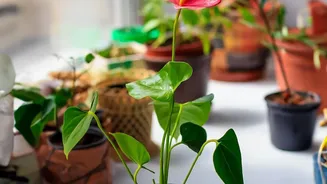
With its elegant white blooms and glossy, dark green leaves, the Peace Lily is more than just a decorative plant. It thrives in high humidity and absorbs moisture from the air through its large leaves. It’s also known for its air-purifying qualities, making it a double-duty hero for indoor spaces. Peace Lilies prefer moderate, indirect light and consistently moist soil, making them well-suited for the lower-light conditions of many apartments. Note that they can be toxic to pets if ingested.
2. Boston Fern (Nephrolepis exaltata)
The Boston Fern, with its lush, feathery fronds, is a classic choice for adding a touch of green. These plants are moisture-loving and are particularly effective at absorbing humidity, which is why they thrive in steamy bathrooms. They prefer bright, indirect sunlight and consistently damp soil. If the fronds start to turn yellow or brown at the tips, it can be a sign that the air is too dry, indicating the plant is working to absorb whatever moisture it can get.
3. Snake Plant (Sansevieria trifasciata)
Known for being nearly indestructible, the Snake Plant is a versatile option for any home. While some plants release humidity, the Snake Plant is a succulent that can help manage moisture levels. Its thick, waxy leaves are built for resilience and can absorb excess airborne moisture in humid environments. It’s an incredibly low-maintenance plant that tolerates low light and infrequent watering, making it perfect for beginners and busy apartment dwellers.
4. Spider Plant (Chlorophytum comosum)
The adaptable Spider Plant is another excellent, low-maintenance choice that helps manage indoor air. Its arching leaves are effective at absorbing moisture from the air. While some sources note they can also release humidity in dry conditions, their primary function in a damp environment is to absorb excess moisture. They are famously easy to care for, thriving in a range of light conditions and being non-toxic to pets, making them a safe and versatile addition to any room.
5. Areca Palm (Dypsis lutescens)
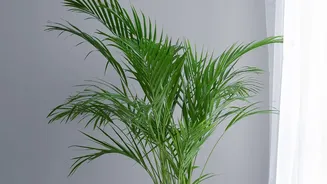
If you have the space, the Areca Palm brings a tropical feel indoors and acts as a fantastic natural dehumidifier. Its large, feathery fronds have a wide surface area, allowing them to absorb a significant amount of moisture from the atmosphere. Areca Palms are also recognised for their ability to purify the air by removing common toxins. They prefer bright, indirect light and regular watering to keep their soil lightly moist.
Beyond Plants: The Power of Clay
Complementing your green dehumidifiers are simple, effective clay units. Materials like terracotta and diatomaceous earth are naturally porous and excellent at absorbing moisture. Diatomaceous earth, made from fossilised algae, has a microscopic, sponge-like structure that rapidly soaks up water and helps prevent mould and odours. You can find diatomaceous earth in blocks, coasters, or as a loose powder to place in small bowls in closets and under sinks. Similarly, unglazed terracotta, the same material as common plant pots, is porous and can passively absorb ambient humidity. Placing terracotta objects or even empty pots in damp corners can help draw moisture out of the air.