







The Bold Prediction and Its Source
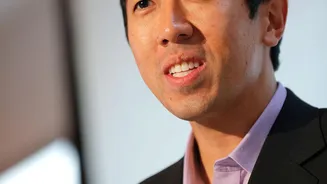
Dario Amodei, the CEO of AI company Anthropic, recently made a startling claim: major diseases including cancer, Alzheimer's, and heart disease could become 'relics of the past' in less than a decade. This prediction, made in an investor video, frames
artificial intelligence as the key to unlocking an 'age of miracles'. Anthropic, the developer of the AI model Claude, is a major player in the AI industry, positioning itself as a leader in both capability and safety. The claim is not entirely new for Amodei, who has previously argued that AI could accelerate biological progress by a factor of ten, effectively compressing 50 to 100 years of research into just five or ten. This vision places him alongside other tech titans, like Google DeepMind's CEO, who also foresee AI dramatically shortening the drug development timeline.
How AI Promises to Tackle Cancer
The core of this optimism lies in AI's ability to process and find patterns in overwhelmingly large and complex datasets. In oncology, this has several profound implications. AI models can accelerate drug discovery by screening vast libraries of chemical compounds to find promising candidates, a process that once took years. Furthermore, AI is being used to design entirely new molecules and predict how proteins will fold—a fundamental aspect of biology, famously demonstrated by DeepMind's AlphaFold. This could lead to more precise therapies. Instead of blunt instruments, future treatments could be highly personalized, with AI helping to match the right drug to the right patient by analyzing their specific genetic makeup and tumor characteristics. Some research is even focused on using AI to design molecular sensors that could detect cancer at its earliest stages through a simple urine test.
Today's Reality: AI in the Clinic
While a complete cure remains a distant goal, AI is already an active and growing partner in cancer research and treatment. Machine learning models are currently used to analyze medical images like pathology slides, helping doctors detect cancer more accurately. In drug development, AI is helping to make the process faster and cheaper. For example, Anthropic has partnered with biotech firms to redesign parts of cell therapies, making them more effective at killing tumor cells in lab tests. AI is also streamlining clinical trials by identifying the best patients for participation and extracting insights from massive volumes of scientific literature. These applications are moving the needle, but they represent incremental progress rather than the revolutionary leap needed for a 'cure'.
The Mountain of Hurdles Ahead
Amodei's prediction has been met with significant skepticism from the medical community. Critics point out that cancer is not one disease but hundreds, each with complex biology. A discovery in a lab is only the first step. Promising drug candidates must still undergo years of rigorous and expensive clinical trials to prove they are both safe and effective, a process AI cannot bypass. There are also immense logistical and ethical challenges. AI models are only as good as the data they are trained on, and biased data can lead to biased results that worsen health disparities. Patient data privacy is a major concern, and regulatory bodies need to create frameworks that ensure safety without stifling innovation. Many medical experts have dismissed the 10-year timeline as impossible, with some suggesting it is more about generating hype for a potential IPO than a realistic medical forecast.