







The Constant Hunt for a Charger
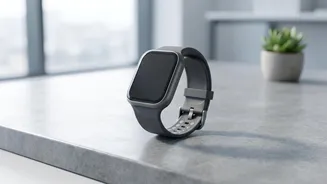
Wearable electronics have become a massive part of daily life, from tracking our steps and heart rate to delivering notifications straight to our wrists. As these devices become more powerful and essential, their biggest limitation becomes more apparent:
battery life. The need for constant charging interrupts their core function, especially for devices designed for continuous health monitoring. This reliance on batteries not only affects convenience but also limits the potential for more advanced, seamless medical sensors that could operate without interruption for weeks or even months.
Your Body as a Power Plant
The solution, according to a growing number of scientists, is to turn the human body into a personal power station. This is achieved using thermoelectric generators, or TEGs. The core principle is a 19th-century discovery known as the Seebeck effect. This phenomenon states that when two different conductive materials are joined together and there is a temperature difference between them, an electrical voltage is created. In the context of wearables, the TEG harnesses the temperature difference—or gradient—between your warm skin (around 37°C) and the cooler ambient air. This steady thermal gradient provides a constant, if small, source of energy.
The Science of a Skin-Powered Generator
A wearable TEG is essentially a small, flexible film containing an array of semiconductor 'legs'. These are sandwiched between two substrates. When worn, the side touching your skin gets warm, while the outer side remains cooler. This temperature difference causes electrons in the semiconductor material to move from the hot side to the cold side, creating an electrical current. The biggest challenge has always been that for this to work effectively, you need a significant temperature difference. Early TEGs were rigid and inefficient, as the heat from the skin would often pass straight through the device without creating a useful gradient.
Breakthroughs in Flexibility and Efficiency
Recent innovations are overcoming these hurdles. Researchers have developed new materials and device structures that are changing the game. One major advance involves creating flexible, stretchable devices using materials like liquid metal and soft polymers, which can conform perfectly to the skin for better heat transfer and comfort. Another groundbreaking approach, developed by scientists at Seoul National University, uses a special substrate that redirects heat flow. Instead of letting heat escape vertically, it forces the heat to travel horizontally across the device, which artificially creates the necessary temperature difference to generate power even in a very thin, flat film. This makes the devices more practical and less bulky.
Beyond Charging Your Watch
While the idea of a self-charging smartwatch is appealing, the power generated by current TEG prototypes is still quite small—often measured in microwatts. While it may not be enough to power a phone just yet, it is sufficient for many low-power sensors. The most exciting applications are in the medical field. Imagine 'implant-and-forget' devices like continuous glucose monitors, pulse oximeters, or ECG patches that never need a battery change. This would ensure uninterrupted monitoring of vital signs, revolutionising remote patient care. This technology could also power sensors in 'smart clothing' or even in industrial settings, harvesting waste heat from machinery to run monitoring equipment.
What Does the Future Hold?
The path to a fully body-powered world of electronics is still under construction. The key challenges are to improve the energy conversion efficiency, reduce the cost of materials, and ensure the devices are durable enough for long-term wear. Teams of scientists around the world are experimenting with novel nanostructured materials and ink-based printing processes to create scalable and cost-effective solutions. The progress is rapid, with recent prototypes demonstrating significant increases in power density and resilience, capable of functioning even after thousands of stretches. As this technology matures, it promises not only to free us from the charger but also to enable a new generation of truly seamless, integrated wearable technology.