





The Rise of the AI Auditor
The sheer volume of scientific research is staggering, with millions of new articles published every year, making it impossible for human researchers to keep up. This is where AI auditors come in. These sophisticated systems use machine learning and natural
language processing to systematically scan vast libraries of scientific papers, datasets, and reference materials. They function as an powerful second pair of eyes, cross-referencing information and flagging inconsistencies at a scale no human could ever manage. A recent and striking example involved a chemist at Zhejiang Lab whose AI model was predicting molecular boiling points. When the AI's results clashed with a 75-year-old reference database, a manual check revealed the database, not the AI, was wrong.
How AI Uncovers Hidden Flaws
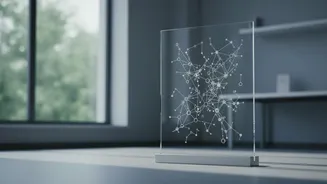
These AI agents aren't just spell-checking. They are trained to perform complex analytical tasks. Some tools specialize in checking for statistical errors, using systems like Statcheck to verify if the reported statistics in a paper are mathematically sound. Others create vast, visual maps of citations to see how research evolves and to spot influential or anomalous connections between studies. They can also check for reproducibility, a cornerstone of good science. In a recent audit of papers from a major machine learning conference, AI agents attempted to re-run the experiments described, finding that a significant number could not be easily reproduced due to issues like missing code or inconsistent results. This highlights a growing reproducibility crisis that AI can help quantify and address.
Why Older Research is a Prime Target
While auditing new papers is important, examining older, foundational research can have a massive impact. An error made long ago can be copied and cited for years, eventually becoming accepted as fact simply through repetition. These mistakes can be simple typos in data tables or incorrect values from century-old measurements that have been carried forward without question. The AI that discovered the boiling-point error also surfaced other mistakes in older papers and reference books, showing this was not an isolated incident. By identifying these foundational errors, AI helps correct the scientific record at its roots, ensuring that future research is built on a more stable and accurate base. This process turns scientific publishing from a one-way street into a continuously updated knowledge system.
The Auditor’s Own Blind Spots
Despite their power, AI auditors are not infallible. The very technology used to spot errors can also introduce them. One of the biggest concerns with large language models has been their tendency to 'hallucinate' or generate convincing but false information, including fabricated citations. Ironically, as AI is being used to find errors, the misuse of AI by some researchers is creating a new wave of mistakes in scientific literature. Furthermore, AI detectors can have biases, such as being more likely to flag text from non-native English speakers as AI-generated. For these reasons, researchers stress that human oversight remains essential. An AI can flag a potential error, but it takes a human expert to understand the context, verify the finding, and make the final call on whether a correction is needed.
The Future of Scientific Integrity
The emergence of AI auditors represents a significant shift in how scientific integrity is maintained. Rather than replacing human peer reviewers, these tools are becoming a crucial part of the process, acting as a large-scale detection system that helps focus human attention where it's needed most. They can scan for patterns indicative of fraudulent 'paper mills' that produce low-quality studies on an industrial scale, or identify thousands of papers with AI-generated errors like fake citations. As AI tools become more sophisticated, they will likely be integrated even earlier in the research process, helping authors, reviewers, and journal editors catch mistakes before publication. This collaboration between machine-scale analysis and human intuition promises to create a more robust and reliable scientific record for everyone.