







From Chatbot to Digital Coworker
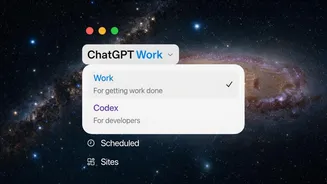
The fundamental shift we are witnessing is the evolution from conversational AI to 'agentic' AI. Until recently, using an AI model meant copying and pasting information into a chat window. A new tool from Anthropic, called Claude Cowork, represents the next
step. It’s designed to function less like a search engine and more like a digital team member that you can delegate tasks to. Unlike a chatbot, Cowork can be given access to a specific folder on your computer. From there, it can autonomously carry out multi-step instructions without you needing to guide it at every turn. This concept of an “office agent” isn’t just about one product; it’s a new category of software designed to execute tasks, manage workflows, and reduce the manual, repetitive work that fills up our days.
What Can It Actually Do?
This all sounds great in theory, but what does it mean for your daily to-do list? Imagine pointing the AI to a chaotic folder of downloaded files and asking it to sort and rename everything according to a specific project. Cowork can do that. Or consider taking photos of a dozen receipts and asking the agent to extract the information and compile it into a clean expense spreadsheet. Early examples show these agents drafting reports from scattered notes, generating slide presentations from a Word document, and keeping them updated when the source data changes. This is made possible by giving the AI specific 'Skills' and 'connectors' to interact with common office applications like Excel and PowerPoint, as well as project management tools. The AI doesn't just provide the text for a slide; it can help build the slide deck itself.
The End of Digital Drudgery
The most immediate promise of these office agents is the automation of what experts call 'knowledge work sludge'—the low-value, repetitive tasks that consume hours of our workweek. This includes data entry, generating standard reports, scheduling, and managing emails. By delegating these duties to a capable AI agent, employees can free up significant time and mental energy. The goal isn’t to replace human workers, but to augment their capabilities, allowing them to focus on high-impact activities like strategic planning, creative problem-solving, and building client relationships. This boosts not only individual productivity but also overall business efficiency, reducing errors and ensuring consistency in routine processes.
An Autonomous Planning Partner
What truly sets these agents apart is their autonomy. You don't just give them a single command; you give them a goal. The agent can then create its own multi-step plan to achieve that outcome. For example, if you ask it to 'prepare a market analysis,' the agent might first search internal documents, then pull real-time data from connected platforms, synthesize the findings, and finally draft a summary document. Recent updates have even made it possible for these tasks to run entirely in the background, without your computer even being online. You can start a task at your desk, check its progress on your phone, and get the finished product waiting for you when you log back in. This transforms the AI from a simple tool into a proactive project assistant that handles complex planning and execution.
Collaboration and the Bigger Picture
While much of the focus is on individual productivity, the long-term impact on team collaboration is just as significant. When team members use a shared AI agent like Cowork, the system maintains a collective memory and context for projects. This ensures everyone, including the AI, is working from the same playbook. Teams can delegate administrative tasks like tracking project progress or assigning sub-tasks directly to the agent, creating a more streamlined and intelligent workflow. This technology is particularly valuable for remote and hybrid teams, helping to bridge communication gaps and ensure seamless coordination across different locations and time zones.
Navigating the New Rules and Risks
Of course, giving an AI more autonomy and access to our files introduces new challenges. Security and data privacy are paramount. To address this, tools like Claude Cowork operate in a 'sandboxed' environment, meaning they can only access the specific files and folders you authorise. For particularly sensitive actions, like deleting files, the agent is designed to require explicit human permission. However, users still need to be cautious. Just as you wouldn't leave a new intern unsupervised with confidential company data, it's important to understand the permissions you grant and to use these powerful tools responsibly. Clear guidelines and human oversight remain essential components of this new working relationship.