




Why Explore Stepwells at Night?
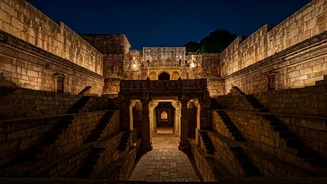
Stepwells, or 'baolis' and 'vavs', are marvels of subterranean architecture, but visiting them during the day can mean navigating crowds and enduring scorching heat. A night tour transforms the experience entirely. The absence of crowds allows for an intimate,
almost spiritual connection with the history etched into the stone. The play of moonlight and artificial light creates dramatic shadows and highlights, turning familiar structures into otherworldly landscapes. For photographers, this is a golden opportunity. The challenges of low-light photography are rewarded with uniquely atmospheric shots that are impossible to capture in harsh daylight. Cooler evening temperatures also make the exploration far more comfortable, allowing you to linger and truly appreciate the intricate craftsmanship.
Finding a Guided Photo Tour
While the idea is catching on, dedicated 'night photo tours' for stepwells are still a niche but growing trend. Your best bet is to look for them in major cities with famous stepwells, such as Delhi, Jaipur, and Ahmedabad. Search for 'heritage night walks,' 'monuments by night tours,' or 'photography workshops' run by local experts. Platforms like Instagram and Facebook are excellent resources for finding local photography groups and guides who organise these outings. Always vet your tour operator. Look for reviews, check their credentials, and ensure they have the necessary permissions to access sites after regular hours. Some tours may focus on dawn or dusk for the 'golden hour' light, which provides a similarly dramatic effect.
Iconic Stepwells to Consider
Not all stepwells are accessible at night, so planning is crucial. Here are a few that are often featured in evening explorations: * **Agrasen ki Baoli, Delhi:** Located in the heart of the city, its accessibility makes it a popular spot. While official closing times can be strict, special photo walks sometimes gain permission for extended access. Its sheer scale and the backdrop of city lights make for compelling images. * **Adalaj ni Vav, Gujarat:** This five-storey deep vav near Ahmedabad is renowned for its intricate carvings. While the site itself has official hours, its exterior and surroundings can be part of night tours that explore the region's architecture. The structure is sometimes illuminated for festivals, offering a rare chance for stunning night shots. * **Panna Meena ka Kund, Jaipur:** Near the Amber Fort, this stepwell’s symmetrical zig-zag stairs are incredibly photogenic. Its location within a major tourist hub means local guides are often familiar with the best times and angles for photography, including early morning and twilight hours that mimic the night-time feel.
Essential Photography Gear
Night photography requires more than just your phone camera. To do justice to these magnificent structures, you’ll need a few key items. A DSLR or mirrorless camera with manual settings is essential for controlling exposure. A sturdy tripod is non-negotiable; you will be using long shutter speeds to capture enough light, and any movement will result in blurry photos. A wide-angle lens (16-35mm) is perfect for capturing the grand scale of the stepwell, while a prime lens (like a 50mm f/1.8) is great for low-light performance. Don’t forget a remote shutter release or use your camera’s self-timer to avoid camera shake when you press the button. Pack extra batteries, as long exposures drain them quickly, and a small torch to help you see your camera settings and navigate in the dark.
Safety and Respectful Exploration
Exploring ancient sites in the dark comes with inherent risks. Never go alone. Always join a reputable group or hire a trusted local guide. Wear sturdy, closed-toe shoes to navigate uneven stone steps. Carry a personal torch, a fully charged phone, and a basic first-aid kit. Remember that these are protected heritage sites. Do not climb on fragile structures, leave any litter, or do anything that could damage the monument. Be mindful of local customs and quiet hours, especially for stepwells located near residential areas. Your goal is to capture beauty, not to disturb or damage it.