

The Tyranny of Distance
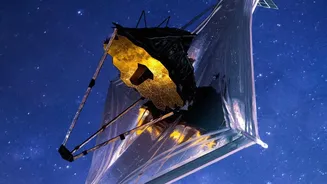
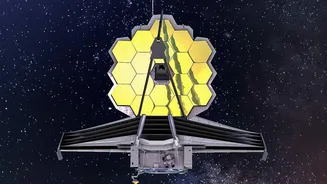
The sheer scale of the cosmos presents a fundamental challenge. The nearest exoplanet, Proxima Centauri b, is over 40 trillion kilometres away. With current technology, a spacecraft would take about 75,000 years to get there. Powerful telescopes like
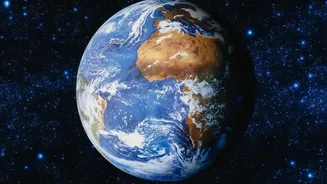
the James Webb Space Telescope can analyse the light from these distant systems, but they can't see surface features directly. They see a single point of light, a planetary average of its atmospheric chemistry and conditions. So, how do you interpret the faint signals from a world you can never visit? You start with the only example of a life-bearing planet you have: Earth. It serves as our indispensable guide, a Rosetta Stone for decoding the secrets of these alien worlds.
Earth as a Time Machine
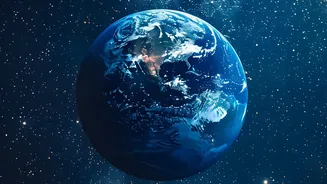
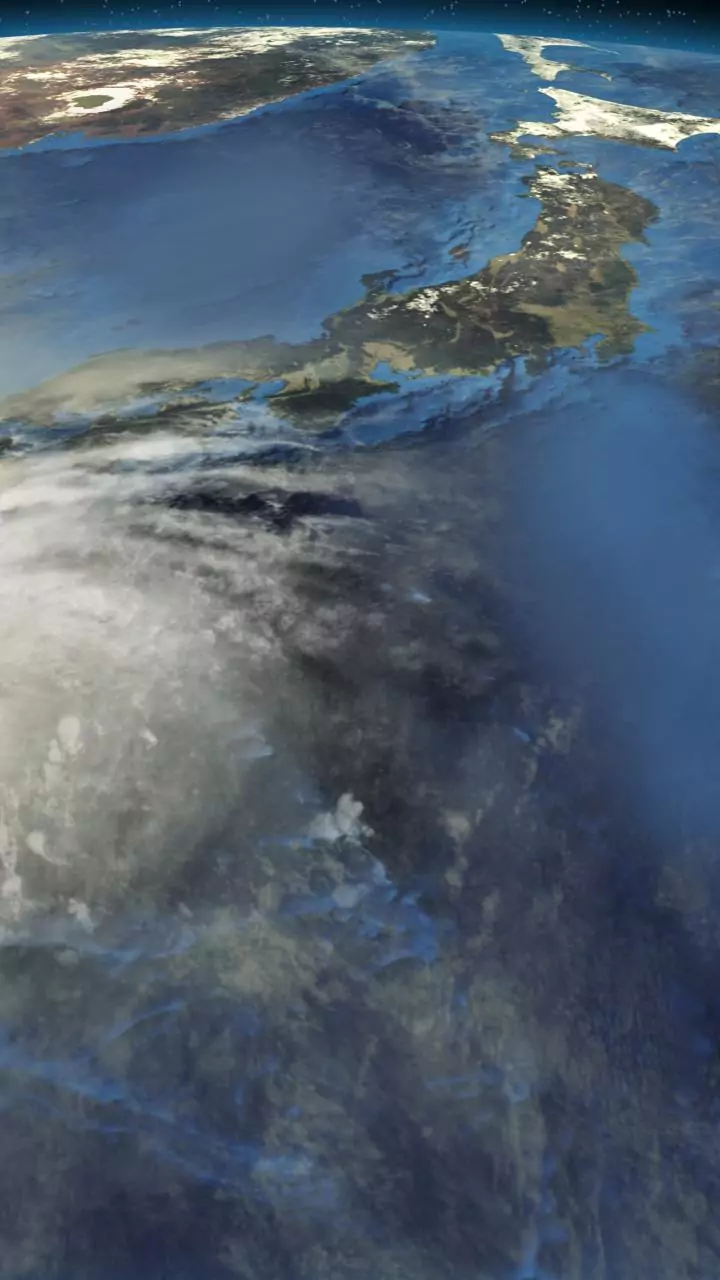
Our planet wasn't always the blue and green marble we know today. Over its 4.5-billion-year history, Earth has been many different worlds. Scientists look at Earth's deep past as a library of planetary possibilities. The Archean Eon, for instance, which began four billion years ago, featured an atmosphere with little oxygen but likely high levels of methane. By studying geological records from this period, researchers can model what a young, hazy, but potentially habitable planet might look like from afar. This allows them to create templates for what to look for when a telescope spots a 'pale orange dot' instead of a pale blue one. Different periods in Earth's history offer glimpses into alien worlds that may be habitable, but under conditions very different from modern Earth.
Cooking Up Alien Atmospheres
In laboratories, scientists are becoming interplanetary chefs, creating "exoplanets in a bottle" to understand how their atmospheres work. Researchers fill chambers with specific gas mixtures thought to exist on distant worlds—like the hydrogen, methane, and carbon dioxide found on K2-18 b—and then expose them to radiation to simulate the light from the planet's star. This process breaks down molecules and allows them to reform into new compounds, creating hazes and other chemical byproducts. By studying these lab-made atmospheres, scientists can predict the chemical fingerprints they should look for with telescopes. These experiments are crucial for interpreting the data we receive, helping to distinguish a world with a lifeless chemical haze from one where gases might be produced by living things.
Searching for Life in the Extremes
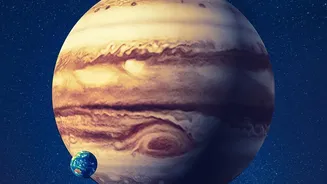
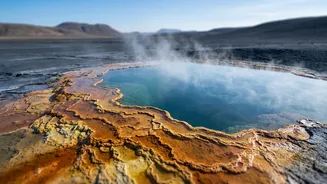
When searching for alien life, we're not necessarily looking for little green men. We're looking for microbes. And to understand what alien microbes might be like, scientists study extremophiles on Earth. These are organisms that thrive in environments we would consider uninhabitable: in boiling hot springs, deep-sea volcanic vents, ultra-saline lakes, and even within the ice of Antarctica. The existence of life in these harsh places dramatically expands our definition of a 'habitable' environment. For example, life found in Antarctic ice serves as a model for what could survive on Mars or Jupiter's moon Europa. By studying extremophiles, scientists can hypothesise what kinds of chemical biosignatures—gases or other markers produced by life—might be detectable on planets vastly different from our own.
A Planet-Sized Field Trip
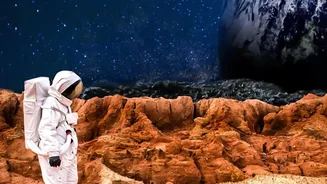
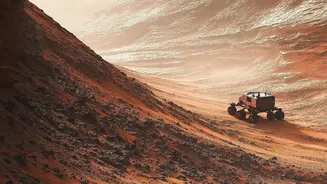
Certain locations on Earth are so geologically similar to other worlds they are officially designated as 'terrestrial analogue sites'. Scientists travel to the Atacama Desert in Chile to understand the arid surface of Mars or to volcanic fields in Iceland and Arizona to simulate what astronauts will encounter on the Moon. These sites are not only for studying geological processes but also for testing rovers, drills, and spacesuits before multi-billion dollar missions are launched. These planetary stand-ins allow researchers to work through the challenges of exploring another world without ever leaving our own, increasing the chances of mission success when we finally do venture out.