



What Is the 2-Minute Wall Squat Trend?
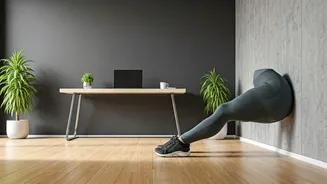
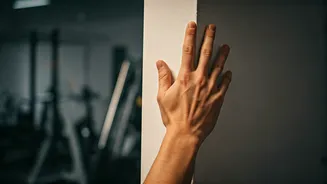
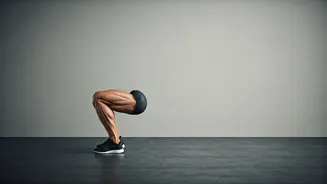
At its core, this trend is an endurance challenge built around a classic exercise: the wall sit. Participants slide their back down a wall until their thighs are parallel to the floor, as if sitting in an invisible chair. The challenge is simple, yet
brutal: hold this position for a full two minutes without standing up. The trend gained massive popularity on platforms like TikTok, where users share their attempts, often showcasing shaking legs and pained expressions, followed by a sense of accomplishment. Its appeal lies in its simplicity — no equipment needed, minimal space required, and a clear, daunting goal.
How to Do a Wall Squat with Perfect Form
The “burn” is meaningless if your form is wrong, which can put unnecessary strain on your knees and lower back. To do it correctly, stand with your back against a smooth, sturdy wall.
1. **Position Your Feet:** Walk your feet out about two feet from the wall, keeping them shoulder-width apart.
2. **Slide Down:** Keeping your back flat against the wall, slowly slide down until your knees are bent at a 90-degree angle. Your thighs should be parallel to the floor, and your shins should be perpendicular to it. Check that your knees are directly above your ankles, not drifting forward over your toes.
3. **Engage Your Core:** Pull your belly button in towards your spine to keep your lower back pressed firmly against the wall. This protects your spine and engages your core muscles.
4. **Hold:** Distribute your weight evenly through your heels. Keep your arms relaxed by your sides, on your hips, or crossed over your chest — but don't rest them on your thighs! That’s cheating.
Why Does It Burn So Much?
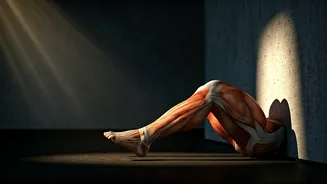
The signature “ultimate burn” of a wall squat comes from its nature as an isometric exercise. In a typical squat, your muscles contract and lengthen (a concentric and eccentric movement). In an isometric exercise, your muscles contract and stay contracted without changing length. Holding the wall sit forces your quadriceps, glutes, and hamstrings to remain under constant tension for the entire duration. This intense, sustained effort restricts blood flow to the working muscles. In response, your body produces metabolic byproducts like lactate, which creates that familiar burning sensation. It’s not necessarily a sign of damage, but a clear signal that your muscles are working incredibly hard to hold the position.
The Real Benefits Beyond the Burn
While the burn is what makes the challenge famous, the real benefits are more substantial. Wall squats are excellent for building muscular endurance, particularly in the quadriceps and glutes. This means your muscles will be able to sustain effort for longer periods. Because it’s a low-impact exercise, it's much kinder on your joints (especially knees and ankles) than high-impact activities like running or jumping. It also helps improve stability and can be a great tool for beginners to build foundational leg strength before moving on to more complex movements like free-standing squats.
Is Two Minutes a Complete Workout?
Here's where we need to manage expectations. While holding a two-minute wall squat is an impressive feat of endurance, it is not a complete workout. It primarily targets a few muscle groups in an isometric fashion. A well-rounded fitness routine includes a mix of cardiovascular exercise, strength training that involves full-range motion (like regular squats and lunges), and flexibility work. Think of the 2-minute wall squat as a fantastic “finisher” to add at the end of your leg workout to push your endurance, or as a quick “exercise snack” you can do during the day to break up long periods of sitting. It complements a workout routine; it doesn't replace it.
Modifications for Every Fitness Level
Not everyone can hold a perfect 90-degree squat for two minutes right away, and that’s perfectly okay. The beauty of the wall sit is its scalability.
* **To make it easier:** Don't slide down as far. A 45-degree angle will still engage your muscles but will be less intense. You can also aim for shorter holds (e.g., 30 seconds) and build up over time.
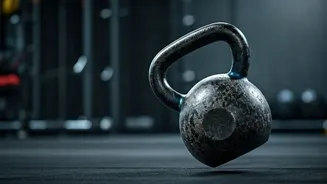
* **To make it harder:** Once you've mastered the two-minute hold, you can add a challenge. Hold a dumbbell or kettlebell at your chest, place a resistance band around your thighs to engage your abductors, or try lifting one foot off the ground for a few seconds at a time to challenge your stability.