





Why Your Breath is a Superpower
Before diving into the techniques, it's helpful to understand why they work. When we're stressed or distracted, our breathing often becomes shallow and rapid. This can trigger the body's 'fight or flight' stress response, which isn't ideal for clear thinking.
Simple, intentional breathing exercises do the opposite. They activate the parasympathetic nervous system, also known as the 'rest and digest' system. This process helps slow your heart rate, lower stress hormones like cortisol, and increase the oxygen supply to your brain. The result is a calmer state of mind, which directly combats the feeling of being foggy and unfocused. Even just five minutes can make a significant difference.
Routine 1: Box Breathing for Focus
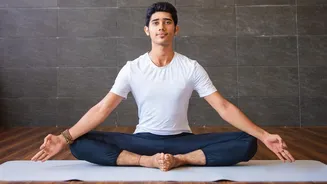
Used by everyone from athletes to Navy SEALs, box breathing is a simple and memorable technique for calming the nerves and improving concentration. Its four-sided structure makes it incredibly easy to learn and practice anywhere, whether at your desk or in your car. How to do it: 1. Find a comfortable seated position with your back straight. 2. Inhale slowly through your nose for a count of four. 3. Gently hold your breath for a count of four. 4. Exhale slowly through your mouth for a count of four. 5. Hold your breath at the end of the exhale for a count of four. That completes one 'box'. Repeat this cycle for three to five minutes, visualising a square in your mind as you move through the four steps.
Routine 2: Diaphragmatic 'Belly' Breathing
Many of us tend to 'chest breathe,' taking shallow breaths that don't fully engage our lungs. Diaphragmatic breathing, or belly breathing, is a technique that encourages a deeper, more efficient breath that can significantly reduce stress and blood pressure. It trains your diaphragm, the primary muscle of respiration, to do its job properly, maximising oxygen intake. How to do it: 1. Lie on your back with your knees bent, or sit comfortably in a chair. 2. Place one hand on your upper chest and the other on your stomach, just below your rib cage. 3. Inhale slowly through your nose. Aim to make your stomach rise, pushing your hand up, while keeping the hand on your chest as still as possible. 4. Exhale slowly through pursed lips, as if you're gently blowing out candles. Feel your stomach fall as you release the air. Continue this deep, intentional breathing for five minutes, focusing on the rise and fall of your abdomen.
Routine 3: The 4-7-8 Relaxing Breath
Popularized by Dr. Andrew Weil, the 4-7-8 technique is described as a 'natural tranquilizer for the nervous system'. Its power lies in the extended exhale, which is particularly effective at activating the body's relaxation response. This is an excellent routine to use when you feel particularly anxious or to help you wind down before sleep. How to do it: 1. Sit with your back straight. Place the tip of your tongue against the tissue ridge just behind your upper front teeth and keep it there. 2. Exhale completely through your mouth, making a 'whoosh' sound. 3. Close your mouth and inhale quietly through your nose to a mental count of four. 4. Hold your breath for a count of seven. 5. Exhale completely through your mouth, making that 'whoosh' sound again, for a count of eight. This is one full breath. Repeat the cycle for a total of four breaths to start. You can work your way up to eight cycles with practice.
Making It a Daily Habit
The key to seeing lasting benefits from these practices is consistency. Five minutes a day is an achievable goal for almost anyone. To help make it stick, try 'habit stacking'—linking your new breathing routine to an existing daily habit. For example, practice for five minutes right after you brush your teeth in the morning, before you have your first cup of tea or coffee, or just before you turn off the lights to sleep. You can also set a simple reminder on your phone. Don't worry about doing it perfectly. The goal is not to stop your thoughts entirely, but to gently guide your focus back to your breath whenever your mind wanders. This simple act of returning your attention is the practice itself.