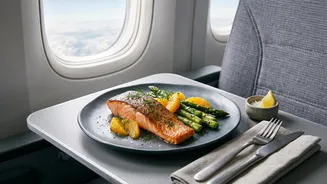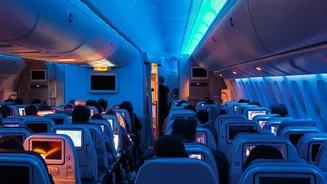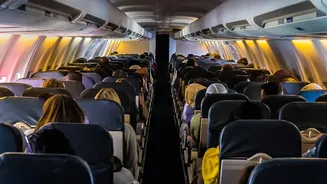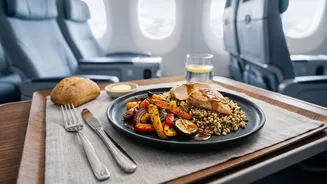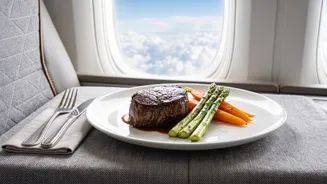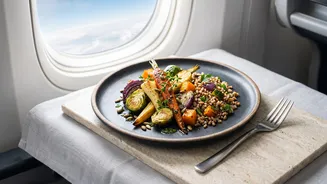








It’s a familiar complaint for any regular traveller: airline food just doesn’t taste right. But before you blame the chef, consider the unique environment of the aircraft cabin. The secret to that bland meal lies in a trio of factors at 30,000 feet.
Your Senses at Altitude
The
moment you step onto a plane, your body begins to respond to a completely different environment. The cabin is pressurized to the equivalent of being on a mountain at 6,000 to 8,000 feet. This lower air pressure, combined with a significant drop in humidity, immediately begins to alter your senses. Cabin humidity can fall below 12%, which is drier than most deserts. This extreme dryness affects your nasal passages, which are crucial for detecting aromas. Since about 80% of what we perceive as 'taste' is actually smell, this is the first blow to your in-flight dining experience. With a dried-out nose, your ability to pick up on the subtleties of food is significantly reduced, much like when you have a cold.
Pressure's Effect on Taste Buds
It’s not just your nose that's affected. The combination of low pressure and low humidity dulls your taste buds directly. Research conducted in simulated flight environments, including studies for the German airline Lufthansa, found that our ability to perceive saltiness and sweetness drops by as much as 30% at cruising altitude. This means a dish that was perfectly seasoned on the ground will taste bland in the air. Interestingly, our perception of sour, bitter, and spicy flavours remains largely unchanged by the altitude. This is why many people find themselves craving tomato juice on flights; its umami and slightly acidic profile cuts through the sensory fog.
The Unexpected Role of Noise
Perhaps the most surprising factor is the constant roar of the jet engines. The background noise in a typical aircraft cabin hovers around 85 decibels, similar to the sound of heavy city traffic. Studies from institutions like Cornell and Oxford University have shown that this loud, persistent noise can suppress our ability to taste sweet foods while actually enhancing our perception of umami—the fifth taste, known for its savoury quality. One theory suggests that the nerve responsible for carrying taste signals from the tongue to the brain passes through the middle ear, and the loud engine noise may physically interfere with its signals. This might explain why savoury dishes, rich in umami from ingredients like mushrooms, tomatoes, and cured meats, often seem more satisfying in the air.
How Airlines Fight Back with Flavor
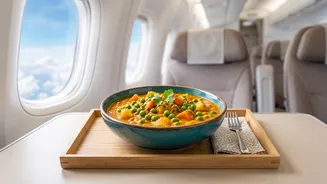
Airline caterers and chefs are well aware of this sensory challenge and have developed strategies to compensate. They can’t simply add 30% more salt or sugar, so they get creative. Menus are often engineered to feature ingredients that are naturally high in umami, such as parmesan cheese, soy sauce, and mushrooms. They also lean on spices and bold seasonings like curry, ginger, and garlic, which are less affected by the cabin environment. Some airlines, like Singapore Airlines, even test their recipes in simulated pressurized cabins to ensure they taste right at altitude. This is why a meal tasted on the ground at a catering facility might seem over-seasoned; it was designed for a palate that's partially numbed.