






The Natural Approach: Cold-Pressed Oils
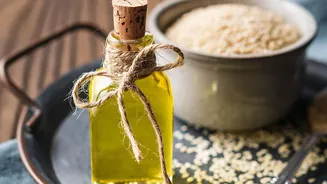
Cold-pressed oils are exactly what they sound like. They are extracted by crushing seeds or nuts and forcing out the oil through pressure. This mechanical process involves minimal heat, which is why it's called 'cold' pressing. Because there's no high-temperature
treatment or chemical solvents involved, these oils retain more of their natural character. This means more of the original flavour, aroma, and, crucially, nutrients like antioxidants and vitamins are preserved. Think of the pungent kick of cold-pressed mustard oil or the nutty aroma of groundnut oil; that's the natural essence of the seed shining through. This method produces a purer, more natural product, but it also means some natural impurities remain, which plays a big role in our next topic.
The Industrial Standard: Refined Oils
Refined oils start the same way, but then they go through a multi-stage purification process. This involves treating the oil with chemicals and high heat to neutralize, bleach, and deodorize it. The goal is to create a product that is completely neutral in taste and smell, with a clearer appearance and a much longer shelf life. While this intensive process strips away impurities, it also removes many of the beneficial nutrients, flavours, and aromas found in cold-pressed oils. The resulting oil, like a standard sunflower or soybean oil, is highly consistent and stable, which is why it's widely used in commercial food production and home kitchens alike.
Decoding the Smoke Point
The smoke point is the temperature at which an oil stops just shimmering and starts to visibly smoke. When you see that wisp of blue smoke, it's a distress signal. The oil is breaking down chemically. This process releases harmful compounds, including acrolein, which gives burnt food an acrid, bitter taste and can be damaging to your health. Pushing an oil past its smoke point destroys its nutrients and can create inflammatory free radicals. For Indian cooking—where techniques range from gentle tadkas to high-heat deep-frying—understanding and respecting the smoke point isn't just about taste; it's about health.
The Smoke Point Showdown
So, which type of oil has a higher smoke point? Generally, refined oils win this round. The very process of refining removes the free fatty acids and other organic particles that are the first to burn in cold-pressed oils. For example, refined groundnut oil has a smoke point of around 232°C, while its cold-pressed counterpart smokes at a much lower 160°C. Similarly, refined sunflower oil can reach 232°C, but the unrefined version starts smoking around 160°C. This functional advantage makes refined oils appear to be the obvious choice for high-heat cooking. However, the story doesn't end there.
Choosing the Right Oil for Your Kadhai
The best oil is not one-size-fits-all; it's about matching the oil to the cooking method. For deep-frying samosas, puris, or bhajiyas, where the oil needs to be held at a consistently high temperature (around 180°C), a refined oil with a high smoke point like sunflower, groundnut, or rice bran oil is a reliable choice. For everyday sautéing, making a sabzi, or preparing a tadka for dal, the temperatures are much lower (120-160°C). Here, a flavourful cold-pressed oil like mustard, groundnut, or coconut oil works beautifully and is well within its safe temperature range. Cold-pressed oils truly excel in raw applications like salad dressings or as a finishing drizzle over a dish, where their rich flavours and nutrients can be fully appreciated.
Health Beyond the Heat
While a high smoke point is important for frying, it isn't the only measure of a 'healthy' oil. Cold-pressed oils are nutritionally superior, offering more antioxidants, vitamin E, and healthy fats that are otherwise stripped away during refining. The key is not to demonize one type of oil over the other. Most everyday Indian cooking doesn't actually reach the extreme temperatures people assume. The real health risk comes from repeatedly overheating any oil past its smoke point. By using a combination of oils—a stable refined oil for occasional deep-frying and a variety of flavourful cold-pressed oils for daily cooking—you get the best of both worlds: safety, flavour, and nutrition.