



Why a Dedicated Drying Zone Is Essential
A designated drying area is more than a convenience; it's a crucial step for maintaining a healthy home during the rainy season. When wet items are scattered around, they release significant moisture into the air. This spike in indoor humidity can lead
to several problems. It creates a breeding ground for mould and mildew, which can grow on walls, furniture, and even within fabrics in as little as 24 to 48 hours. This not only causes damage but can also trigger allergies and respiratory issues. Furthermore, clothes that take too long to dry often develop a persistent musty smell as bacteria multiply in the damp fibres. A well-planned drying zone contains this moisture, protects your home, and keeps your laundry smelling fresh.
Choosing the Best Location
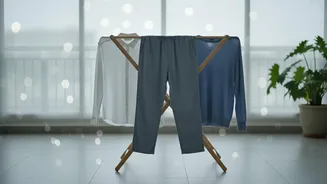
The ideal spot for your drying zone is a room with good ventilation. A spare room, a laundry area, or a bathroom with a working exhaust fan are all excellent choices. If possible, select a space with a door you can close to prevent moisture from spreading throughout the house. Good airflow is critical, so positioning your rack between two open windows to create a cross-breeze can be highly effective. If that’s not an option, placing a portable fan nearby will help circulate air and speed up drying. Avoid placing racks directly against walls or in corners where air can become stagnant, as this can lead to condensation and mould. Ensure the flooring is protected with a waterproof mat or old towels to catch drips and prevent damage.
Gearing Up: The Right Equipment
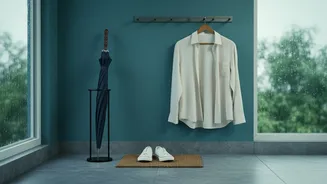
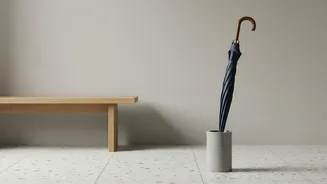
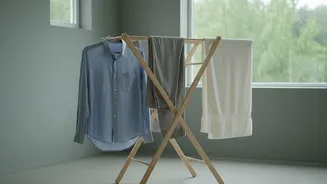
Investing in the right gear makes all the difference. Start with a good quality clothes drying rack that suits your space. Options range from large, foldable floor models to space-saving wall-mounted or ceiling-mounted pulley systems common in Indian homes. Avoid overcrowding the rack; leaving space between garments is essential for air to circulate and dry them faster. Near the entrance, place a durable doormat made of coir or rubber to trap mud and water. An umbrella stand or a deep bucket is perfect for corralling wet umbrellas and preventing puddles. For shoes, an open rack is better than a closed cabinet, as it allows them to air out and dry properly.
Drying Wet Clothes and Shoes Correctly
A few simple techniques can dramatically reduce drying time. Before hanging clothes, run an extra spin cycle in your washing machine to remove as much excess water as possible. When hanging, use hangers for shirts and blouses to save space and help them keep their shape. For wet shoes, never use direct heat from a dryer or heater, as it can damage the glue and materials. Instead, loosen the laces, remove the insoles to dry separately, and stuff the shoes with crumpled newspaper. The paper absorbs moisture effectively; replace it every few hours for very wet shoes. Placing the stuffed shoes near a fan can also speed up the process.
Advanced Tactics for Fighting Dampness
In very humid climates, you may need extra help to control moisture. A dehumidifier is an excellent investment, as it actively pulls excess moisture from the air, helping clothes dry faster and preventing mould growth. Placing a dehumidifier in the same room as your drying rack is the most effective setup. For smaller, enclosed spaces like wardrobes and shoe cabinets, passive moisture absorbers containing silica gel, calcium chloride, or activated charcoal can be very effective at preventing musty smells and protecting your belongings. Even simple household items like unrefined salt can be used to absorb ambient moisture in a pinch.