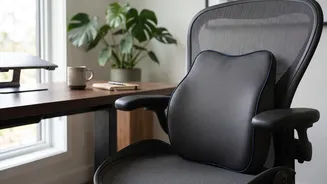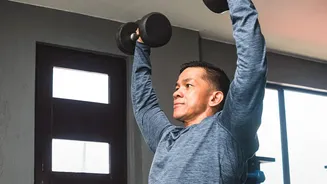





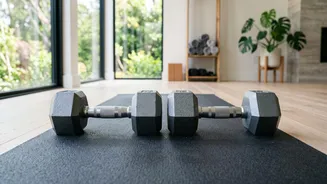


The modern workday often means hours spent in a chair, leading to tight hips, a sore back, and poor posture. Fortunately, a smart approach at the gym can help undo the damage. These exercises are specifically chosen to awaken sleepy muscles.
Activate Your Posterior Chain
Prolonged
sitting effectively switches off your posterior chain—the crucial network of muscles on the back of your body, including your glutes and hamstrings. When these muscles become weak, it can lead to lower back pain and poor posture. The goal is to wake them up. Glute bridges are an excellent starting point. Lie on your back with your knees bent and feet flat on the floor, then drive your hips toward the ceiling, squeezing your glutes at the top. This reactivates the glutes without straining the back. For a more advanced move, Romanian Deadlifts (RDLs) are fantastic. This exercise involves hinging at your hips while holding a barbell or dumbbells, keeping your back straight and lowering the weight until you feel a deep stretch in your hamstrings. This not only strengthens the hamstrings and glutes but also promotes the essential hip-hinge pattern that sitting discourages.
Open Up Your Hips
Sitting keeps your hips in a constant state of flexion, causing the muscles at the front of your hips—the hip flexors—to become short and tight. This tightness can pull your pelvis out of alignment and contribute to lower back discomfort. To counteract this, you need to open your hips with targeted stretches and exercises. A simple kneeling hip flexor stretch is highly effective. Kneel on one knee, place the other foot forward, and gently push your hips forward while keeping your torso upright. You'll feel a stretch in the front of the hip of the kneeling leg. In your workout, incorporate deep squats like the Goblet Squat. Holding a dumbbell at your chest encourages an upright posture while allowing you to sink deep into the squat, opening your hips and stretching your groin. This full-range movement is the direct opposite of the static, flexed position of sitting.
Strengthen Your Upper Back and Core
Slouching over a keyboard leads to a rounded upper back and weak core muscles. Strengthening these areas is vital for pulling your shoulders back and maintaining an upright posture. Rowing movements are your best friend here. Seated Cable Rows or Bent-Over Dumbbell Rows target the muscles of the upper and mid-back, which are responsible for retracting your shoulder blades. Focusing on squeezing your shoulder blades together with each repetition helps to reverse that forward slump. For your core, planks are a classic for a reason. They teach your body to remain stable and aligned from head to toe, strengthening the deep core muscles that support your spine. Side planks are also beneficial for targeting the obliques and improving hip stability.
Improve Shoulder and Spine Mobility
A sedentary job doesn't just weaken muscles; it restricts your range of motion, particularly in your upper back (thoracic spine) and shoulders. Poor mobility here forces other areas, like your lower back and neck, to compensate, leading to pain. Face Pulls are a phenomenal exercise for this. Using a rope attachment on a cable machine, pull the rope towards your face, aiming to get your hands on either side of your ears. This strengthens the small muscles that externally rotate your shoulders, directly combating the internal rotation that comes from hunching. To improve thoracic mobility, try exercises like Cat-Cow stretches or thoracic rotations on all fours. These movements gently take your spine through flexion and extension, helping to undo the stiffness from being locked in one position all day.