



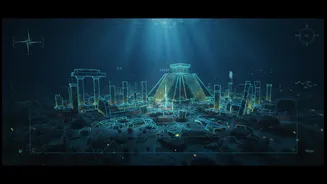


A Glimpse into the Deep
The waters off the coast of Poompuhar in Tamil Nadu have long been a subject of fascination for historians and archaeologists. This region, celebrated in Sangam literature as the flourishing port capital of the early Cholas, Kaveripoompattinam, is now
the focus of intense underwater exploration. Recent surveys, led by institutions like the National Institute of Ocean Technology (NIOT) and the Tamil Nadu State Department of Archaeology (TNSDA), are deploying sophisticated technology to map the seabed in unprecedented detail. These efforts are building on decades of sporadic exploration, but what they are beginning to reveal has injected new excitement into the quest for India's submerged heritage. The central question is whether the intriguing shapes detected on the ocean floor are the work of nature or the long-lost remnants of a thriving ancient civilisation.
The Eyes Beneath the Waves
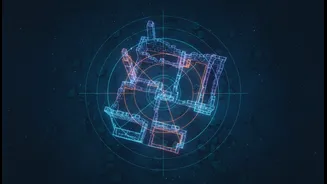
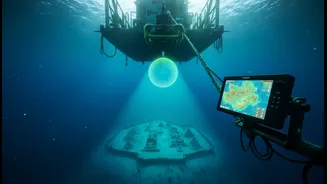
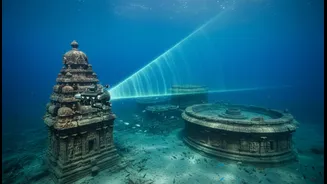
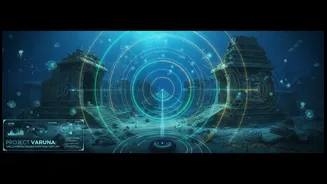
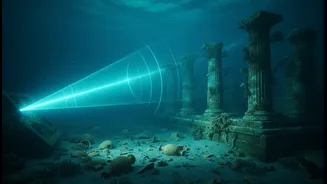
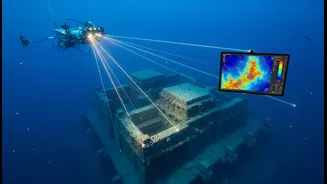
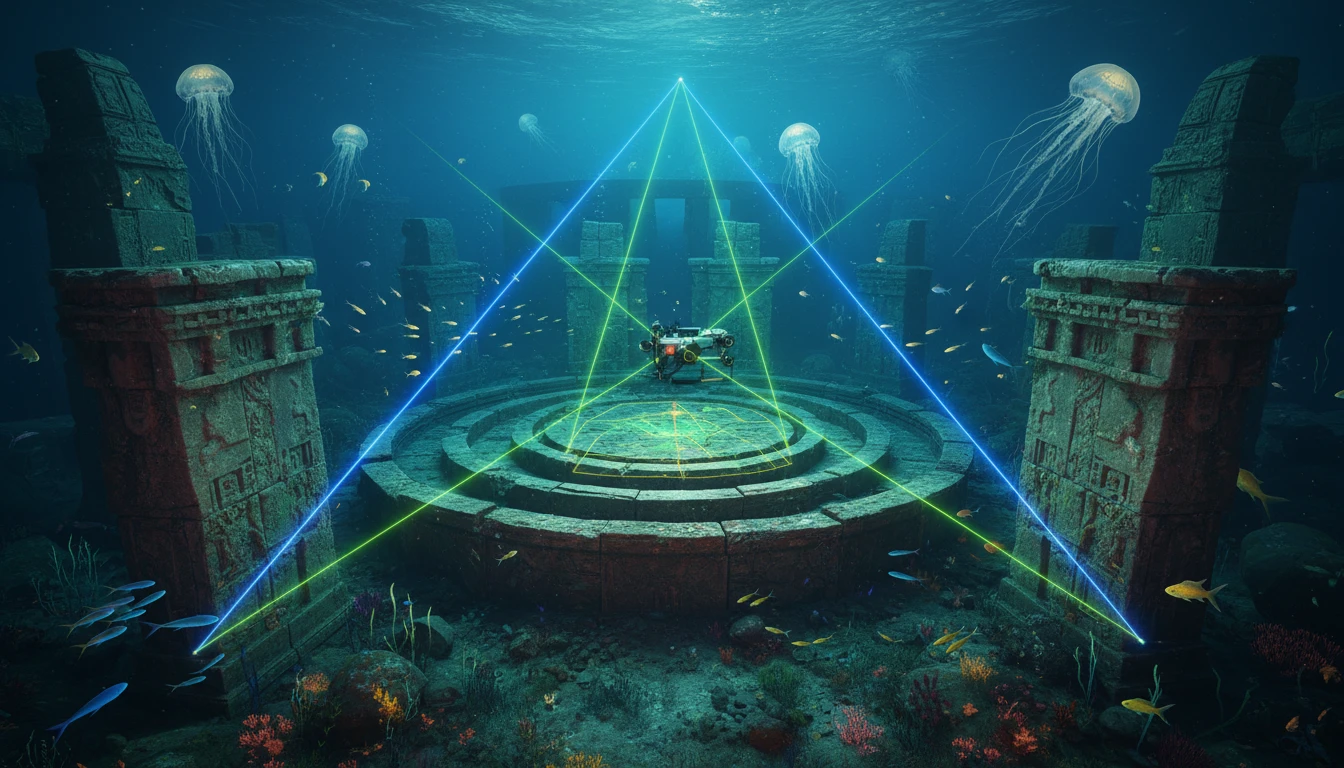
The key to this new chapter of discovery is advanced sonar technology. Instruments like multibeam echosounders, side-scan sonar, and sub-bottom profilers act as the eyes of the exploration teams. Unlike a simple camera, which would be useless in the dark and often murky depths, sonar works by sending out sound pulses and measuring the echoes that bounce back. A multibeam echosounder, for instance, can create a wide, detailed 3D map of the seafloor's topography. A side-scan sonar, typically towed behind a vessel, paints an acoustic picture of the surface, revealing the texture and shape of objects below. Finally, a sub-bottom profiler sends lower-frequency sound waves that can penetrate sediment, allowing scientists to see features that may be buried beneath the seabed, such as ancient river channels. Together, these tools can detect structural anomalies—unusual, geometric, or aligned features—that stand out from the natural landscape.
Echoes of a Lost Port?
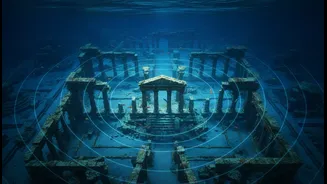
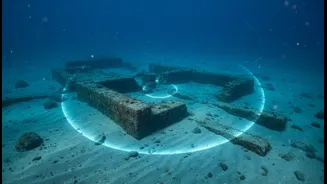
The data collected so far is tantalizing. Researchers have identified several noteworthy features deep underwater, at depths ranging from 23 to 100 meters and several kilometers offshore. Earlier explorations in the 1990s had already found a large, U-shaped or horseshoe-shaped structure at a depth of about 23 meters. More recent and extensive surveys have mapped what appear to be submerged palaeo-channels of the Kaveri river and other features that have been interpreted as possible wharves, walls, and building complexes. Some studies, based on analysis of the seafloor's geological features and past sea levels, have controversially suggested that some of these structures could date back as far as 15,000 years, long before the Sangam period. These claims remain highly debated and require physical evidence for verification. However, the sonar images strongly suggest a landscape that was once shaped by more than just natural forces.
From Data to Digging
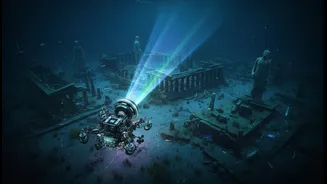
An acoustic image is not a confirmation. While sonar can identify promising targets, the next crucial step is physical verification. This is the painstaking work of marine archaeology. It involves deploying remotely operated vehicles (ROVs) for a closer look and, most importantly, sending trained divers to the seabed. The goal for divers is to examine these structures up close, determine if they are indeed man-made, and search for any associated artifacts like pottery or tools that can help date the site. This process is slow, expensive, and dependent on favorable sea conditions. As researchers analyse the latest sonar data, plans are already in motion for follow-up phases of exploration. Only through this rigorous, hands-on investigation can the anomalies seen on a screen be confirmed as a lost chapter of human history.
Rewriting India's Maritime History
If these submerged structures are confirmed to be parts of an ancient port complex, the implications would be enormous. It would provide concrete evidence for the descriptions of Kaveripoompattinam found in ancient texts like 'Silappathikaram' and 'Manimekalai', which describe a city lost to the sea. The discoveries would offer invaluable insights into Sangam-era maritime trade, urban planning, and the engineering capabilities of ancient Tamil civilisation. It could also shed light on the impact of natural disasters and sea-level rise on coastal populations throughout history. The work at Poompuhar, along with similar explorations at other ancient ports like Korkai, is part of a broader effort to understand and reclaim Tamil Nadu's rich maritime heritage. Every sonar pulse and every dive brings us closer to potentially uncovering a story that has been submerged for millennia, waiting to be retold.