


Create Illusions of Space
One of the most powerful qualities of stripes is their ability to trick the eye. This is a fundamental principle of interior design that you can easily deploy with cushions. If you have a low sofa or want to give the impression of a higher ceiling, choose
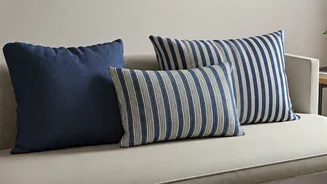
cushions with strong vertical stripes. They draw the eye upward, creating a sense of height and airiness. Conversely, horizontal stripes can make a narrow armchair or a short sofa feel wider and more expansive. By placing a couple of horizontally striped cushions on a small loveseat, you visually stretch its dimensions, making it appear more generous and inviting. It's a simple, non-permanent way to subtly reshape the proportions of your furniture and the room itself.
Introduce Colour Without Commitment
Perhaps you love the idea of a bold colour like emerald green or sunny yellow, but painting an entire wall feels too permanent and risky. Striped cushions are your perfect entry point. They allow you to introduce vibrant hues and playful colour combinations in small, manageable doses. A classic navy and white stripe can bring a crisp, coastal feel, while a multi-coloured stripe can inject bohemian fun into a neutral setting. Because cushions are relatively inexpensive and easy to swap out, they offer a low-commitment way to experiment with trends and seasonal palettes. You can change them with your mood, the time of year, or whenever you feel the room needs a quick refresh.
Act as a 'Pattern Neutral'
Mixing patterns can be intimidating, but stripes are famously cooperative. In the world of design, simple, classic stripes are often considered a 'pattern neutral'—much like a solid colour. This means they pair beautifully with more complex designs like florals, geometrics, or abstract prints. The key is to vary the scale of the patterns. If you have large-scale floral curtains, for instance, a tightly pinstriped cushion will complement them without competing. The structured, linear nature of stripes provides a grounding element that brings order to a mix of patterns, preventing the overall look from feeling chaotic. Start by pairing a simple striped cushion with one other patterned item and see how they instantly work together.
Define Your Decorating Style
The type of stripe you choose can instantly signal a specific design aesthetic. Think of it as a stylistic shortcut. Wide, evenly spaced stripes in primary colours often evoke a classic, preppy or nautical feel, perfect for a sunroom or a relaxed living area. On the other hand, irregular, hand-drawn, or 'broken' stripes in earthy tones like terracotta and beige can lend a rustic, artisanal, or Scandinavian vibe. Thin, sharp pinstripes in monochrome shades like black, white, and grey suggest a more formal, tailored, and sophisticated look suitable for a modern or minimalist space. By being intentional with your choice of stripe, you can reinforce or even define the overarching theme of your room with minimal effort.
Add Texture and Visual Interest
A room full of solid colours, even beautiful ones, can sometimes fall flat. It lacks the layers that make a space feel professionally designed and lived-in. Stripes, even in a subtle, tone-on-tone colourway, add immediate visual texture and depth. They break up monolithic blocks of colour on a sofa or bed, creating rhythm and movement. To enhance this effect, consider the fabric of the cushion itself. A striped cushion in a tactile material like linen, chunky knit wool, or velvet adds another layer of sensory interest, making the space not only look better but also feel more comfortable and inviting. This combination of pattern and material is what elevates a room from simply 'decorated' to 'well-curated'.