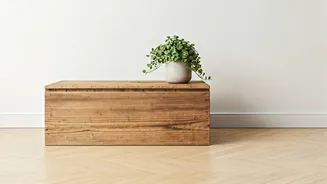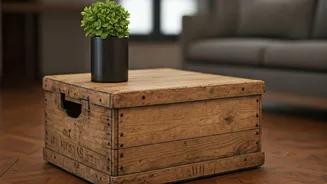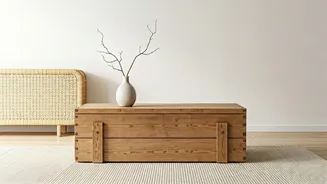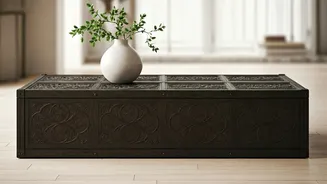






The Japandi Philosophy
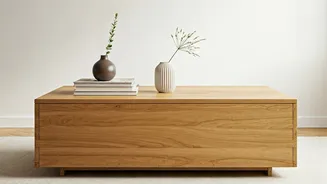
Before you grab your sandpaper, let's understand the goal. Japandi is a design hybrid, a beautiful marriage between Japanese rustic minimalism (wabi-sabi) and Scandinavian functionality (hygge). Think clean lines, natural materials, a muted colour palette,
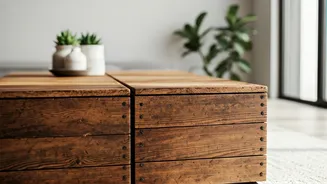
and an appreciation for things that are imperfect and handmade. For our project, this means we aren't aiming for a factory-perfect finish. We want to celebrate the wood's grain, the trunk's history, and its inherent character while simplifying its form. The elegance comes from subtraction, not addition. The goal is a piece that feels calm, grounded, and deeply personal.
Finding the Perfect Trunk
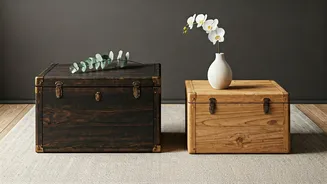
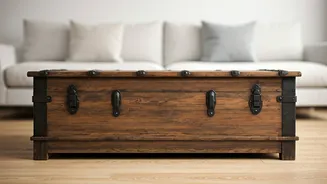
Not every old chest will work. You might have a forgotten 'sandook' in the attic, or you might be scouring your local antique market. Look for a trunk with good bones. The ideal candidate has a flat top, is made of solid wood like teak or sheesham, and is structurally sound. Check for signs of serious woodworm or rot, which can be difficult to fix. Don't be deterred by a scratched surface or tarnished metal fittings—those can be addressed. The most important factor is its size and height. As a coffee table, it should be no taller than the seat cushions of your sofa (typically 40-50 cm) and proportionate to your living room space.
Preparation is Everything
This is the most crucial, yet least glamorous, part of the process. First, give the trunk a thorough cleaning. A simple solution of mild soap and warm water applied with a soft cloth will remove decades of dust and grime. Be gentle, especially if the wood is delicate. Once dry, assess the hardware. Do the hinges and latches work? Japandi leans towards minimalism, so you might choose to remove ornate or bulky metal pieces for a cleaner look. If you keep them, you can polish them or paint them a matte black. If there are any loose wooden parts, now is the time to secure them with wood glue and clamps.
The Art of Refinishing
Here’s where the transformation truly begins. The goal is to bring out the natural beauty of the wood. Start by sanding the entire exterior. An orbital sander will make this much faster, but sandpaper blocks (starting with a medium 120-grit and finishing with a fine 220-grit) work just as well. Always sand in the direction of the wood grain. Your aim is to remove the old, flaky varnish or paint, but not necessarily every single dent and scratch; these imperfections add to the wabi-sabi charm. Once you have a smooth, clean surface, wipe away all the dust with a tack cloth. To achieve the light, natural look of Japandi, avoid dark stains. Instead, apply a clear matte or satin polyurethane sealer. This will protect the wood from spills while keeping its natural colour. Apply two to three thin coats, with light sanding in between, for a durable finish.
Adding Function and Form
A trunk on the floor can feel heavy. To give it the light, airy feel of a coffee table, consider adding legs. Simple, tapered wooden legs or minimalist black metal hairpin legs work beautifully with the Japandi aesthetic. You can find these online or at speciality hardware stores. Attaching them is straightforward: simply screw them into the reinforced base of the trunk. This elevation not only improves the table's function but also dramatically changes its silhouette, making it feel more like a deliberate piece of furniture rather than just a storage box. This single step can be the most impactful in its transformation.
Styling Your Centrepiece
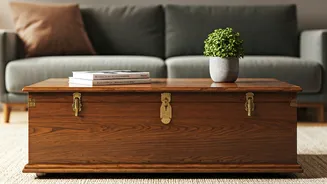
Your new coffee table is ready, but how you style it completes the Japandi story. Resist the urge to clutter it. Remember, less is more. Place a simple, textured ceramic vase on top, perhaps with a single dry branch. A small, neat stack of books with neutral-toned spines or a single scented candle in an earthy vessel would also work. The surface is meant to be a calm space, a focal point for the room that invites tranquility. The beauty of your new table is not just in what’s on it, but in the beautiful, restored wood and the history it holds.