




Your New AI Study Partner
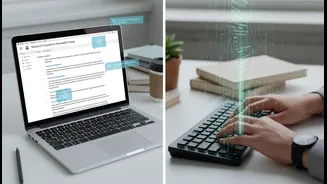
In the race to submit flawless research papers, students across India are increasingly turning to AI-powered writing assistants. These are not just simple spellcheckers; they are sophisticated tools designed to enhance the quality of academic work. Platforms
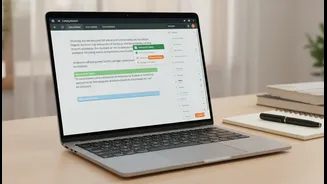
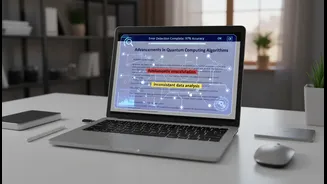
like Grammarly, QuillBot, Paperpal, and Trinka have become common in a student's digital toolkit. These services use artificial intelligence, specifically machine learning and natural language processing, to scan text and offer real-time suggestions. They can identify a wide range of issues, from basic spelling and punctuation mistakes to more complex problems with grammar, syntax, clarity, and tone. Some tools are even specifically trained on millions of academic papers to better understand the conventions of scholarly writing, offering more relevant suggestions than a general-purpose editor.
More Than Just a Spellchecker
The power of these AI tools goes far beyond correcting a misplaced comma. Advanced platforms can help restructure sentences for better flow and readability, suggest alternative word choices to avoid repetition, and even check the overall tone of your writing to ensure it's appropriately academic. For students, especially those writing in English as a second language, this can be a game-changer. Tools like QuillBot specialise in paraphrasing, which can help rephrase complex ideas to improve clarity and avoid accidental plagiarism. Others, like Grammarly and Paperpal, include robust plagiarism detectors that compare your text against billions of web pages and academic databases, providing an essential final check for originality. Some platforms even offer features to help with generating citations and ensuring they are formatted correctly, saving hours of tedious manual work.
The Fine Line Between Helper and Cheat
With great power comes great responsibility. While AI tools offer immense benefits, they also present significant ethical challenges. The biggest risk is over-reliance. Using AI to generate entire sections of text or simply accepting every suggestion without critical thought can undermine the learning process and may constitute academic misconduct. Presenting AI-generated text as your own work is a form of plagiarism, and universities are rapidly developing policies to address this. A 2025 survey at IIT Delhi found that while over 77% of faculty and 80% of students use AI tools, there is an urgent need for clear guidelines. Many Indian universities, following UGC advisory notes, now require students to disclose any use of AI in their assignments and hold the student fully responsible for the final work's integrity. The AI is a tool, not the author; the intellectual contribution must be your own.
A Guide to Using AI Responsibly
So, how can you use these tools to your advantage without crossing an ethical line? The key is to treat the AI as a proofreader, not a writer. First, complete your research and write the entire draft yourself. Your ideas, arguments, and structure should be entirely your own. Then, use the AI tool to polish your work. Focus on its feedback for grammar, spelling, punctuation, and sentence clarity. When the AI suggests a change, don't just click 'accept.' Take a moment to understand why the suggestion is being made. This turns the tool into a learning opportunity, helping you improve your own writing skills over time. Always double-check facts, figures, and especially citations that an AI might generate, as they are known to occasionally create plausible-sounding but non-existent sources. Most importantly, check your university's specific policy on AI use before you even begin. Transparency is crucial; when in doubt, disclose your use of the tool to your professor.
The Educator's Evolving Perspective
Educators are not blind to this technological shift. Instead of outright bans, many are adapting their teaching and assessment methods. Some professors now design assignments that require students to use AI and then critically evaluate its output, pointing out errors, biases, or oversimplifications. This approach fosters AI literacy, teaching students how to engage with these tools thoughtfully. While AI detection software like Turnitin's is also in use, educators acknowledge these tools are not foolproof and can sometimes flag human writing, especially from non-native English speakers. Therefore, the focus is increasingly on dialogue and education rather than just enforcement. The goal is to prepare students for a future where collaborating with AI is a standard professional skill, while still upholding the timeless values of academic integrity and original thought.