
The Sun's Turbulent Temper
Space weather refers to the changing conditions in space, driven primarily by the Sun. Our star is not just a steady source of light and heat; it also erupts, spewing charged particles and radiation into the solar system. The two main culprits are solar flares
and Coronal Mass Ejections (CMEs). A solar flare is an intense burst of radiation that can reach Earth in about eight minutes. A CME is a much larger eruption of plasma and magnetic fields that travels more slowly, taking one to three days to arrive. When these solar outbursts interact with Earth's magnetic field, they can trigger geomagnetic storms, which have significant effects on technology both in space and on the ground.
Satellites Under Cosmic Siege
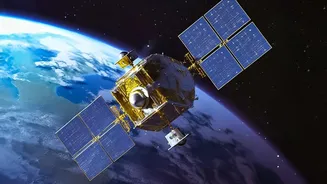
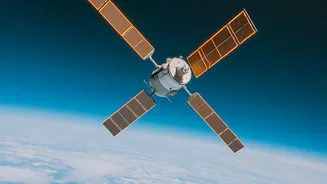
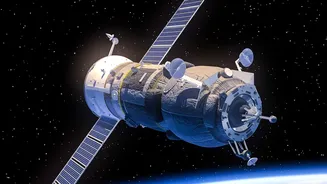
Satellites are particularly vulnerable to this cosmic weather. The high-energy particles from a solar storm can damage sensitive electronics and degrade solar panels, shortening a satellite's lifespan. These storms can also heat Earth's upper atmosphere, causing it to expand. This increases the atmospheric drag on satellites in low-Earth orbit, slowing them down and potentially causing them to re-enter the atmosphere and burn up. This very scenario caused the loss of dozens of Starlink satellites in 2022, a watershed moment that highlighted the real-world risks of even modest storms. Furthermore, the charged environment of a geomagnetic storm can disrupt GPS signals, leading to inaccurate positioning, and interfere with the radio signals used for communication.
A New Generation of Forecasts
Until recently, predicting the severity of a solar storm has been difficult. But a new wave of research is changing the game. Scientists are developing powerful new tools, including Artificial Intelligence (AI) models, to improve forecasting. For instance, NASA and IBM have partnered to create an AI model called Surya that analyzes vast amounts of solar data to predict solar flares up to two hours in advance, a significant improvement over older methods. Another approach involves placing new monitoring instruments deeper in space. The European Space Agency's upcoming HENON mission, scheduled for a 2027 launch, will carry a UK-built magnetometer called MAGIC. By measuring the Sun's magnetic field much farther from Earth than current monitors, it aims to extend the advance warning time for severe storms from just minutes to several hours.
From Warning to Action
An improved warning system is more than an academic exercise; it allows for concrete protective measures. With a few hours' notice, satellite operators can take action to mitigate damage. They could place satellites into a safe mode, temporarily shutting down their most sensitive components to protect them from electrical surges. They could also reorient the spacecraft to minimize its exposure to incoming radiation or increased atmospheric drag. For companies operating large constellations, better forecasting could inform decisions about launch schedules and orbital adjustments, preventing costly losses. For critical infrastructure on Earth, like power grids, longer warning times allow operators to prepare for potential impacts, helping to prevent widespread blackouts.
India's Stake in Space Security
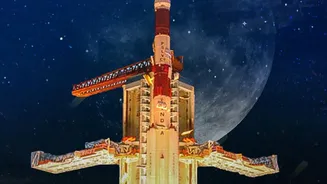
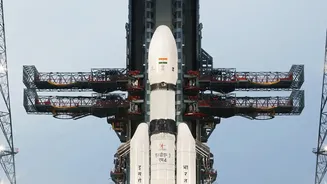
As a major space-faring nation, India has a significant interest in improving space weather monitoring. The Indian Space Research Organisation's (ISRO) Aditya-L1 mission, stationed at a strategic point 1.5 million km from Earth, is a dedicated solar observatory. While primarily a solar physics mission, its data is crucial for understanding the Sun-Earth connection and improving space weather models. Recent findings from Aditya-L1 have provided unprecedented views of solar flares and CMEs, contributing valuable insights to the global scientific community. This research is vital for safeguarding India's growing satellite fleet, which underpins the Digital India initiative, national defence, and a burgeoning private space industry. The experience from Aditya-L1 is considered a significant step toward India developing its own space weather prediction capability.