



The Foundation: Why Rolling Beats Folding
For decades, travellers have debated the best way to pack. While folding is what we do in our wardrobes, it’s not the most efficient method for a suitcase. Folding clothes into squares and stacking them creates pockets of wasted air and makes it hard
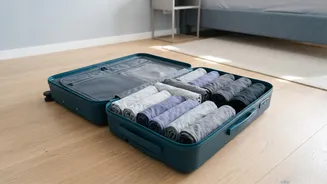
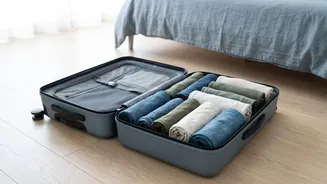
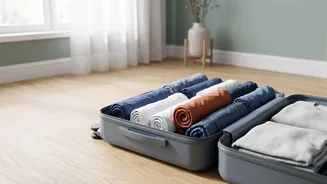
to see everything at a glance. Rolling, on the other hand, compresses fabrics and allows you to fit garments into every nook and cranny of your bag. Tightly rolled items are less prone to the deep-set wrinkles that sharp folds can create, especially in casual wear like T-shirts and leggings. It transforms your jumble of clothes into a neat, visible, and accessible collection, almost like a filing system.
The Basic Roll: Your Everyday Go-To
This is the cornerstone of space-saving packing and works wonderfully for most casual items. Start by laying a garment, like a t-shirt or pair of trousers, on a flat surface. Smooth out any wrinkles. For a shirt, fold the sleeves inwards to create a neat rectangle. For trousers, fold them in half lengthwise. From there, begin to roll the item as tightly as you can, from the bottom hem upwards (or from the waistband down for trousers). The result is a compact cylinder that can be easily slotted into your suitcase. This method is ideal for t-shirts, shorts, casual dresses, and lightweight sweaters.
The Ranger Roll: For Maximum Compression
When you need to maximise every inch of space, the Ranger Roll, also known as the Army Roll, is your best friend. This military-tested technique creates an even tighter, self-contained bundle. To roll a t-shirt this way, lay it flat and fold the bottom hem inside-out by a few inches, creating a 'lip'. Fold the sleeves in, then fold the sides of the shirt towards the middle to form a narrow rectangle. Next, roll the shirt tightly from the collar down towards the lipped end. Once you reach the bottom, take the inside-out lip and pull it over the entire roll, securing it like a small sleeping bag. This technique not only saves significant space but also prevents the roll from coming undone in transit.
The Bundle Method: For Wrinkle-Free Formalwear
Some items, like blazers, formal shirts, or dresses, don't take well to tight rolling. For these, the bundle wrapping method is a superior choice for preventing creases. This technique involves wrapping clothes around a central 'core' item, like a small pouch of socks and underwear. Start by laying your most wrinkle-prone item, like a jacket, flat. Then, layer other garments on top in a specific order: longer items like dresses, followed by long-sleeved shirts, trousers, and finally, smaller items. Place your core in the centre and wrap each piece of clothing around it one by one, smoothing the fabric as you go. The large radius of the bundle prevents the sharp folds that cause wrinkles.
Smart Packing Beyond Rolling
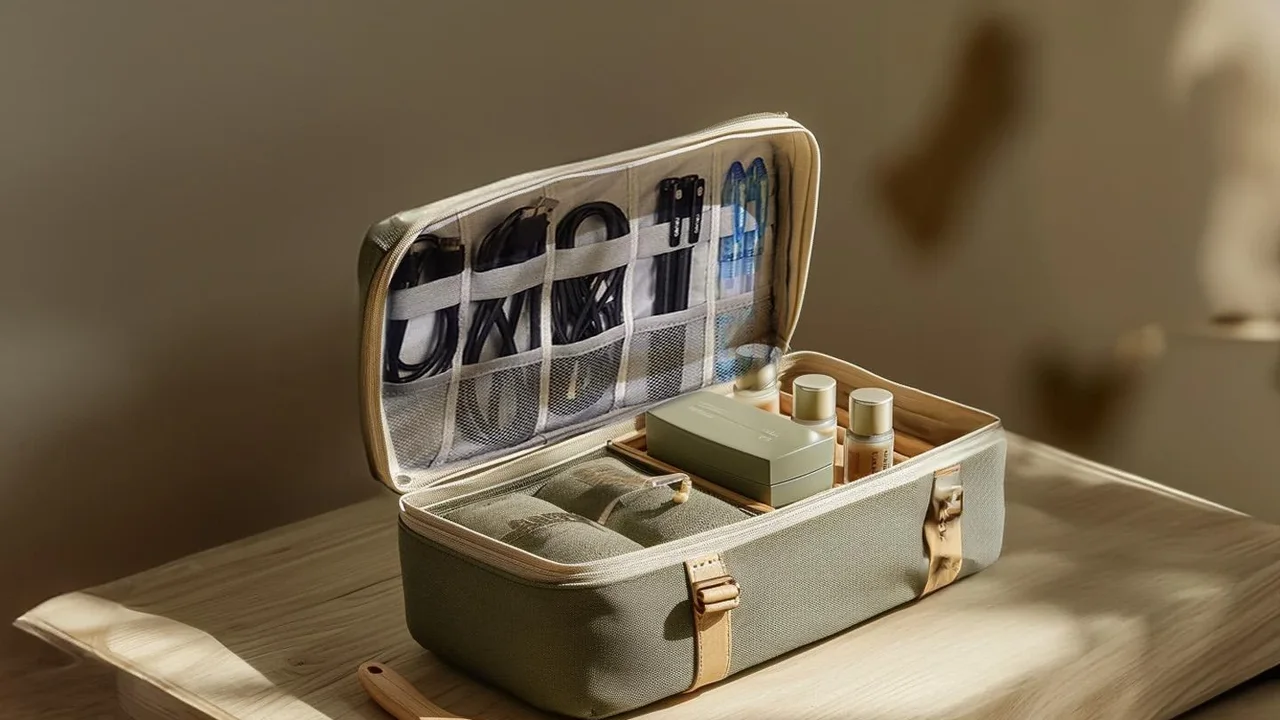
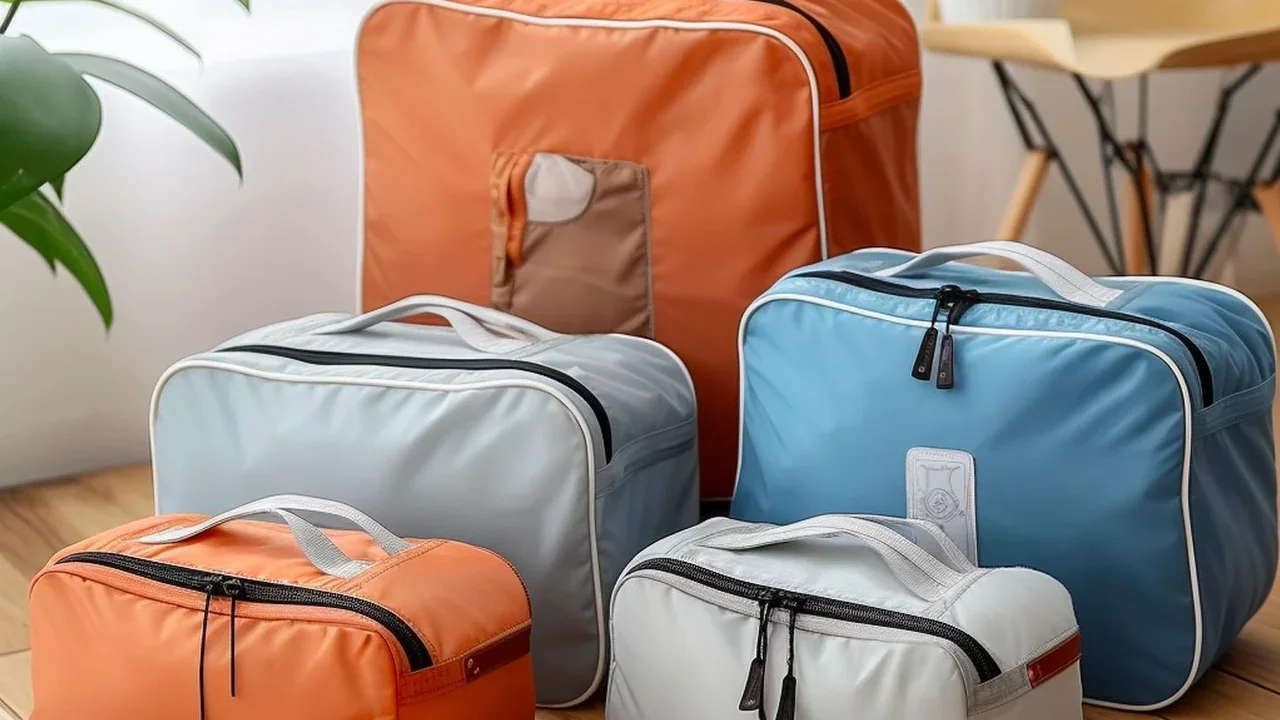
Rolling is a game-changer, but other strategies complete the puzzle. Use packing cubes to group rolled items by category—one for tops, one for bottoms—which keeps your bag organised. For even more compression, consider vacuum-seal bags, though they don't offer the same organisational benefits as cubes. Always wear your bulkiest items, like a heavy jacket, sweater, or sneakers, during travel to free up precious luggage space. Finally, think about multi-purpose items. A lightweight dress can work for a casual day out or a nice dinner. Leggings are great for travel days and can double as sleepwear. By planning your outfits, you can avoid packing 'just in case' items that you never end up wearing.