

An Ambitious Goal: Lunar Sample Return
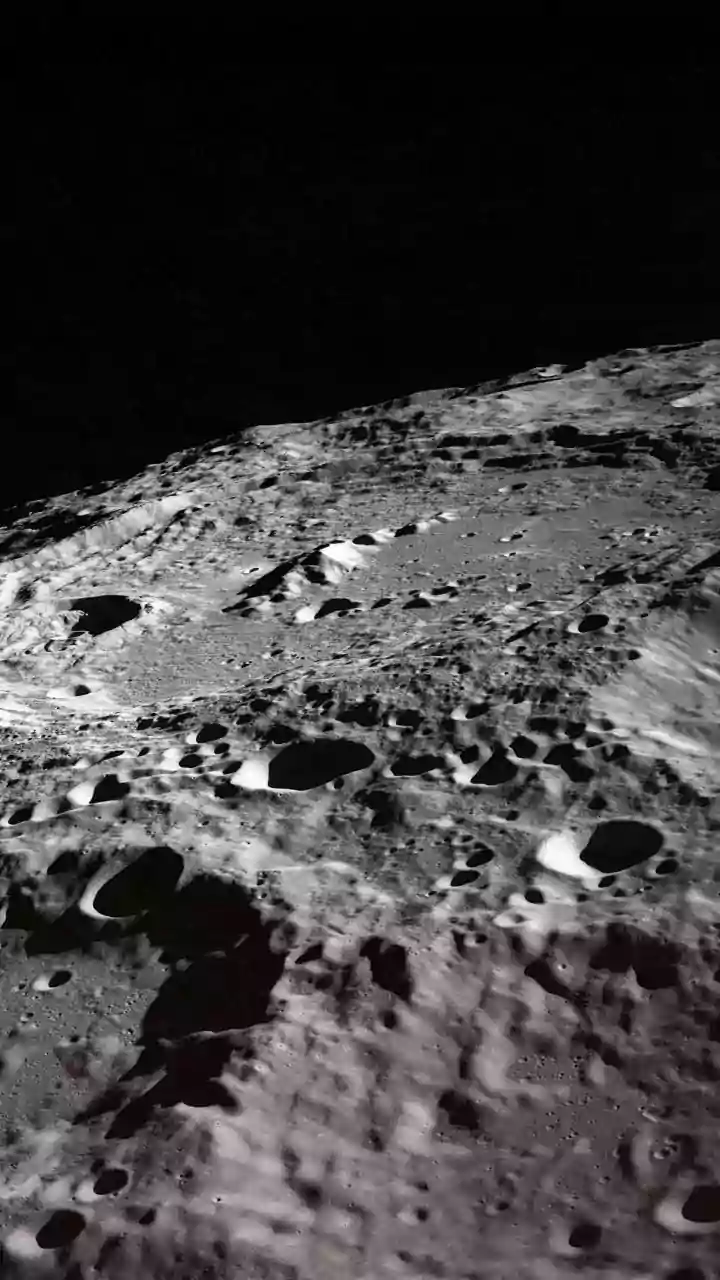
The primary goal of Chandrayaan-4 is to achieve what only a handful of nations have done before: perform a lunar sample return. The mission aims to land in the Moon's south pole region, collect up to three kilograms of soil (regolith) and potential ice,
and transport it securely back to Earth for scientific study. This makes India the fourth country to independently bring back lunar material and the first to attempt it from the scientifically vital south pole. Approved by the Union Cabinet in September 2024, the mission is a crucial stepping stone for India's long-term space ambitions, including a potential crewed lunar landing by 2040.
The Five-Module, Two-Launch Plan
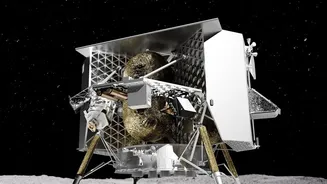
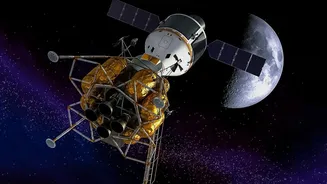
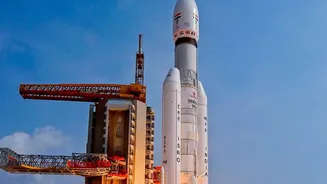
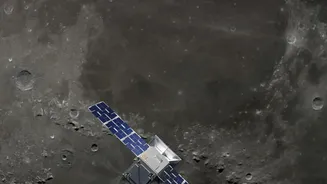
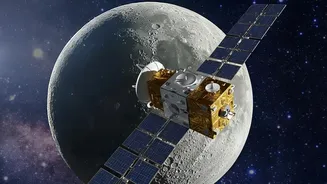
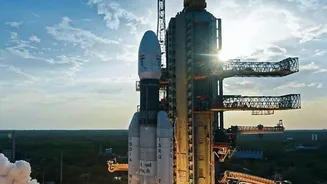
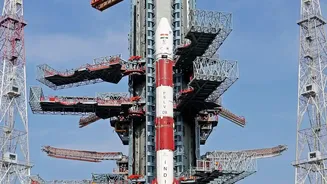
Chandrayaan-4 is so massive and complex that it cannot be launched on a single rocket. The entire spacecraft weighs around 9,200 kilograms, exceeding the capacity of India's most powerful rocket, the LVM3. To solve this, ISRO has designed a mission with five separate modules that will be launched in two parts. The first launch will carry the Descender Module (the lander) and the Ascender Module. The second launch will carry the Propulsion, Transfer, and Re-entry modules. These two stacks will then meet and dock in Earth's orbit—a feat of precision engineering in itself—before beginning the journey to the Moon as one integrated spacecraft.
Landing, Drilling, and Scooping
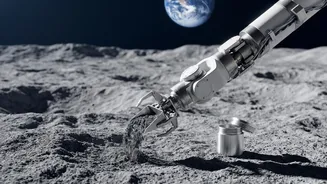
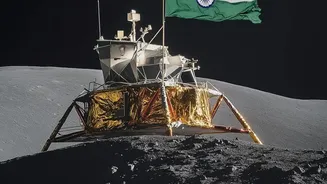
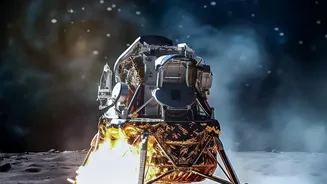
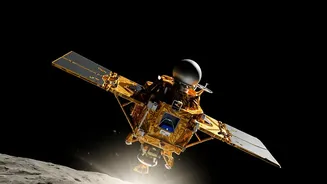
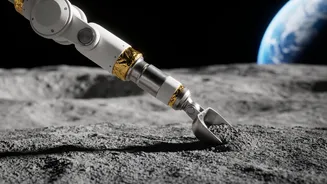
Once the integrated spacecraft reaches lunar orbit, the Descender and Ascender modules will separate and perform a soft landing near the south pole, a region believed to hold water ice in its permanently shadowed craters. After landing, a robotic arm on the Descender will scoop up surface soil. A drilling mechanism will also collect subsurface samples. These precious samples will be transferred into separate containers inside the Ascender Module and hermetically sealed to prevent contamination during the long journey home.
The Journey Home: Ascent and Orbital Rendezvous
This is where the mission enters its most critical phase. The Ascender Module, carrying the lunar samples, will act as its own mini-rocket. Using the Descender as a launchpad, it will lift off from the lunar surface to rendezvous with the Transfer and Re-entry modules waiting in lunar orbit. Once docked, the sample container will be automatically transferred from the Ascender to the Re-entry Module. Following the transfer, the Transfer Module will fire its engine, setting a course back to Earth.
Fiery Re-entry and Recovery
The final leg of the journey involves surviving a high-speed plunge through Earth's atmosphere. As it approaches our planet, the Re-entry Module, designed to withstand extreme temperatures, will separate from the Transfer Module. It will perform a ballistic re-entry before deploying parachutes for a safe landing on Earth. Recovery teams will then secure the capsule, bringing the pristine lunar samples to Indian laboratories. The successful demonstration of these technologies—from orbital docking to lunar ascent and high-speed re-entry—is a key objective of the mission.
Why Bring the Moon to Earth?
Studying lunar samples directly in advanced labs on Earth provides insights that remote instruments cannot. While previous missions have returned samples, they came from limited geological areas. The soil and ice from the Moon's south pole are particularly valuable. They could unlock secrets about the origin and evolution of the Earth-Moon system, the history of the solar system, and the availability of resources like water ice, which could be used for drinking water or rocket fuel in future missions. For India, analyzing these unique samples at home represents a monumental leap in its scientific and technological capabilities.