


What is the Crew Escape System?
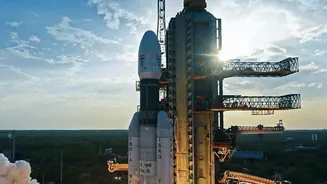
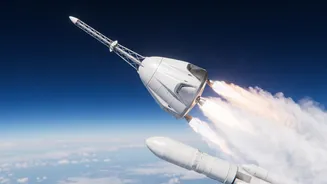
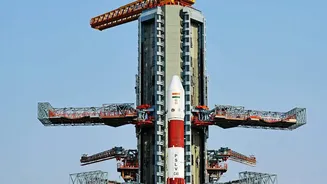
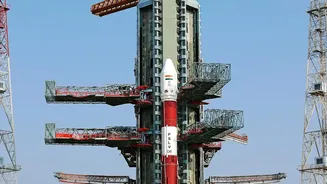
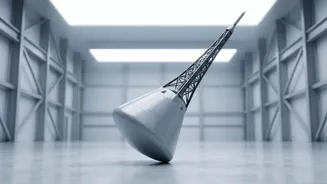
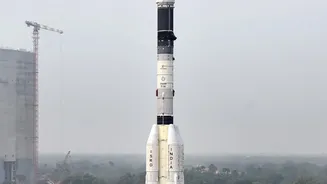
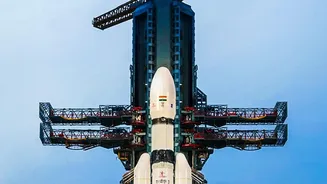
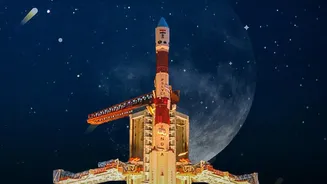
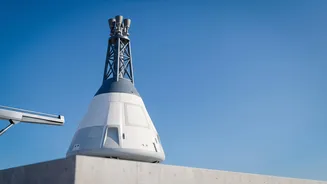
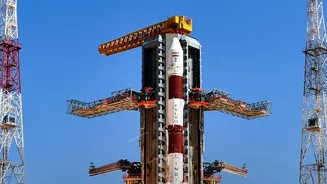
Think of the Crew Escape System (CES) as the ultimate lifeboat for astronauts. It is a specialised, rocket-powered mechanism mounted at the very top of the Gaganyaan launch vehicle. Its sole purpose is to pull the crew module—the capsule carrying the astronauts—away
from the main rocket at incredible speed if a catastrophic failure is detected during launch or ascent. This system is designed to function in milliseconds, making the difference between disaster and a safe recovery. Unlike the parachutes and heat shields used for a normal return to Earth, the CES is only ever used in an emergency, representing a critical layer of safety for India's human spaceflight ambitions.
The Anatomy of an Escape
The Gaganyaan CES is a 'puller' type system, similar to those used in the historic Apollo and Soyuz missions. It consists of a cluster of powerful, quick-acting solid-fuel motors. These aren't just any motors; they use special high burn-rate propellants designed to generate immense thrust almost instantly. Key components include the primary Crew Escape System Motors, which provide the main pulling force, and smaller pitch motors that steer the capsule away from the malfunctioning rocket's path. This powerful combination is designed to out-accelerate the main launch vehicle, even with its massive boosters firing, to get the crew clear of danger.
How an Abort is Triggered
An abort is not initiated manually. The launch vehicle is equipped with a sophisticated Integrated Vehicle Health Management (IVHM) system that acts as the rocket's brain and nervous system. It continuously monitors thousands of parameters, from engine pressure and thrust levels to the rocket's flight path. If this autonomous system detects a critical anomaly—a deviation from the expected performance that could jeopardise the mission—it automatically triggers the CES. This automated logic ensures the escape sequence can begin within milliseconds, far faster than any human could react, which is crucial when dealing with a rocket travelling at hypersonic speeds.
A Step-by-Step Emergency Ejection
Once an abort is triggered, a precise and rapid sequence of events unfolds. First, pyrotechnic devices sever the connections holding the crew module to the rest of the rocket. Simultaneously, the high-thrust escape motors fire, pulling the crew capsule up and away from the launch vehicle with an acceleration that can be up to 10 times that of gravity. After reaching a safe altitude and distance, the escape system tower is jettisoned. The crew module then begins its descent, deploying a sequence of parachutes—starting with smaller drogue chutes to stabilise it and then three large main parachutes to slow it down for a gentle splashdown in the ocean, where recovery teams await.
Proven Through Rigorous Testing
This system isn't just theory; ISRO has rigorously tested it to ensure it is flawless. The Test Vehicle Abort Mission-1 (TV-D1), conducted in October 2023, was a landmark success. In this test, a dedicated vehicle launched the unpressurised crew module to an altitude of about 17 km. An in-flight abort was deliberately triggered at a speed of Mach 1.2—the point of maximum aerodynamic pressure. The CES performed exactly as planned, pulling the module away, separating, and allowing the capsule to deploy its parachutes for a safe recovery from the Bay of Bengal. This and other tests have proven the system's reliability, building a foundation of safety for the crewed missions to come.