




Beyond the 'Eureka!' Moment
In movies, finding alien life is a single, dramatic event. On Earth, it’s a meticulous, often grueling process of elimination. Astrobiology is less about a single 'eureka!' moment and more about chipping away at uncertainty. Any potential sign of life,
or 'biosignature,' is guilty until proven innocent. Scientists must first demonstrate that a signal isn't a fluke, that it wasn't caused by contamination from Earth, and, most importantly, that it couldn't have been created by a non-biological process. This is the real work of life detection: patiently and systematically ruling out every other possibility before daring to whisper the word 'life.' The thrill isn't just in finding a potential signal, but in the detective work required to prove what it truly is. This is why understanding the methodology is far more critical for an informed follower of space exploration than simply reacting to the initial news.
The Specter of False Positives
A false positive occurs when a non-biological process mimics a sign of life. Nature is a clever chemist, and many compounds we associate with life can be made in other ways. For instance, the detection of methane in Mars's atmosphere sparked excitement because, on Earth, microbes produce vast quantities of it. However, geological processes like the interaction of water and certain rocks can also produce methane, providing a plausible non-biological explanation. Similarly, the potential detection of phosphine in the clouds of Venus in 2020 caused a stir because the gas is overwhelmingly linked to life on Earth. Yet, subsequent research and debate have shown how complex atmospheric chemistry or even volcanic activity could be alternative, non-living sources, and some observations failed to detect it at all. These examples show why scientists are so cautious. They must first exhaust all known (and even theoretical) abiotic mechanisms before considering a biological origin.
The Challenge of Sampling
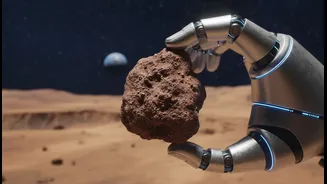
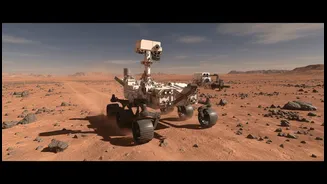
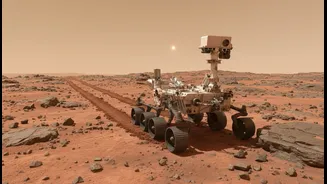
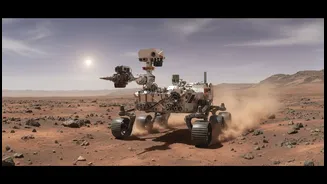
Finding a potential biosignature also depends heavily on where you look and what you can analyze. Missions like the Perseverance rover on Mars are marvels of engineering, but they face immense challenges. The rover can only drill a few centimeters into rock, meaning it's sampling material that has been exposed to harsh surface radiation for billions of years, which can break down the very organic molecules it seeks. Choosing a drilling location is a high-stakes decision made by hundreds of scientists debating which rock offers the best chance for preserving history. Furthermore, the instruments on a rover, while advanced, are not as powerful as labs on Earth. Studies using Mars-like environments in Chile's Atacama Desert have shown that current rover instruments might struggle to detect low levels of organic matter, potentially leading to false negatives where signs of life are missed. This highlights the critical importance of Mars Sample Return missions, which aim to bring carefully selected rock cores back to Earth for analysis with our most powerful instruments.
Building a Standard of Evidence
To avoid a cycle of exciting claims followed by retractions, the scientific community is working to standardize how we talk about evidence for life. NASA has proposed a framework called the 'Confidence of Life Detection' (CoLD) scale. Modeled after the Technology Readiness Level (TRL) scale used for engineering, the CoLD scale has seven levels. Level 1 is the initial detection of a tantalizing signal, while Level 7 represents confirmation from multiple missions and independent lines of evidence that have ruled out all non-biological sources. A headline-grabbing detection of a gas like methane might only be a Level 1 or 2. To climb the ladder, scientists would need to find supporting evidence—perhaps complex organic molecules in the same area or isotopic ratios that point to biological activity—and demonstrate it’s not a geological fluke. This framework helps manage expectations and provides a clear roadmap for what's needed to move from a hint to a definitive discovery, ensuring that extraordinary claims are backed by truly extraordinary evidence.