









The Divine Blueprint
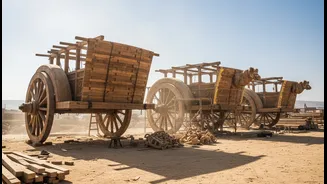
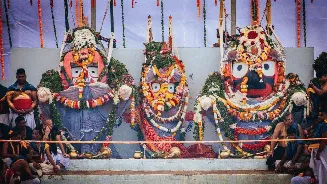
The construction of the three chariots—Nandighosha for Lord Jagannath, Taladhwaja for Lord Balabhadra, and Darpadalana for Devi Subhadra—is a sacred ritual that begins months in advance on the auspicious day of Akshaya Tritiya. There are no modern architectural
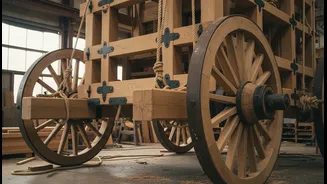
drawings or manuals. Instead, teams of hereditary artisans, known as Biswakarmas or Maharanas, rely on knowledge passed down through generations. Measurements are not taken in feet or inches but in traditional units like 'haat' (the length of a forearm) and 'anguli' (finger width), ensuring the divine proportions remain unchanged year after year. The process starts with the ritualistic sawing of specific woods like Phasi, Dhausa, and Asana, which are considered sacred and brought from designated forests.
An Army of Hereditary Artisans
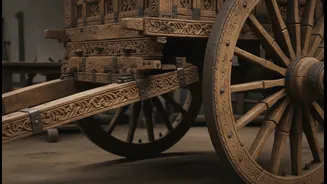
Building these colossal structures, which stand up to 45 feet tall, requires the coordinated effort of around 200 craftsmen. These artisans are divided into specialized groups. The Maharanas are the lead carpenters who shape and assemble the main structure. The Kamara Sevaks, or hereditary blacksmiths, painstakingly handcraft thousands of iron fittings and nails of various sizes, from small two-inch nails to massive four-and-a-half-foot ones that secure the superstructure. Then there are the Chitrakars (painters) who adorn the chariots with vibrant colours and religious motifs, and the Darji sevayats (tailors) who stitch the massive cloth canopies that cover the structures. Each group plays an indispensable role, their work a form of devotional service.
A Foundation of Pure Tradition
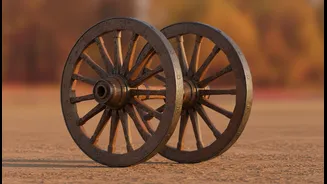
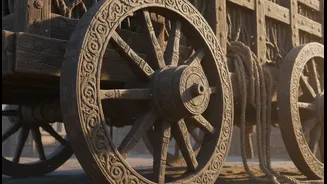
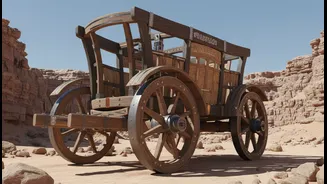
Traditionally, the chariots are assembled with remarkable precision using ancient joinery techniques. Nandighosha, the largest chariot, has 16 wheels, Taladhwaja has 14, and Darpadalana has 12, each about seven feet in diameter. A staggering number of wooden pieces are used for each—832 for Nandighosha alone. The entire structure is a testament to ancient Indian engineering, with every joint, peg, and axle crafted from wood and fitted together without modern machinery. This adherence to tradition is not just about technique; it is believed to maintain the spiritual purity of the divine vehicles.
Pragmatic Innovation for Safety
While the core construction remains deeply traditional, the Shree Jagannath Temple Administration (SJTA) has introduced key innovations over the years to enhance safety and efficiency. One of the earliest changes was the use of a mechanical sawmill to cut the timber logs to precise dimensions, a task previously done manually by carpenters. More recently, the focus has shifted to the braking system. The traditional brake, a large wooden beam lowered in front of the wheels, has been upgraded. In consultation with engineers, the wooden logs are now reinforced with special nylon-rubber belts and heavy-duty spikes. This modern enhancement provides greater friction and allows the sevayats to control the massive, heavy chariots more effectively in the dense crowds, preventing accidents without compromising the wooden brake's core design.
When Modern Tools Serve Ancient Faith
Other subtle yet significant modern interventions have been adopted to ensure the grand procession goes smoothly. Heavy-duty railway jacks are now used to help fit the massive wheels onto the axles, a task of immense physical difficulty. Furthermore, mild steel and iron clamps are used for immediate repairs if any part of a wheel gets damaged during the yatra. These innovations are not seen as a departure from tradition. Rather, they are viewed as necessary adaptations to preserve the festival's integrity and ensure the safety of the millions of devotees who participate. They represent a harmonious blend where modern engineering serves to support and sustain a timeless spiritual practice.