




A Pathfinder for Our Return to the Moon
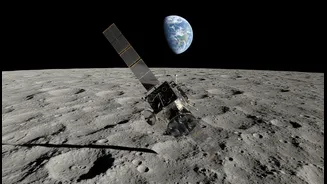
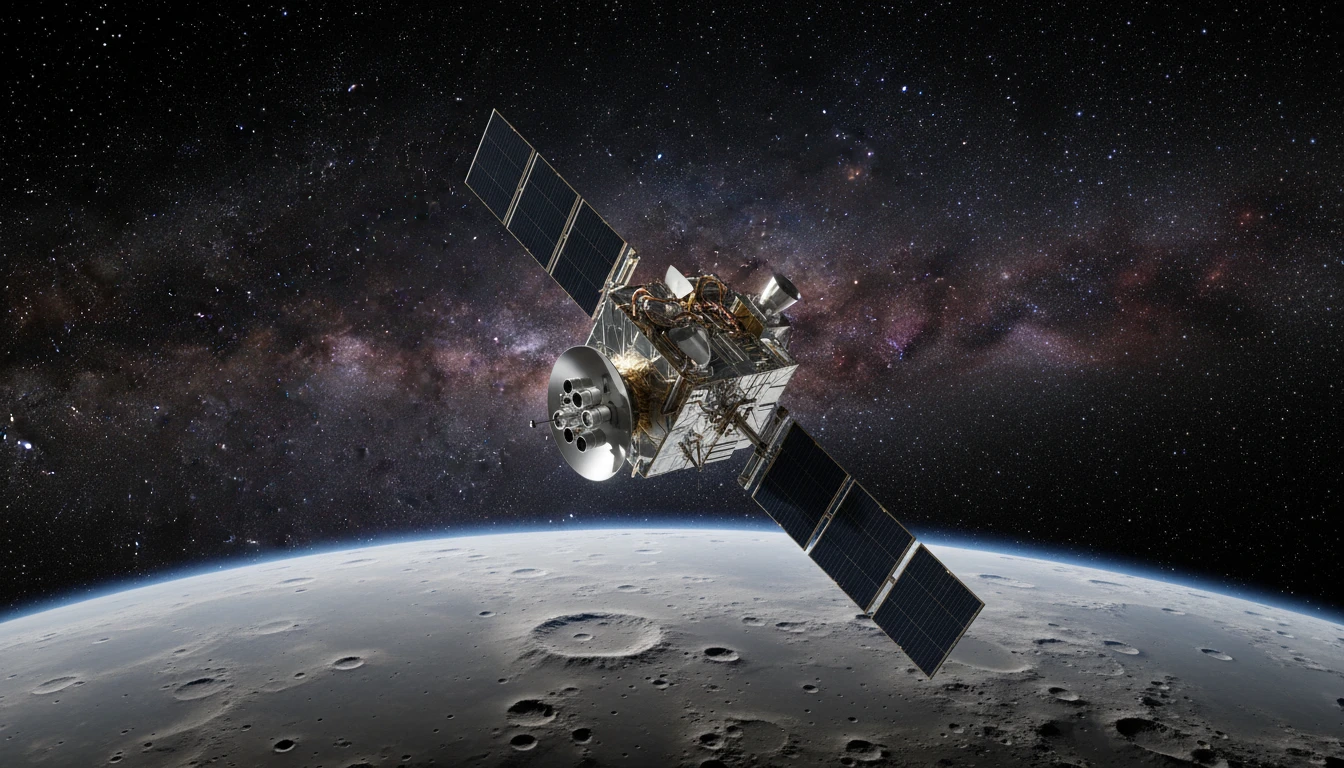
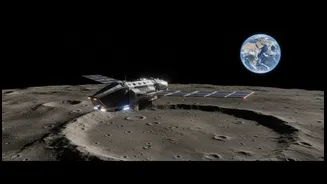
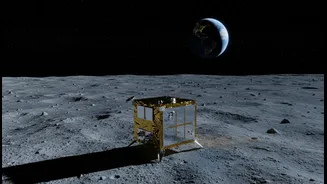
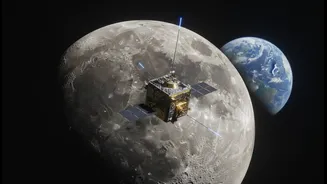
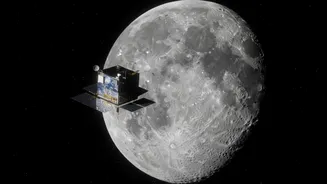
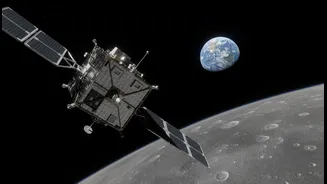
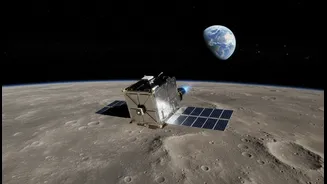
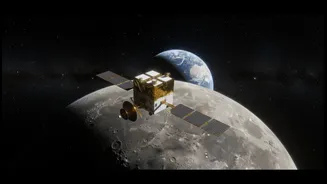
Launched in June 2022, the Cislunar Autonomous Positioning System Technology Operations and Navigation Experiment (CAPSTONE) is a small but mighty pathfinder mission. Weighing only 55 pounds, its job was to test an untried, unique lunar orbit, reducing
risk for the far larger and more complex missions under NASA's Artemis program. Having successfully completed its primary and extended missions by mid-2026, it has provided a wealth of data for engineers and scientists. While NASA's official involvement concluded in June 2026, the spacecraft continues to be operated by the company Advanced Space, serving as a testbed for future technologies.
The Genius of a New Lunar Orbit
At the heart of the mission is the near-rectilinear halo orbit (NRHO). Unlike the circular orbits of the Apollo era, the NRHO is a highly elongated, seven-day loop around the Moon. Its genius lies in its stability; it sits at a gravitational balance point between the Earth and Moon, requiring minimal fuel for a spacecraft to maintain its position. CAPSTONE’s primary goal was to be the first spacecraft to fly this orbit, verifying that reality matched the complex computer models. By confirming the orbit's power and propulsion requirements, it has lowered the risk and logistical uncertainty for the future Gateway space station, which will use the same path.
A GPS for the Moon
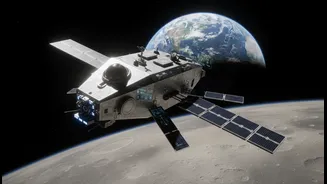
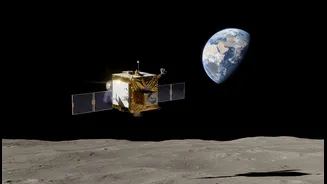
Beyond testing the orbit, CAPSTONE had a crucial secondary objective: to demonstrate autonomous navigation technology. The mission tested the Cislunar Autonomous Positioning System (CAPS), a system allowing a spacecraft to determine its own position by communicating with other lunar orbiters, like NASA's Lunar Reconnaissance Orbiter (LRO), without constantly relying on ground stations on Earth. This is a foundational step toward creating a 'lunar GPS' network, which will be essential for the dozens of government and commercial missions planned in the coming years, enabling safer and more efficient operations in cislunar space.
Why Every Piece of Data Matters
The phrase "evidence still matters" is a perfect descriptor for a pathfinder mission, where learning from problems is as important as success. CAPSTONE's journey was not without its challenges, including a temporary loss of communication after launch and a partially open valve on a thruster. These incidents, however, provided invaluable data. Engineers on the ground gained real-world experience in diagnosing and recovering a spacecraft in deep space. Every anomaly and piece of telemetry validated or refined their models, providing crucial evidence that informs the design of more complex, human-rated systems. This is the essence of a demonstration mission: find the problems on a smaller, less expensive scale before you commit to the multi-billion-dollar hardware.
From Data to Design
For engineers and space enthusiasts, CAPSTONE serves as a powerful case study. The data it generated on orbital mechanics, fuel efficiency, and navigation accuracy directly informs how future lunar spacecraft will be designed and operated. During its extended mission, it even served as a testbed for new software, demonstrating that a satellite's capabilities can be enhanced long after launch. The mission's success helps build a foundation for commercial support of future lunar operations, proving out capabilities that private companies and international partners can build upon. By validating these new technologies, CAPSTONE has helped make the vision of a sustained human presence on the Moon more tangible and achievable.