





Why Prolonged Sitting Causes Stiffness
Our bodies are designed to move. When we sit for long periods, certain muscles adapt by shortening and tightening, while others become inactive. This commonly affects the hip flexors, hamstrings, and the muscles of the upper back. The hips become locked
in a flexed position, the shoulders tend to round forward, and the spine loses some of its natural mobility. Over time, this lack of movement can contribute to chronic stiffness, reduced range of motion, and even pain in the lower back, neck, and shoulders.
The Solution: Foam Rolling for Myofascial Release
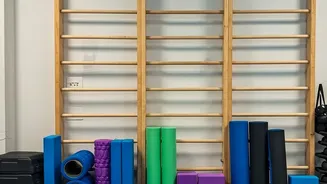
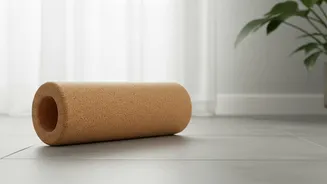
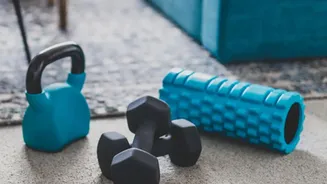
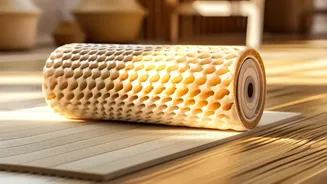
A foam roller is a simple, cylindrical tool used for self-massage, a technique known as self-myofascial release. Fascia is the connective tissue that surrounds your muscles. When you remain in one position for too long, this tissue can become tight and form painful knots or trigger points. By applying slow, sustained pressure with a foam roller, you can help release this tension, increase blood flow to the muscles, and improve tissue elasticity. This process can alleviate soreness and prepare your body for movement.
Essential Foam Rolling Exercises
To get started, focus on the areas most affected by sitting. For the upper back (thoracic spine), lie on the floor with the roller positioned under your shoulder blades. With knees bent and feet flat, lift your hips and slowly roll up and down your mid to upper back, avoiding your neck and lower back. To target your glutes, sit on the roller with one ankle crossed over the opposite knee and gently roll over the glute of the crossed leg. For tight hip flexors, lie face down and place the roller under the front of your hip, rolling gently from the top of your thigh to your hip bone.
Unlocking Your Joints with Mobility Drills
While foam rolling helps release tight muscles, mobility drills actively take your joints through their full range of motion. Unlike static stretching where you hold a position, mobility drills are dynamic movements that improve joint function and reduce stiffness. They are crucial for desk workers because they directly counteract the static postures we hold all day. Incorporating just a few minutes of mobility work can improve posture, enhance movement quality, and make you feel less restricted.
Key Mobility Drills for Desk Workers
The Cat-Cow is a classic for spinal mobility. On your hands and knees, alternate between arching your back toward the ceiling and dipping it toward the floor. For hip and spine rotation, the World's Greatest Stretch is an all-in-one movement: from a lunge position, place one hand on the floor and rotate your torso, reaching the other arm to the sky. To open up your upper back, try Thoracic Spine Rotations. Start on all fours, place one hand behind your head, and rotate your elbow down toward the opposite wrist and then up toward the ceiling.
Creating a Consistent Routine
The key to combating stiffness from sitting is consistency. You don't need to spend hours in the gym. Aim for short, frequent movement breaks throughout your day. Try to stand up and move every 60 to 90 minutes. A simple 5 to 10-minute routine of foam rolling and mobility drills performed daily can make a significant difference. You can do it in the morning to start your day, after work to decompress, or even in short bursts during breaks. The goal is to make movement a regular habit to offset the effects of being sedentary.