


Why a Crowded Garden Suffers
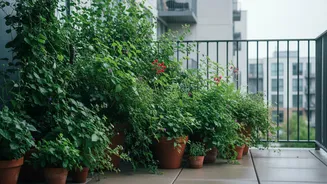
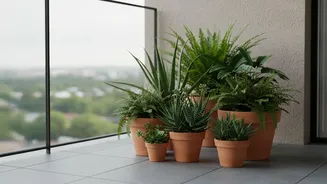
An overflowing balcony garden might look impressive at first, but overcrowding is a significant threat to plant health. When plants are packed too tightly in containers, they are forced into a constant battle for essentials like sunlight, water, and soil
nutrients. This competition often leads to stunted growth, weaker stems, and a disappointing lack of flowers or fruit. Furthermore, dense foliage restricts airflow, creating a humid microclimate that is an ideal breeding ground for fungal diseases and pests. Poor air circulation and excess moisture trapped between leaves can cause issues like root rot, while compacted soil prevents roots from getting the oxygen they need to thrive. What began as a vibrant collection can quickly become a group of stressed, underperforming plants.
Step 1: Assess Your Greenery
Before making any cuts, take a step back and perform a thorough assessment. The goal is to identify which plants are thriving and which are merely surviving. Look for signs of stress: Are some plants looking 'leggy', with long, pale stems and sparse leaves, indicating they are stretching desperately for light? Are there yellowing or browning leaves, which could signal nutrient deficiency or improper watering? Notice which plants are robust and producing well, and which seem weak or have sustained damage. Also, consider your own enjoyment. Which plants bring you the most joy? This initial audit isn’t about making decisions yet, but about gathering information to make informed choices.
Step 2: Making the Hard Decisions
This is often the most difficult part for any gardener. Once you've assessed your plants, it's time to decide what stays and what goes. Prioritize ruthlessly based on health and performance. Any plant that is clearly diseased, pest-infested, or consistently failing to thrive should be at the top of the removal list. Next, consider duplicates. Do you have three pots of mint when one would suffice? Sacrificing the weaker specimens will allow the strongest to flourish. Finally, think about your long-term vision for the balcony. If a plant has grown too large for its space or no longer fits your aesthetic, it may be time to part ways. Remember, removing a plant doesn't mean it has to be thrown away. Healthy but unwanted plants can be gifted to friends, neighbors, or local gardening groups.
Step 3: Prune for Prosperity
Thinning isn't just about removing entire pots; it's also about strategically pruning the plants you decide to keep. Pruning improves air circulation and allows more sunlight to reach the lower leaves and centre of the plant. Start by removing any dead, damaged, or diseased branches. Then, focus on creating more space between branches to open up the plant's structure. When making cuts, always trim back to just above a leaf node (the point where a leaf emerges) or to a side branch. This encourages the plant to heal quickly and sprout new, bushier growth rather than leaving unsightly and decay-prone stubs. For plants that have become too tall, avoid simply lopping off the top; instead, use careful cuts to maintain a more natural shape. A good pruning can rejuvenate a plant and dramatically improve its overall health and appearance.
Step 4: Planning Your Next Chapter
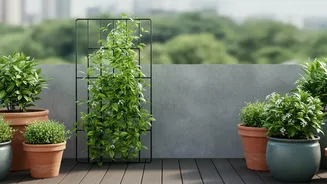
With newly created space, you can now plan for smart expansion rather than just random additions. This is the perfect opportunity to embrace vertical gardening. Utilize walls and railings, which are often overlooked real estate on a balcony. Consider installing a trellis for climbing plants, using railing planters, or investing in tiered or stackable planters to make the most of your vertical space. This approach allows you to add more greenery without cluttering the floor. Before buying new plants, assess your balcony's conditions, paying close attention to sun exposure and wind. Choosing plants that are well-suited to your specific environment and container size will set you up for sustainable success. Think about a mix of textures and plant types—herbs, flowers, and even compact vegetables—to create a dynamic and productive garden.